Thanksgiving is a time to slow down, sit together and say thank you. If you are looking for a Thanksgiving story for kids, this page has two parts. First, a simple and honest retelling of how the Thanksgiving tradition began. Then three short original stories about gratitude that you can read aloud at the table or at bedtime. In the United States, Thanksgiving falls on the fourth Thursday of November, which is 26 November in 2026.
Key Takeaways
- The first Thanksgiving feast took place in autumn 1621 in Plymouth, between English settlers and the Wampanoag people.
- The real story is bigger than the one often told in picture books, and kids can handle the full version.
- Three short stories below teach gratitude, sharing and kindness.
- Quick activities and talking points help families turn the story into a habit of saying thanks.
What Is Thanksgiving?
Thanksgiving is a holiday for giving thanks for the food we have, the people we love and the good things in our lives. In the United States, families gather on the fourth Thursday of November for a big meal, often with turkey, corn, pumpkin pie and cranberry sauce. Canada also has its own Thanksgiving, held on the second Monday of October.
The idea of giving thanks after a harvest is very old. Many peoples around the world, including Native American nations, held harvest celebrations long before the United States existed.
The True Story of the First Thanksgiving for Kids
A Long Trip Across the Ocean
In 1620, a group of English families sailed across the Atlantic Ocean on a ship called the Mayflower. We call them the Pilgrims. They landed at a place they named Plymouth, in what is now Massachusetts. They arrived just as winter was starting, and they were not ready for it. Food ran short, many people got sick, and about half of the settlers did not survive that first winter.
The People Who Already Lived There
The land was not empty. The Wampanoag people had lived in that part of the world for thousands of years. They knew where to fish, which plants to grow and how to live through the cold months. In the spring, a man named Tisquantum, often called Squanto, helped the settlers. He spoke English and showed them how to plant corn and where to catch fish. The Wampanoag leader, Massasoit, also agreed to a peace treaty with the settlers.
The Harvest Feast of 1621
In the autumn of 1621, the settlers had a good harvest and held a feast to give thanks. The Wampanoag joined them. According to a letter written by one of the settlers, Edward Winslow, the celebration lasted three days. About ninety Wampanoag men came and brought deer to share. The tables held birds like ducks and geese, corn, fish and vegetables. There was probably no pumpkin pie, and nobody knows if turkey was served.
How Thanksgiving Became a National Holiday
For many years, different towns and states held their own days of thanks. In 1863, during a very hard time for the country, President Abraham Lincoln asked Americans to set aside a national day of Thanksgiving. In 1941, Congress made it the fourth Thursday of November.
It is also important to tell children that the story did not stay peaceful. In the years after the feast, relations between settlers and Native nations became very painful, and many Native people lost their land and their way of life. Today, some Native Americans see Thanksgiving as a National Day of Mourning, while others celebrate a harvest thanks in their own way. Telling both parts helps children understand history with kindness.
Fun Thanksgiving Facts for Kids
- The first Thanksgiving feast lasted three days, not one dinner.
- The Wampanoag people grew corn, beans and squash, which are often called the Three Sisters.
- Thanksgiving became a national holiday in 1863.
- In Canada, Thanksgiving is in October, not November.
- Many families say what they are thankful for before eating. It is one of the oldest and simplest Thanksgiving traditions.
3 Short Thanksgiving Stories for Kids
These three stories are original and short enough to read in about two minutes each. Each one ends with a gentle moral.
Story 1: The Thankful Jar
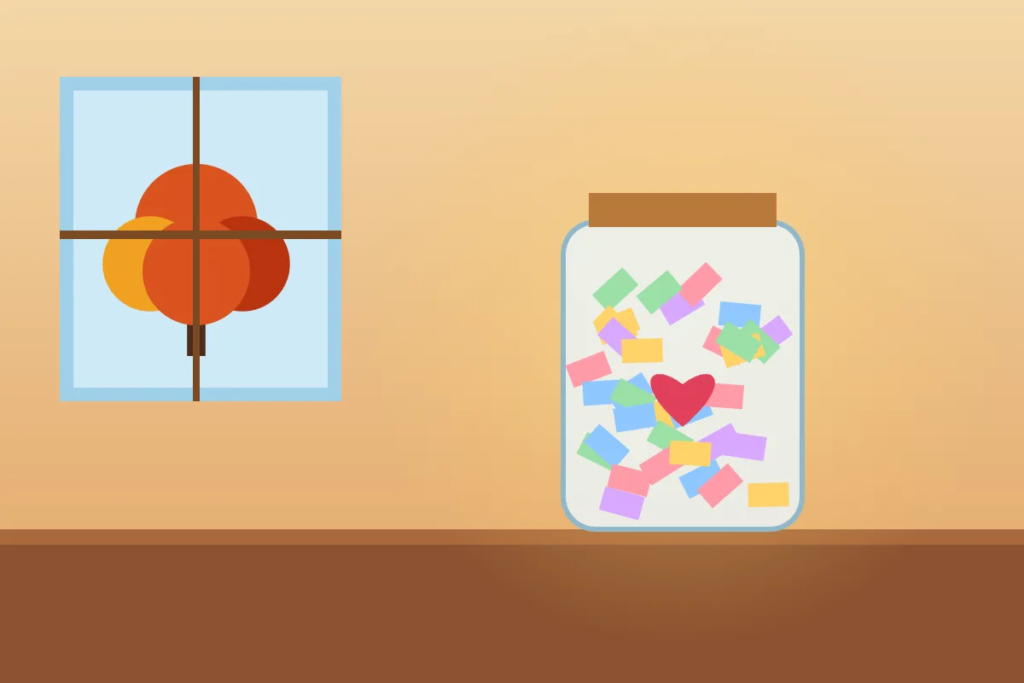
Mia’s family kept a big glass jar on the kitchen shelf. Every November, everyone wrote what they were thankful for on little paper slips and dropped them inside.
“I do not have anything to write,” Mia sighed, chewing her pencil.
“Start small,” said Grandma. “What made you smile today?”
Mia thought hard. “My warm socks,” she said, and wrote it down. Then she wrote, Dad’s burnt pancakes, because they made everyone laugh. Then she wrote, the sound of rain on my window. Once she began, the slips would not stop coming. She wrote about her best friend, her bicycle bell and the first red leaf she found.
On Thanksgiving, the family sat around the table and read the slips aloud. Mia’s little brother could not write yet, so he had drawn a picture of a dog. Everyone clapped. When the jar was empty, Mia noticed something wonderful. Hers was the fullest pile of all, and the smallest things had made the biggest pile of happiness.
Moral: Gratitude grows when we notice small things.
Story 2: The Last Slice of Pie
After the Thanksgiving dinner, one slice of apple pie was left on the table. Sam and his sister Nora both looked at it.
“I was going to have it,” said Sam, reaching for the plate. Then he looked out of the window. Their neighbour, Mr. Alvarez, was sitting alone on his porch with a cup of tea. His family lived far away, and his house was quiet.
Sam gulped. The pie smelled so good. But he put the slice on a clean plate, covered it with a napkin and walked next door.
“Happy Thanksgiving,” he said. “This is for you.”
Mr. Alvarez’s eyes lit up. He invited Sam to sit, shared warm cider and told him funny stories from when he was a boy. When Sam walked home, he felt full in a way no pie could have done.
Moral: Sharing makes a treat feel bigger.
Story 3: Pip and the Acorns
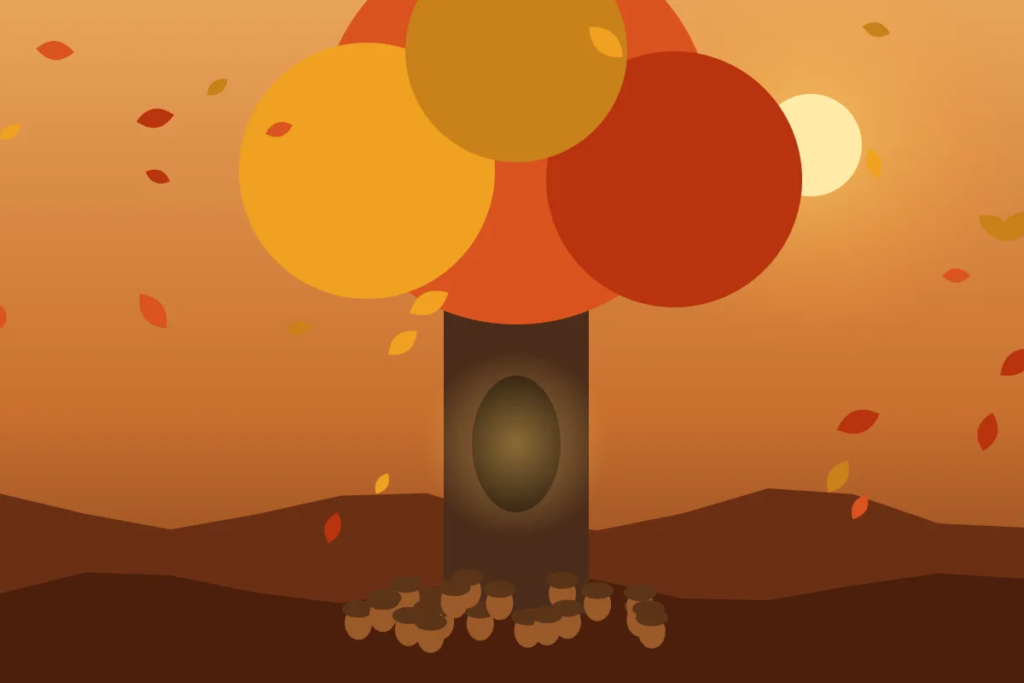
Pip the squirrel spent all autumn collecting acorns. He stacked them in the hollow of the old oak until the pile was taller than he was.
One cold evening, Pip heard a tiny sniffle. A little field mouse named Tilly stood by the tree, shivering. “The rain washed away my food store,” she whispered. “I have nothing for winter.”
Pip looked at his big pile. He thought about keeping every acorn for himself, but then he remembered how cold the nights were getting. “Take what you need,” he said, and he rolled five acorns to her door.
All winter, the two friends stayed warm in their burrows. When the first snow fell, Tilly knocked on Pip’s tree with a basket of dried berries she had found. They shared a feast under the snow-dusted oak, and it was the best meal either of them had ever had.
Moral: Kindness has a way of coming back to you.
Questions to Ask Kids After the Stories
- What is one small thing you are thankful for today?
- Who in your life would you like to say thank you to?
- In the story of Sam, why did sharing the pie feel good?
- Why do you think it is important to listen to more than one side of a history story?
Easy Thanksgiving Activities for Kids
- Make a thankful jar. Fill a clear jar with notes from the family and read them at dinner.
- Write thank-you cards. Send a card to a teacher, a grandparent or a neighbour.
- Draw a harvest table. Let kids draw or paint their dream Thanksgiving feast.
- Help in the kitchen. Stir, mash or set the table together.
- Give back. Pack a bag of food or clothes to donate to people who need it.
Looking for more stories for the season? Try our calming bedtime stories for kids or these short stories for preschoolers.
Frequently Asked Questions
What is the story of the first Thanksgiving for kids?
In autumn 1621, English settlers in Plymouth held a harvest feast and invited the Wampanoag people. The celebration lasted about three days. It is remembered as the first Thanksgiving, though the full history is more complicated than the picture-book version.
Who was Squanto?
Squanto, also called Tisquantum, was a Native American man who spoke English. He helped the Plymouth settlers learn to plant corn and catch fish in the spring of 1621.
When is Thanksgiving in 2026?
Thanksgiving in the United States is on Thursday, 26 November 2026. It is always the fourth Thursday of November.
Why do we celebrate Thanksgiving?
We celebrate Thanksgiving to give thanks for the harvest, our families and the good things in our lives. It also reminds us to share with others.
How can I explain Thanksgiving to a young child?
Keep it simple. Say that Thanksgiving is a day to thank the people and things that make us happy and to share a meal with family. Older kids can also learn the history, including the Native American side of the story.
Final Thoughts
Thanksgiving works best when children feel it, not just hear about it. Read one story a night, say what you are thankful for before dinner and keep the habit going after the holiday is over.
