
Diwali is the festival of lights, and every Diwali story for kids starts with the same simple idea: light wins over darkness. In 2026 the main Diwali night falls on Sunday, 8 November, and families across India and around the world will light diyas, draw rangoli, share sweets and tell the old stories once again.
But which story is the Diwali story? The honest answer is that there is more than one. Different parts of India remember different tales, and all of them are told during these days. This page brings you four of them in simple English, each with a moral lesson, so you can read them aloud at bedtime, in class or sitting beside the diyas.
Key Takeaways
- Diwali means a row of lamps. It celebrates light over darkness and good over evil.
- Four popular stories: Rama’s return to Ayodhya, Goddess Lakshmi, Krishna and Narakasura, and the Pandavas coming home.
- Each story has a moral that children can understand and remember.
- Short on time? Scroll down to the Diwali story in 10 lines.
What Is Diwali and Why Do We Celebrate It?
Diwali, also spelled Deepavali, comes from two Sanskrit words: deepa, which means lamp, and avali, which means row. So the name simply means a row of lamps. The festival falls on the new moon night of the Hindu month of Kartik, usually in October or November, when the sky is at its darkest. That is exactly why lamps matter so much. On the darkest night, people fill their homes with light.
Hindus, Jains and Sikhs all celebrate around this time, each for their own reasons. The four stories below are the Hindu stories that are told to children most often.
Story 1: Rama Returns to Ayodhya
A Prince Sent to the Forest
Long ago, in the city of Ayodhya, there lived a kind and brave prince named Rama. His father, King Dasharatha, was ready to make him the next king. But because of a promise the king had made years earlier to his queen Kaikeyi, Rama was asked to leave the kingdom and live in the forest for fourteen years.
Rama did not argue. He kept his father’s word and left, together with his wife Sita and his younger brother Lakshmana. The people of Ayodhya cried as they went. Rama’s other brother, Bharata, loved him so much that he refused to sit on the throne. He placed Rama’s sandals on it and looked after the kingdom until his brother came back.
Sita Is Taken Away
In the forest the three lived in a small hut and were happy. Then one day, Ravana, the mighty ten-headed king of Lanka, tricked them while Rama and Lakshmana were away and carried Sita off to his island.
Rama and Lakshmana searched everywhere. On the way they met Hanuman, the clever and loyal vanara, and Sugriva, the king of the vanaras. Together they gathered a great army to bring Sita home.
The Battle and the Victory
Hanuman leapt across the sea, found Sita and told her that help was on the way. The army built a bridge of stones over the water and marched to Lanka. After a long battle, Rama defeated Ravana. This victory is remembered as Dussehra, about three weeks before Diwali.
The Night of Lamps
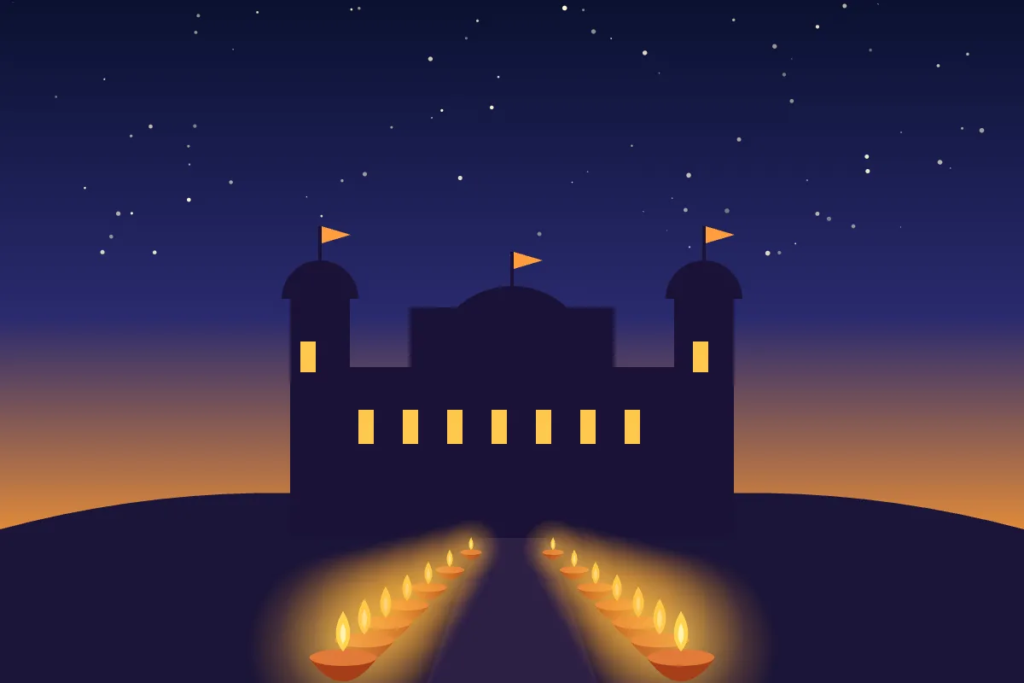
The fourteen years were over. Rama, Sita and Lakshmana began the long journey back to Ayodhya. They arrived on a new moon night, when there was no moon to light the way. The people of Ayodhya wanted to welcome their prince home, so they placed little oil lamps on every window, doorstep and road. The whole city glowed.
According to the Ramayana tradition, that was the first Diwali, and it is why we still light diyas today.
Moral: Keep your promises even when it is hard. People who stay truthful and patient will always find their way home.
Story 2: Goddess Lakshmi and the Diwali Night
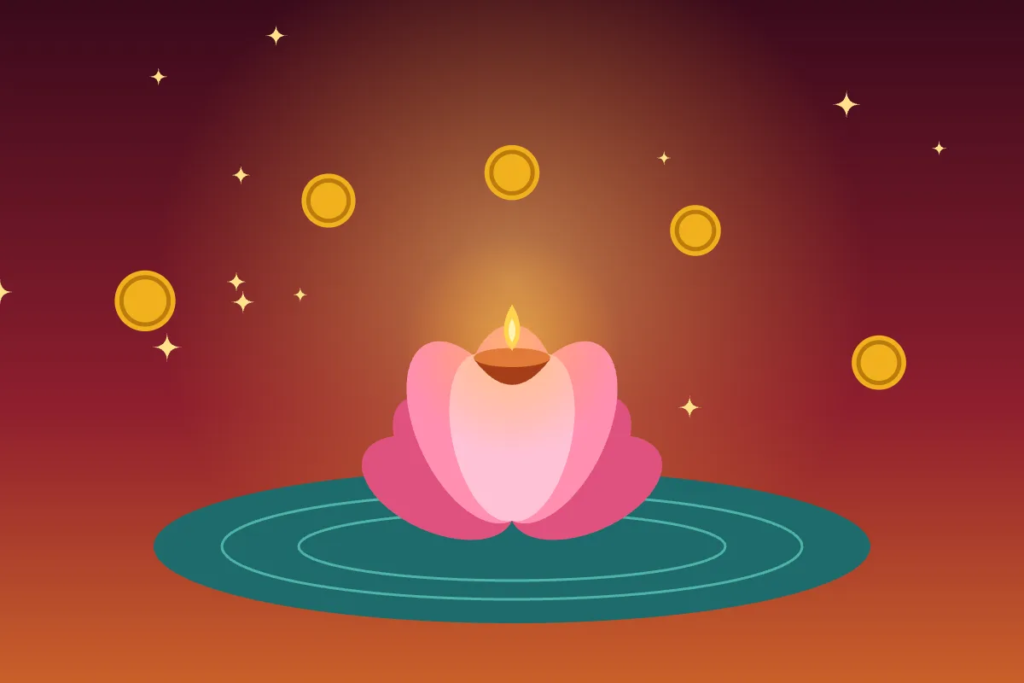
Another Diwali story is about Goddess Lakshmi, who is loved as the goddess of wealth, good fortune and kindness. Long ago the gods lost their strength and their shine. Lord Vishnu told them to churn the great Ocean of Milk together with the asuras, using a mountain as the churning stick and a giant serpent as the rope.
It was a long and tiring job, and many strange and wonderful things rose from the water. At last, Goddess Lakshmi stepped out of the waves, seated on a lotus flower and shining like gold. She chose Lord Vishnu as her partner, and with her arrival, happiness and good fortune returned to the world.
Many families believe that Lakshmi visits homes on Diwali night, and that she enters the homes that are clean, bright and welcoming. So before Diwali, children help to sweep and tidy the house. They draw rangoli at the door and place diyas on the steps so the way is easy to see. On this night families also pray to Lord Ganesha, who removes obstacles, along with Lakshmi.
Moral: A clean home, a kind heart and honest work make room for good things. Real wealth is not only money. It is also health, love and gratitude.
Story 3: Krishna and the Demon Narakasura
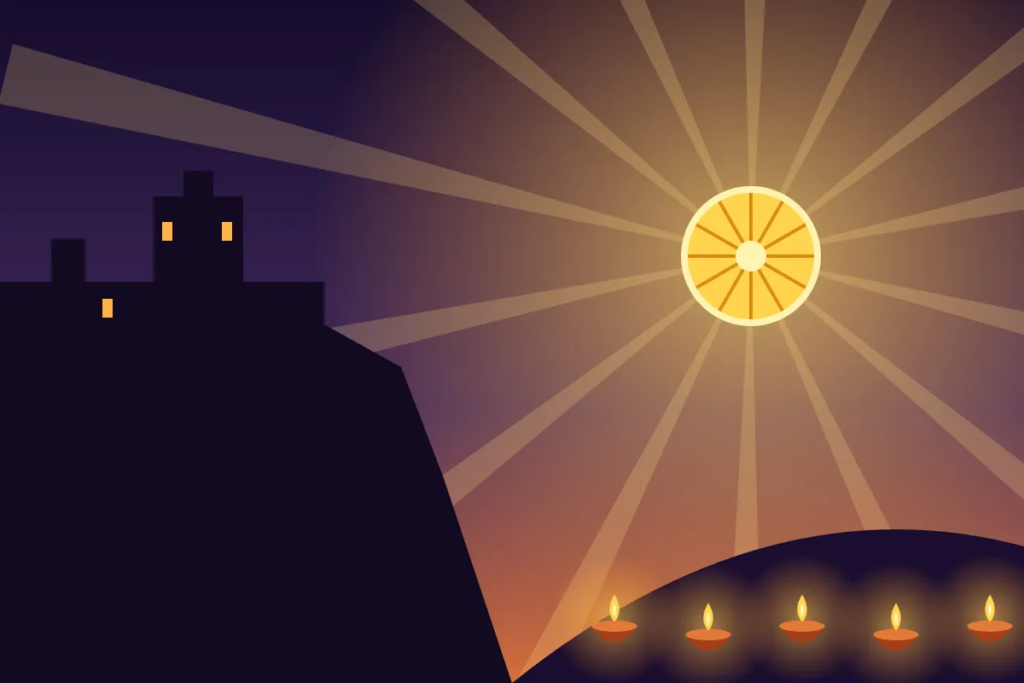
The day before the main Diwali night is called Naraka Chaturdashi, or Choti Diwali. It remembers the story of Narakasura, a demon king who ruled the land of Pragjyotisha. He had received a powerful boon, and it made him proud and cruel. He frightened the people, took things that were not his, and kept thousands of captives locked inside his fortress.
The people prayed for help, and Lord Krishna came. His wife Satyabhama went with him into battle. After a fierce fight, Narakasura was defeated. In some tellings, the demon asked that his end be remembered with lamps and joy rather than sorrow.
Krishna opened the fortress gates and freed everyone who was held inside. As the sun rose on the morning of the victory, the people took an early bath, wore fresh clothes and lit lamps to celebrate that the darkness was finally gone. Even today, many families in South and West India wake up before sunrise on this day for an oil bath and then light diyas.
If your child enjoys Krishna’s tales, you can also read our little Krishna story and Krishna Leela stories for kids.
Moral: Cruelty may look strong for a while, but it cannot last. Standing up for people who are in trouble is always the right thing to do.
Story 4: The Pandavas Come Home
In the Mahabharata, five brothers called the Pandavas, Yudhishthira, Bhima, Arjuna, Nakula and Sahadeva, lost their kingdom in an unfair game of dice. They were sent away for thirteen years: twelve in the forest and the last one hiding in disguise. They faced hunger, danger and sadness, but they stayed together and never gave up their honesty.
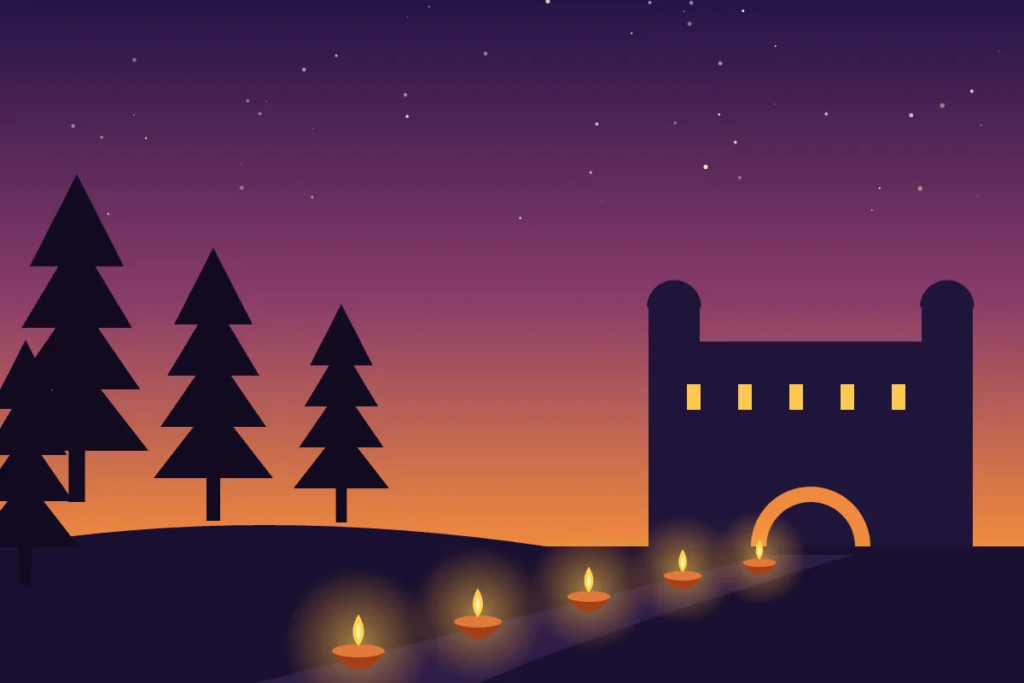
In some regional traditions, the Pandavas returned to their kingdom on the new moon night of Kartik, and their people welcomed them with rows of lamps, just like the people of Ayodhya had welcomed Rama. You can read more about one of the five brothers in our Krishna and Arjuna story for kids.
Moral: Hard times do not last forever. Stay together, stay honest and keep going, and the lights will come back.
Diwali Story for Kids in 10 Lines
Need a quick version for a school assignment or a bedtime chat? Here is the Diwali story in ten short lines.
- Long ago, Prince Rama of Ayodhya was sent to the forest for fourteen years.
- His wife Sita and his brother Lakshmana went with him.
- The demon king Ravana carried Sita away to Lanka.
- Hanuman and a brave army of vanaras helped Rama find her.
- Rama defeated Ravana and brought Sita back.
- After fourteen years, Rama, Sita and Lakshmana returned to Ayodhya.
- It was a new moon night, so the people lit rows of diyas to welcome them home.
- That glow of lamps is why the festival is called Diwali, the row of lamps.
- Many families also pray to Goddess Lakshmi and Lord Ganesha on this night.
- Diwali reminds us that light wins over darkness and good wins over evil.
The Five Days of Diwali
Diwali is not just one night. In most of India it is a five-day festival, and each day has its own meaning.
| Day | Name | What happens |
|---|---|---|
| Day 1 | Dhanteras | Families clean the home, light a lamp and welcome good health and good fortune. Many buy something new for the house. |
| Day 2 | Naraka Chaturdashi (Choti Diwali) | Remembers Krishna’s victory over Narakasura. People take an early bath and light lamps. |
| Day 3 | Lakshmi Puja (Diwali) | The main night. Families pray to Lakshmi and Ganesha and fill the home with diyas. |
| Day 4 | Govardhan Puja | Remembers Krishna lifting Govardhan hill. In many places people offer thanks for food and nature. |
| Day 5 | Bhai Dooj | Brothers and sisters celebrate their bond with tilak, gifts and sweets. |
Moral Lessons Kids Can Learn From Diwali Stories
| Story | Main lesson |
|---|---|
| Rama returns to Ayodhya | Keep your word and be patient. |
| Goddess Lakshmi | Value kindness, cleanliness and gratitude over money. |
| Krishna and Narakasura | Stand up against cruelty and help people in trouble. |
| The Pandavas come home | Stay honest and stay together in hard times. |
How Can Kids Celebrate Diwali?
- Help clean and decorate. Sweep the doorstep, arrange flowers and tidy your room.
- Make rangoli. Use coloured rice, flower petals or chalk to draw patterns at the door.
- Paint a diya. Decorate clay lamps with colours and glitter. An adult should light them.
- Share sweets. Take a small box of sweets and a diya to a neighbour or friend.
- Read a story each evening. Pick one of the four stories above and read it together.
- Do one kind act. Give away toys, books or clothes that you no longer use.
Diwali Safety Tips for Kids
- Never light diyas, candles or fireworks without an adult nearby.
- Keep curtains, papers and loose clothes away from open flames.
- Tie back long hair and wear fitted cotton clothes near lamps.
- If you use crackers, pick quieter, low-smoke ones, stand far away and keep a bucket of water close. Skipping them is a good choice too, especially for pets and elders.
Frequently Asked Questions
What is the Diwali story for kids in short?
The most popular story is about Prince Rama, who returned to Ayodhya after fourteen years in the forest and after defeating the demon king Ravana. The people of Ayodhya lit rows of lamps to welcome him home, and that is why Diwali is called the festival of lights.
Why is Diwali celebrated?
Diwali celebrates the victory of light over darkness and good over evil. Different regions link it to different stories, including Rama’s return to Ayodhya, Goddess Lakshmi and Krishna’s victory over Narakasura.
Why do we light diyas on Diwali?
Diyas remind us of the lamps that welcomed Rama home on a dark new moon night. They also stand for hope, knowledge and good wishes, and many families believe a bright home welcomes Goddess Lakshmi.
Who is Goddess Lakshmi and why is she worshipped on Diwali?
Lakshmi is the goddess of wealth, good fortune and kindness. Families pray to her on the main night of Diwali, along with Lord Ganesha, and ask for health, happiness and a prosperous year.
Is there only one Diwali story?
No. Hindus, Jains and Sikhs all celebrate around this time, and even within Hindu traditions the stories differ by region. North India often remembers Rama’s return, while many families in the South and West remember Krishna and Narakasura.
When is Diwali in 2026?
The main Diwali night, Lakshmi Puja, falls on Sunday, 8 November 2026. Exact puja timings depend on your city, so check a local panchang.
Final Thoughts
Whichever Diwali story your family tells, the message is the same. Be honest, be kind, help others and keep a little light burning, even on the darkest night.
This Diwali, pick one story from this page, light a diya with a grown-up and read it aloud. Stories are one of the best ways to pass the festival on to the next generation.
