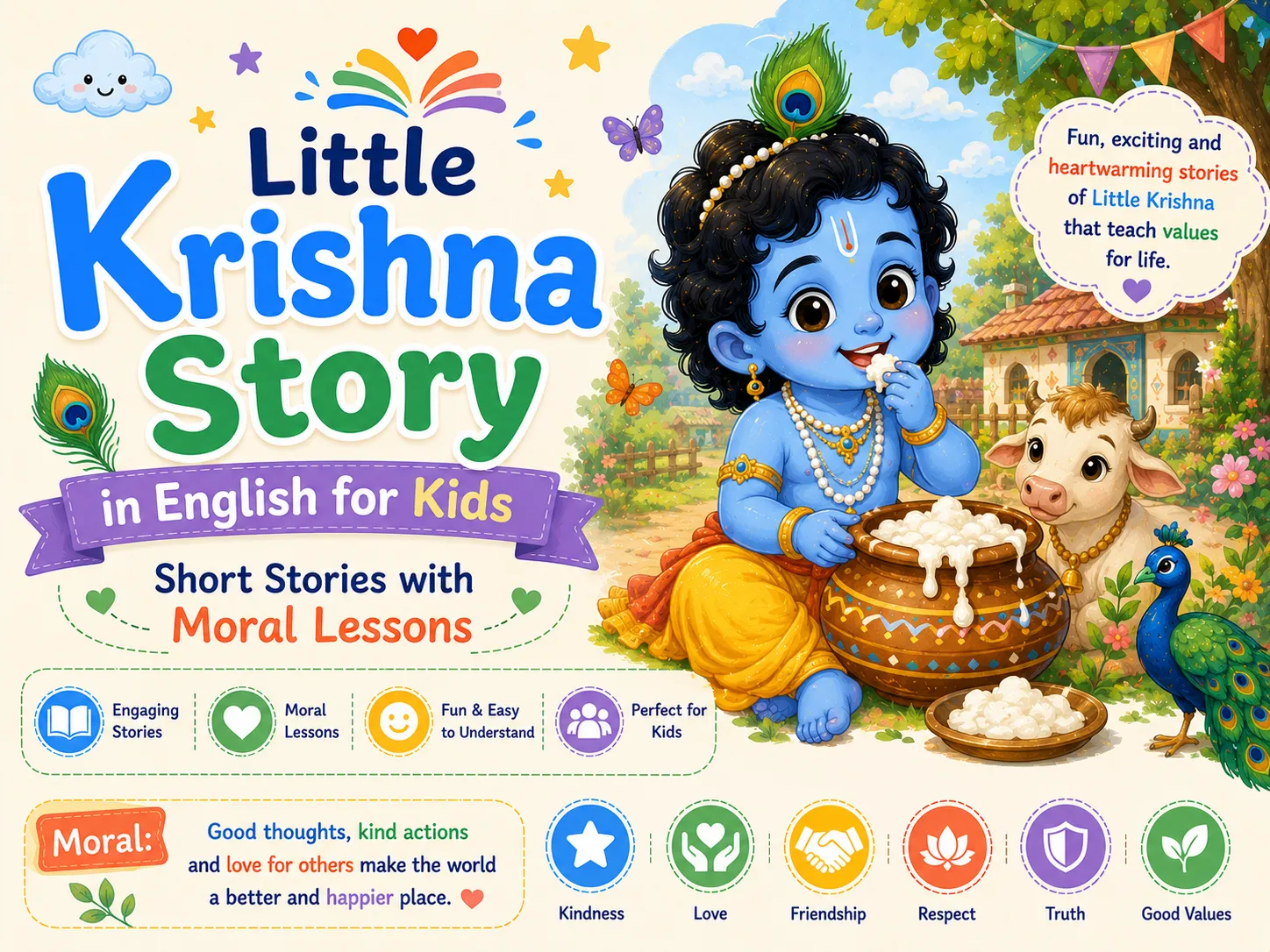
Little Krishna stories are filled with joy, love, kindness, and valuable life lessons that children can easily understand.
These short and simple stories introduce young readers to the playful childhood of Lord Krishna, who spread happiness wherever he went.
From helping friends and caring for animals to respecting elders and sharing with others, each story teaches an important moral in a fun and engaging way.
Written in easy English, these stories help children improve their reading skills, build a strong vocabulary, and develop good values.
They are perfect for bedtime reading, school activities, and family story time, making learning enjoyable and meaningful.
24 Best Little Krishna Story in English for Kids with Moral Lessons
Baby Krishna’s First Smile Brings Joy to Gokul
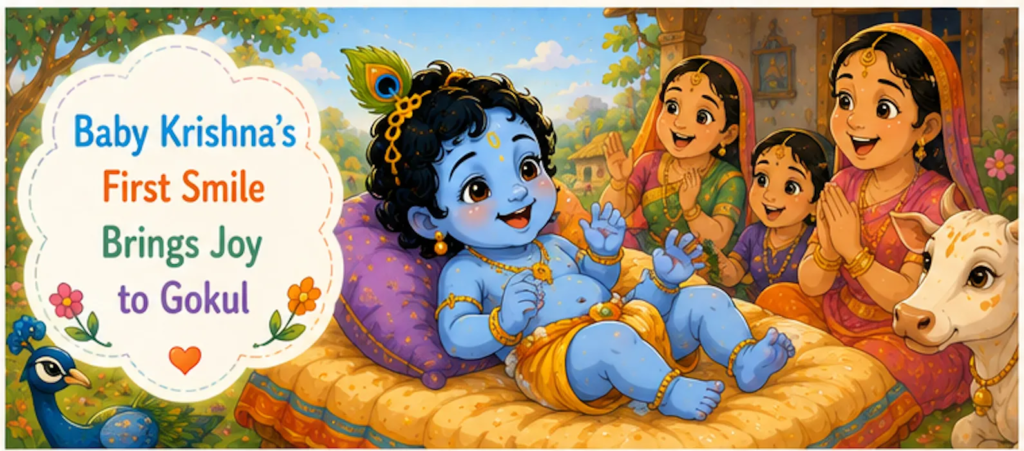
The village of Gokul was filled with happiness after the birth of little Krishna. One bright morning, Mother Yashoda gently held baby Krishna in her arms. As she looked into his sparkling eyes, Krishna gave his very first sweet smile. His smile was so warm and cheerful that everyone around him felt happy.
Nanda Baba, the cowherds, and the village women gathered to see the little child. The birds sang more sweetly, the calves jumped with joy, and even the flowers seemed to bloom brighter. Everyone believed that Krishna’s smile brought love, hope, and peace to Gokul.
Mother Yashoda hugged Krishna with great affection and thanked God for such a wonderful child. The villagers celebrated by sharing sweets and singing joyful songs.
Moral: A simple smile can spread happiness, bring people together, and brighten everyone’s day.
Mother Yashoda Sings a Lullaby to Little Krishna
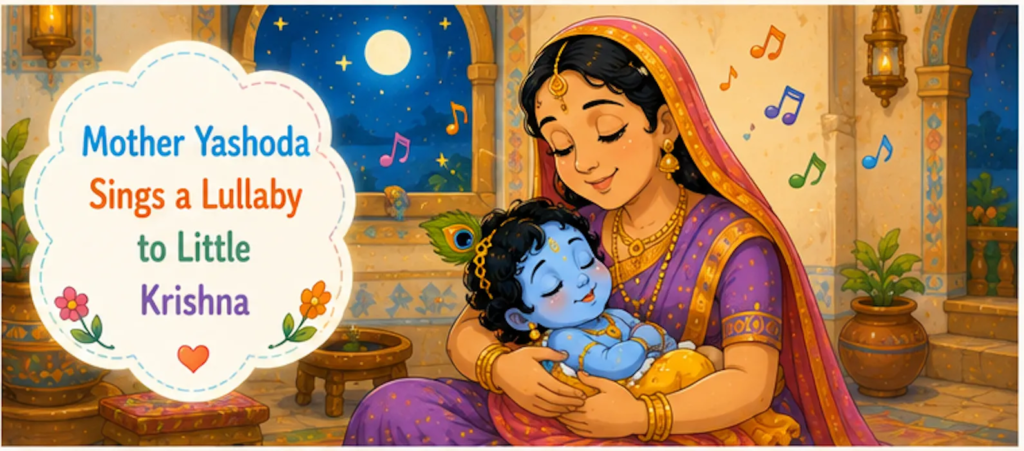
As the sun slowly set over Gokul, the village became quiet and peaceful. Mother Yashoda gently rocked little Krishna in a wooden cradle decorated with colorful flowers. Krishna had been playing happily all day and was now feeling sleepy.
With a loving smile, Yashoda began to sing a soft lullaby. Her sweet voice filled the room with warmth and comfort. Baby Krishna looked at his mother with bright eyes, smiled, and slowly closed them. Outside, the cool evening breeze whispered through the trees, and the stars began to twinkle in the sky. Even the birds became silent, as if they were listening to Yashoda’s beautiful song.
Soon, Krishna fell into a peaceful sleep. Mother Yashoda lovingly covered him with a soft cloth and thanked God for blessing her with such a wonderful child. Her gentle care and endless love made Krishna feel safe and happy.
Moral: A mother’s love, care, and kind words bring comfort, peace, and happiness to a child’s heart.
Also Read:

Little Krishna Learns to Crawl Around the House
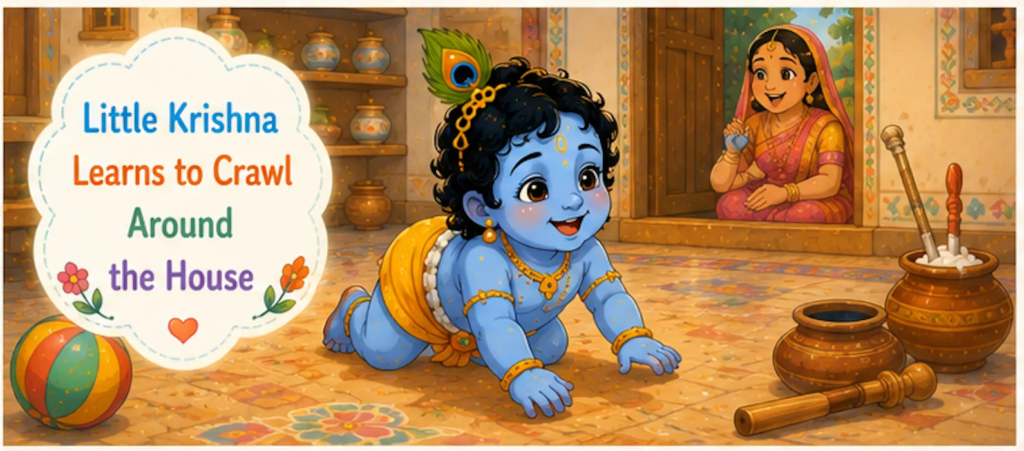
One sunny morning in Gokul, Mother Yashoda placed little Krishna on a soft mat in the courtyard. Curious about everything around him, Krishna slowly began to crawl. He giggled with joy as he moved from one corner to another, touching colorful flowers, little toys, and tiny clay pots.
Mother Yashoda watched him carefully with a smile, making sure he stayed safe. Nanda Baba laughed happily as Krishna crawled toward him with outstretched hands. The village children clapped and cheered for their little friend. Even the calves came close, as if they wanted to play with him.
Although Krishna stumbled a few times, he never gave up. He kept trying until he reached his parents, who hugged him with love and pride. Everyone celebrated this special moment with happy hearts.
From that day, Krishna became more confident and eager to explore the world around him.
Moral: Every small step toward learning is important. With courage, patience, and support from loved ones, we can grow stronger every day.
Krishna’s Tiny Footprints Fill Gokul with Wonder
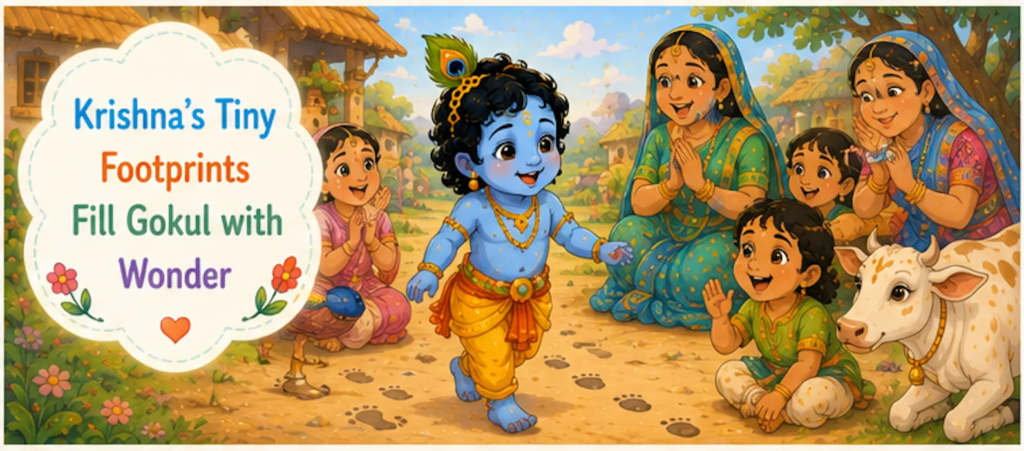
Early one morning, Mother Yashoda noticed a trail of tiny footprints on the floor of her home. Smiling with curiosity, she followed them through the courtyard and into the garden. There she found little Krishna happily playing among the flowers, laughing as butterflies fluttered around him.
The villagers soon gathered to see the adorable footprints. They believed each tiny step of Krishna spread joy, love, and blessings throughout Gokul. Children carefully placed their own feet beside Krishna’s footprints and laughed together. The cows stood peacefully nearby, and the birds sang sweet songs as if celebrating the happy moment.
Mother Yashoda gently lifted Krishna into her arms and kissed his forehead. She thanked God for filling their home with such happiness. The little footprints reminded everyone that even the smallest steps can leave a beautiful mark on the hearts of others.
Moral: Every kind action, no matter how small, can bring happiness and make a positive difference in the lives of others.
The Day Krishna Took His First Steps
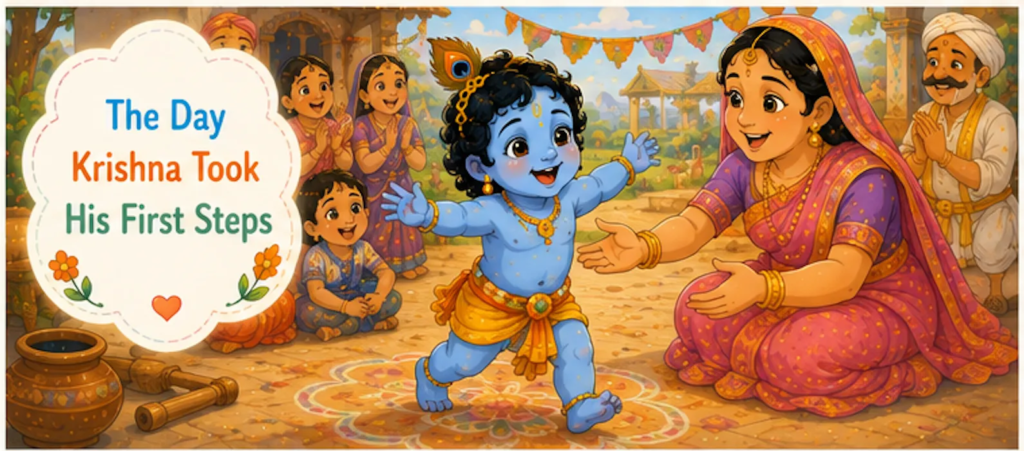
One cheerful morning in Gokul, Mother Yashoda and Nanda Baba stood in the courtyard, encouraging little Krishna to walk. Krishna held Yashoda’s finger tightly and smiled with excitement. Slowly, he lifted one tiny foot, then the other. After a few careful steps, he wobbled and almost fell, but Yashoda gently supported him.
Krishna did not give up. He tried again with determination. This time, he walked all by himself toward Nanda Baba, who welcomed him with open arms. Everyone clapped with joy, and the village children laughed happily. The cows mooed softly, and the birds seemed to sing in celebration of Krishna’s special achievement.
Mother Yashoda hugged Krishna with pride and blessed him with love. From that day on, Krishna became more confident and enjoyed exploring every corner of Gokul.
Moral: Success comes through patience and repeated effort. Every small achievement is the beginning of a wonderful journey.
Also Read:

Krishna Loves Playing with Calves in the Meadow
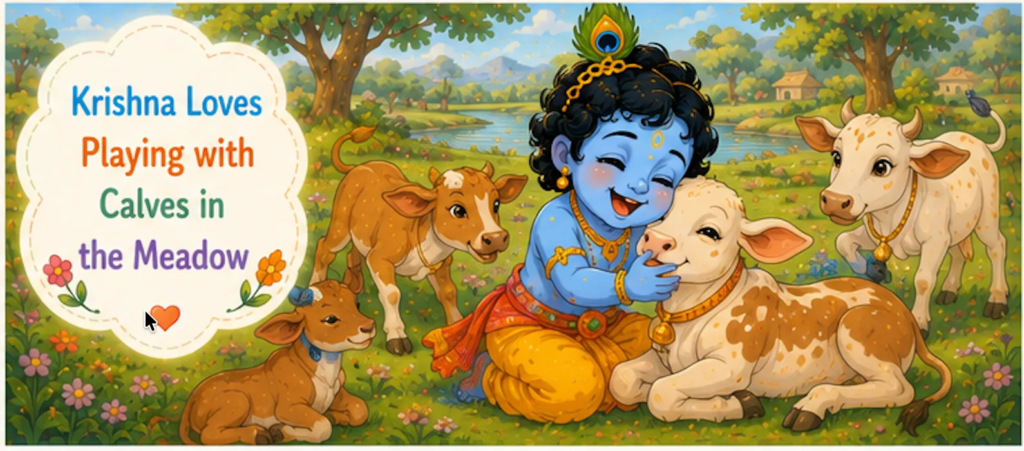
One bright morning, little Krishna walked to the green meadow near Gokul with Mother Yashoda’s permission. There, several playful calves were grazing on the fresh grass. Krishna gently patted their heads and called each one with a loving voice. The calves happily ran toward him, wagging their tails and jumping around.
Krishna laughed with delight as he played gentle games with them. He picked fresh leaves for the calves and made sure every one of them had enough to eat. The village children joined him, and together they enjoyed running through the fields without troubling the animals. The peaceful meadow echoed with laughter, birdsong, and the soft sounds of happy calves.
When it was time to return home, Krishna lovingly waved goodbye to his animal friends. The calves watched him leave, hoping he would come back soon.
Moral: Showing kindness and care to animals teaches us love, responsibility, and respect for all living beings.
Little Krishna Makes Friends with the Village Children
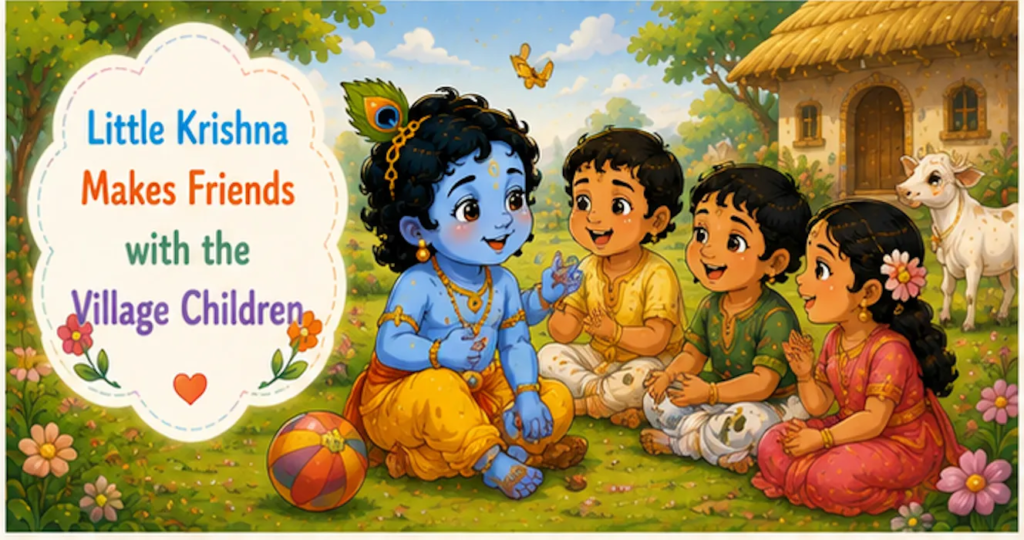
One pleasant afternoon in Gokul, little Krishna saw a group of children playing near the village well. With a bright smile, he walked over and asked if he could join their game. The children happily welcomed him, and soon they were running, laughing, and playing together.
When one young boy felt left out because he was shy, Krishna gently held his hand and invited him to join the game. Everyone cheered, and the boy’s face lit up with happiness. Krishna made sure that every child had a chance to play, and no one was left behind.
As the sun began to set, the children sat under a big tree and shared fruits and stories. They thanked Krishna for making the day so special. From then on, the children of Gokul became close friends who always cared for one another.
Moral: True friendship means including everyone, sharing with others, and making sure no one feels alone.
Also Read:
Krishna’s Sweet Habit of Sharing His Food
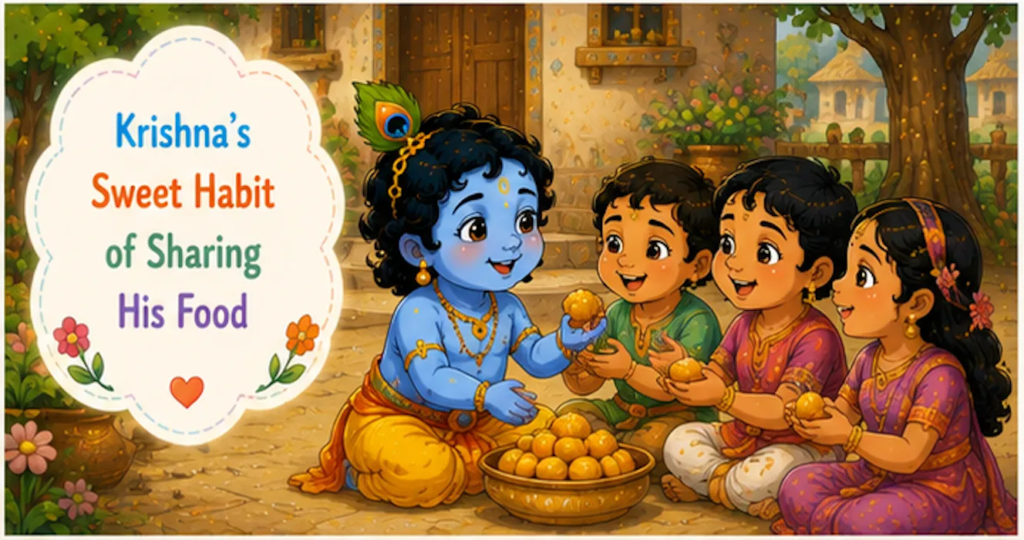
One morning in Gokul, Mother Yashoda packed a small basket of fresh fruits, butter, and homemade sweets for little Krishna. As Krishna walked through the village, he met a few children who had forgotten to bring their snacks. Without thinking twice, Krishna smiled and shared his food with them.
The children thanked him with happy hearts. Soon, they all sat together under the shade of a large tree, enjoying the meal while laughing and telling fun stories. Even a hungry calf wandered nearby, and Krishna lovingly offered it a few fresh leaves. Everyone admired his caring nature and generous heart.
When Krishna returned home, Mother Yashoda noticed the empty basket. After hearing what had happened, she hugged him proudly and said, “Food tastes even sweeter when it is shared with others.”
From that day on, the children of Gokul remembered Krishna’s kindness and learned to share whatever they had.
Moral: Sharing with others brings joy, strengthens friendships, and teaches us to care for everyone.
Mother Yashoda Dresses Krishna for a Festival

The village of Gokul was filled with excitement as everyone prepared for a colorful festival. Early in the morning, Mother Yashoda lovingly bathed little Krishna and dressed him in a bright yellow dhoti. She placed a small peacock feather in his hair and tied tiny ankle bells that jingled as he walked. Krishna looked cheerful and smiled with delight.
Nanda Baba admired Krishna’s festive clothes and blessed him with love. The villagers decorated their homes with flowers and colorful rangoli. Children danced happily while musicians played joyful tunes. Krishna greeted everyone with kindness and shared sweets with his friends. His gentle smile and polite manners made the celebration even more special.
As evening arrived, the village gathered to offer prayers and thank God for the blessings of family, friendship, and happiness. Mother Yashoda felt proud to see Krishna spreading joy wherever he went.
Moral: Festivals become truly meaningful when we celebrate with love, kindness, gratitude, and respect for everyone.
Krishna Helps a Lost Calf Find Its Mother
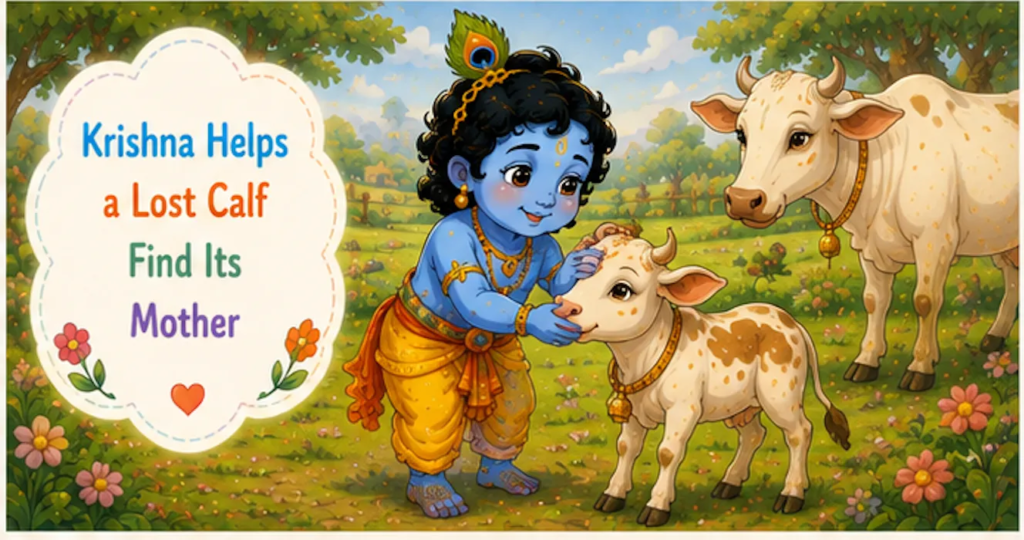
One peaceful morning in Gokul, little Krishna heard a soft cry coming from a nearby meadow. He walked closer and found a small calf looking frightened and alone. The calf had wandered away from its mother and did not know the way back.
Krishna gently stroked the calf to calm it down. He spoke to it with kindness and slowly led it through the grassy fields. Along the way, he asked the cowherds if they had seen a worried cow searching for her baby. Soon, they heard a loud, loving moo from across the meadow. The calf quickly ran toward its mother, and the two were happily reunited.
The villagers smiled as they watched the joyful scene. They praised Krishna for his caring heart and his willingness to help without expecting anything in return. Krishna simply smiled, happy to see the mother and calf together again.
Moral: Helping those in need with kindness and compassion brings happiness to everyone and makes the world a better place.
Little Krishna’s Favorite Swing in Vrindavan
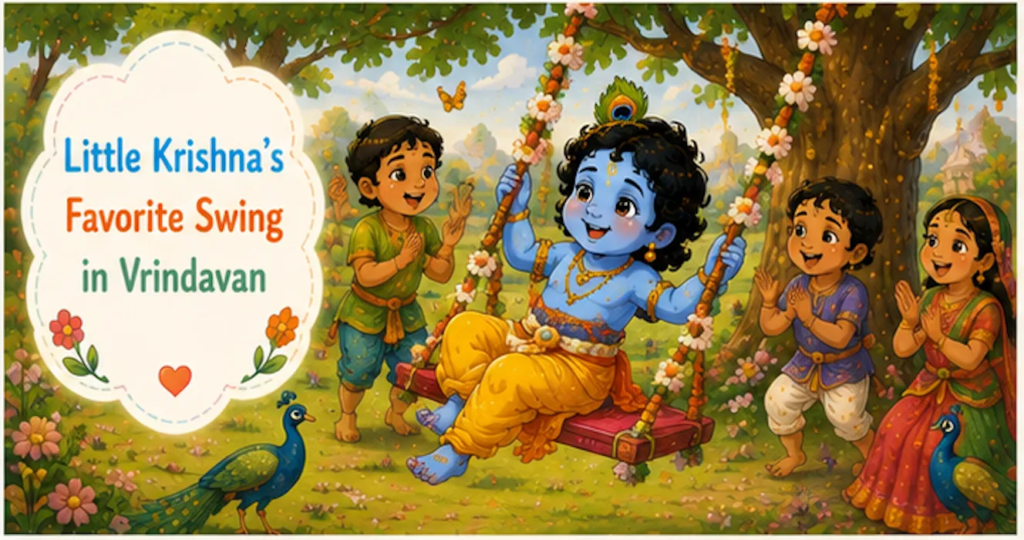
One beautiful morning in Vrindavan, little Krishna ran to his favorite swing hanging from the strong branches of a large banyan tree. The swing was decorated with colorful flowers and green leaves by the village children. Krishna sat on it with a joyful smile as his friends gently pushed the swing higher.
The cool breeze brushed against their faces, and the sweet songs of birds filled the air. Krishna laughed with delight while watching butterflies dance among the blooming flowers. Soon, more children arrived to take turns on the swing. Krishna happily shared it with everyone, making sure each friend had a chance to enjoy the fun.
Mother Yashoda watched from a distance with a loving smile. She was happy to see Krishna playing kindly and including everyone. As the sun began to set, the children returned home with cheerful hearts, remembering the wonderful day they had spent together.
Moral: True happiness grows when we share, take turns, and make everyone feel included.
Krishna Welcomes the First Rain with Dance
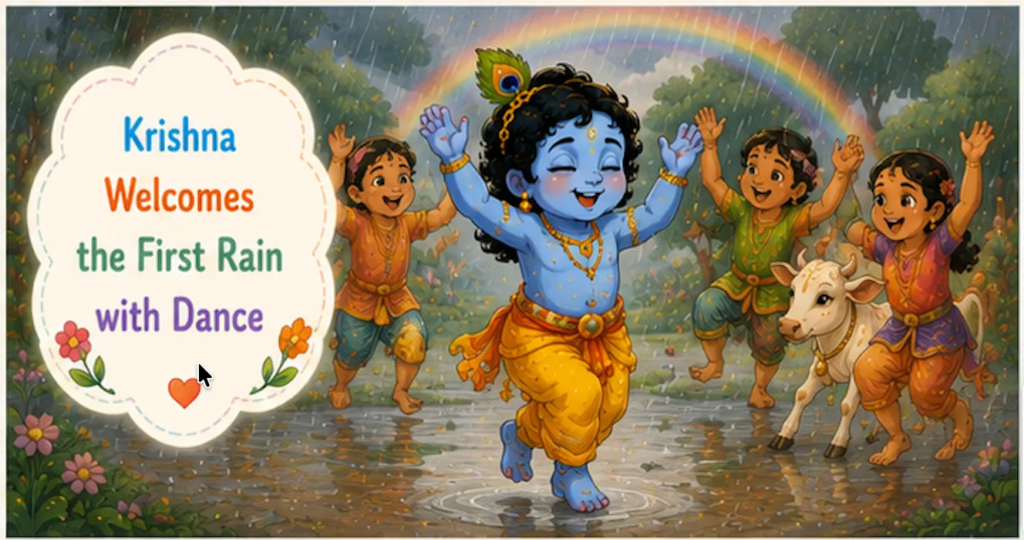
After many warm summer days, dark clouds gathered over Gokul. The villagers looked up with hope, waiting for the first rain of the season. Soon, cool raindrops began to fall, bringing fresh fragrance to the earth. Little Krishna stretched out his hands, laughed with joy, and began to dance in the gentle rain.
The village children joined him, splashing in tiny puddles and twirling happily. The peacocks spread their colorful feathers and danced, while the trees and flowers looked fresh and bright. Mother Yashoda smiled as she watched Krishna enjoy nature with respect and happiness. After the rain stopped, a beautiful rainbow appeared across the sky. Krishna pointed at it with wonder and thanked God for the gift of rain that helped the fields, animals, and people.
Everyone returned home with joyful hearts, grateful for nature’s blessings.
Moral: We should be thankful for nature’s gifts and celebrate them with joy, care, and gratitude.
Krishna Comforts a Crying Friend
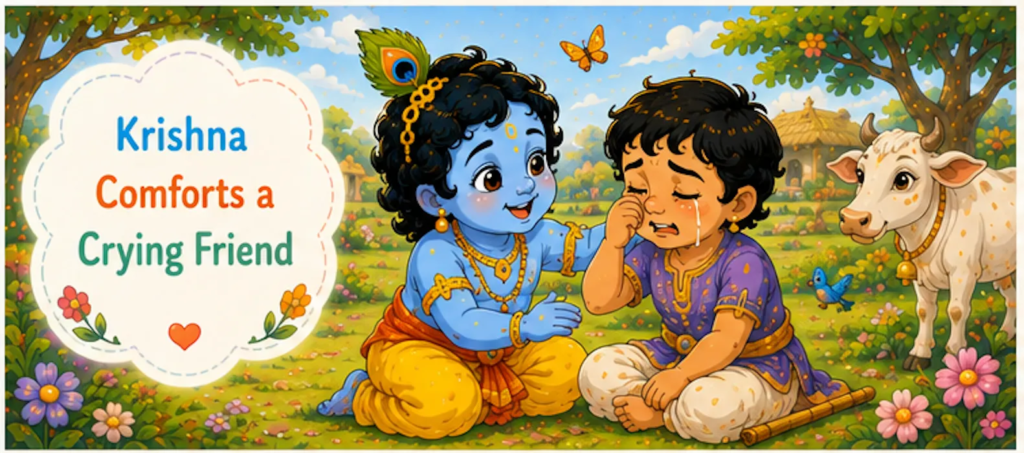
One afternoon in Gokul, little Krishna was playing with his friends near the riverbank. Suddenly, he noticed his friend Madhav sitting alone under a tree with tears in his eyes. Krishna walked over gently and asked, “What happened, my friend?”
Madhav explained that he had accidentally broken his favorite toy while playing. He felt very sad because it had been a gift from his grandfather. Krishna smiled kindly and sat beside him. “A toy can be replaced, but your smile is precious,” he said. Then Krishna gathered a few twigs, leaves, and flowers, and together they made a new toy. Soon, the other children joined in, adding their own ideas.
Madhav forgot his sadness and laughed happily with his friends. He thanked Krishna for cheering him up and teaching him that friendship is more valuable than any toy.
Moral: A kind word, a helping hand, and true friendship can turn someone’s sadness into happiness.
Baby Krishna Learns the Value of Saying “Thank You”
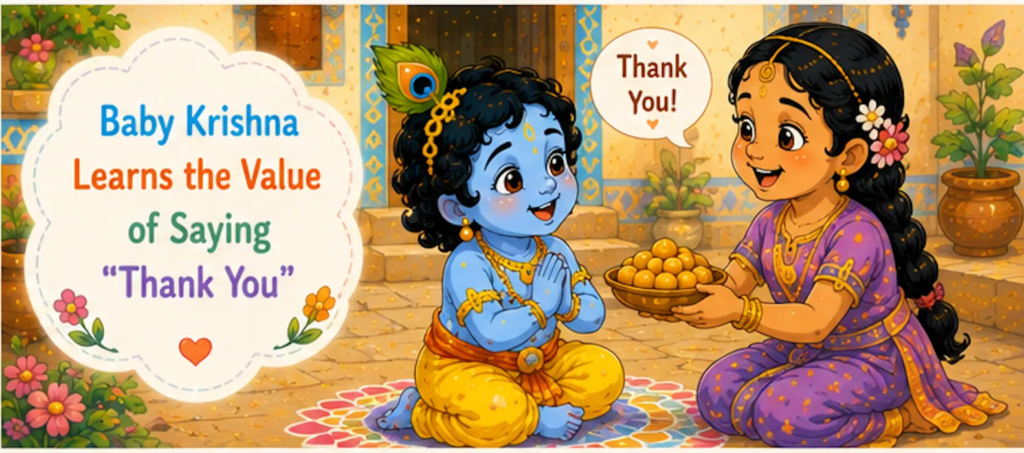
One sunny morning in Gokul, Mother Yashoda gave little Krishna a bowl of fresh butter and warm milk. Krishna smiled brightly and said, “Thank you, Mother.” Yashoda hugged him and explained that showing gratitude makes every gift more meaningful.
Later, Krishna went outside to play with his friends. A kind neighbor offered the children sweet fruits from her garden. Krishna accepted them politely and thanked her with a cheerful smile. The neighbor felt happy and blessed the children. On the way home, Krishna met an old cowherd who helped him cross a muddy path. Once again, Krishna folded his hands and said, “Thank you.”
Watching Krishna’s good manners, the village children also began thanking their parents, teachers, and elders for their kindness. Gokul became an even happier place because everyone appreciated one another.
Moral: Saying “thank you” is a simple habit that shows gratitude, spreads kindness, and makes relationships stronger.
Krishna Shows Kindness to Birds and Animals
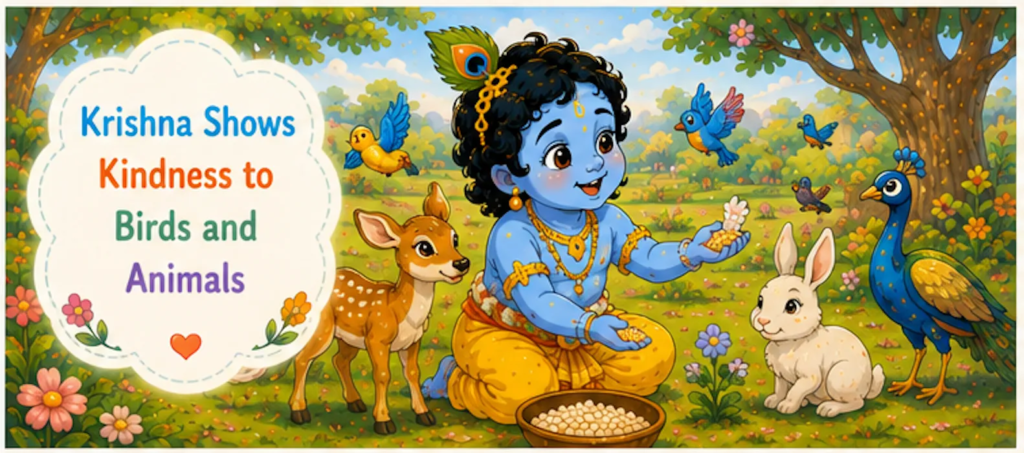
One calm morning in Gokul, little Krishna went for a walk with his friends. As they crossed a grassy field, they saw a small bird with a hurt wing sitting under a tree. The bird looked frightened and could not fly.
Krishna gently picked up the bird and placed it in a safe basket lined with soft leaves. He gave it a little water and asked his friends to bring some grains. The children took turns caring for the bird every day. Nearby, Krishna also noticed a thirsty calf. He filled a small bowl with clean water so the calf could drink.
After a few days, the bird’s wing became strong again. Krishna smiled as it flew high into the blue sky. The children clapped with joy, happy that their care had helped both the bird and the calf.
From that day on, the children of Gokul promised to protect and care for all living creatures.
Moral: Kindness to animals and birds shows a caring heart and helps make the world a happier place.
Little Krishna Plants a Small Tree with His Friends
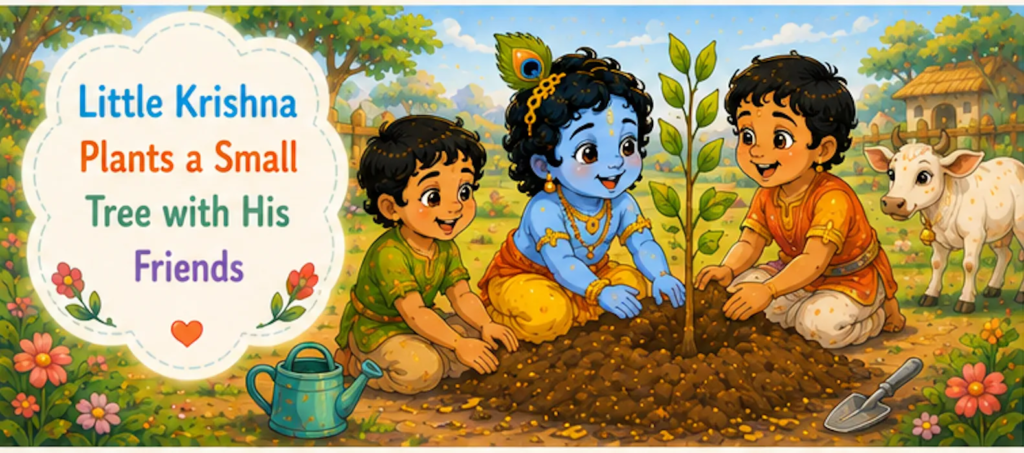
One bright morning in Gokul, little Krishna noticed an empty patch of land near the village playground. He smiled and said to his friends, “Let us plant a tree here. It will give shade, fresh air, and fruits to everyone.”
The children eagerly gathered a small mango sapling, water, and garden tools. Together, they carefully dug a hole and placed the young tree in the soil. Krishna gently covered its roots with earth and poured water around it. Every child promised to take turns watering the sapling and protecting it from animals.
Days passed, and the little tree began to grow strong green leaves. Birds soon built tiny nests in its branches, and travelers rested under its cool shade. The villagers praised the children for their thoughtful work, and everyone felt proud of their effort.
Krishna smiled happily, knowing that one small act of care could bring joy to many for years to come.
Moral: Planting and caring for trees is a gift to nature that benefits people, animals, and future generations.
Krishna’s Happy Morning in Nanda Baba’s Courtyard
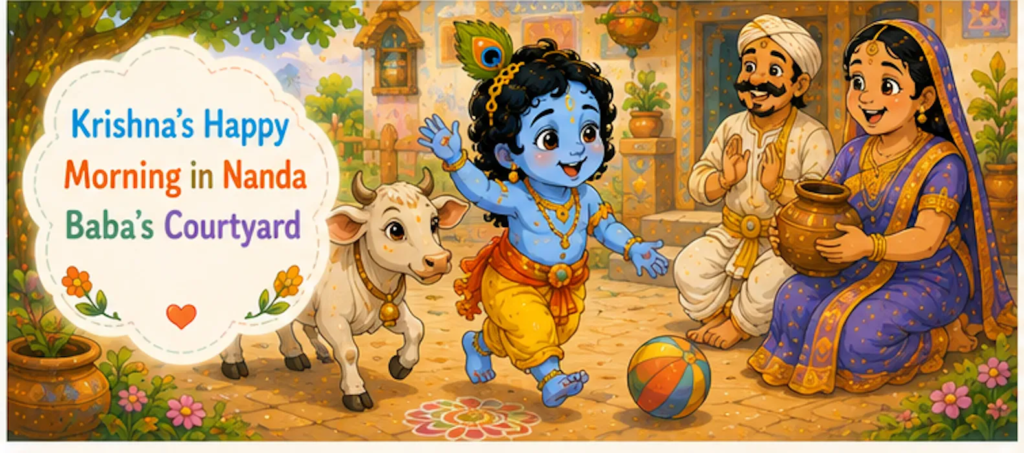
The first rays of the sun filled Nanda Baba’s courtyard with a golden glow. Little Krishna woke up early with a cheerful smile and ran outside to greet everyone. Mother Yashoda welcomed him with a warm hug and served him fresh milk and butter for breakfast.
After eating, Krishna helped scatter grains for the birds. Sparrows and pigeons quickly gathered, filling the air with happy chirping. He then patted the gentle calves and greeted the cows with love. The village children arrived, and together they swept the courtyard, watered the flowering plants, and laughed as they worked.
Nanda Baba praised the children for helping with simple daily tasks. Krishna reminded his friends that caring for their home and animals was just as important as playing. Soon, the courtyard looked clean, colorful, and full of life.
Everyone began the day with happy hearts, thankful for their family, friends, and the peaceful village of Gokul.
Moral: Starting the day with gratitude, kindness, and helpfulness brings happiness to everyone around us.
The Village Celebrates Little Krishna’s Birthday
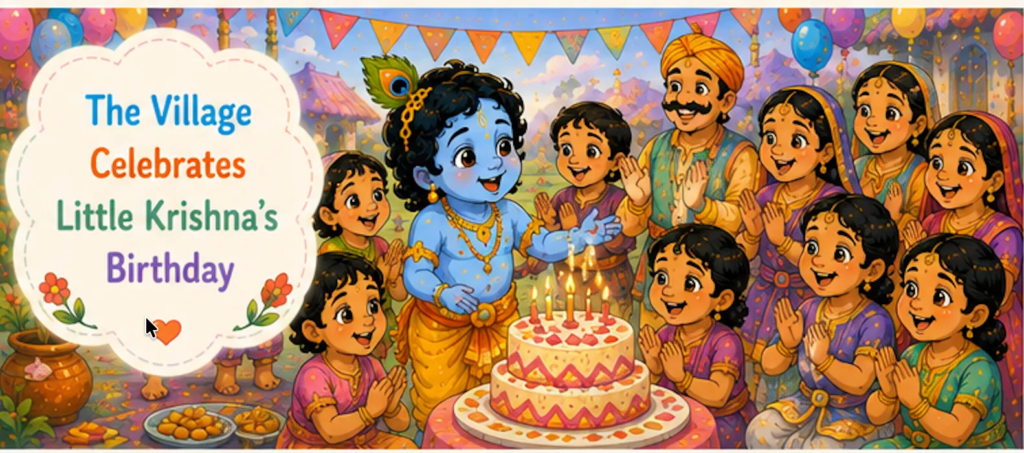
The people of Gokul woke up early with excitement because it was little Krishna’s birthday. Mother Yashoda decorated the house with fresh flowers, colorful garlands, and beautiful rangoli. Nanda Baba invited all the villagers to join the celebration.
Krishna wore a bright yellow dhoti and a tiny peacock feather on his head. Everyone smiled as they wished him a happy birthday. The children sang cheerful songs, danced together, and played fun games in the courtyard. Mother Yashoda lovingly served butter, sweets, fruits, and delicious food to every guest. Krishna happily shared his treats with his friends and thanked everyone for coming.
The elders blessed Krishna with love, good health, and wisdom. As the evening ended, the villagers lit small lamps and offered prayers for peace and happiness. The celebration filled Gokul with laughter, love, and togetherness, creating memories that everyone would cherish for a long time.
Moral: Birthdays are a wonderful time to share joy, show gratitude, and celebrate with family, friends, and kindness.
Krishna Teaches Friends to Play Fair
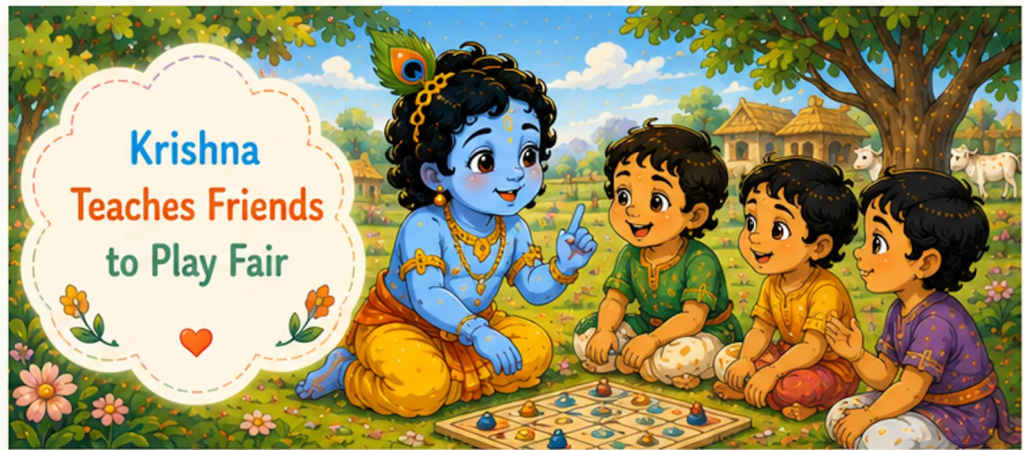
One pleasant afternoon in Gokul, little Krishna and his friends gathered in a green field to play a running game. Everyone was excited to win. During the game, one boy quietly skipped a rule so he could reach the finish line first. Some children became upset and started arguing.
Krishna gently raised his hand and said, “Winning is wonderful, but being honest is even more important.” He explained that games are meant to bring fun, friendship, and learning, not quarrels. The boy realized his mistake, apologized to everyone, and agreed to play by the rules.
The children smiled, forgave their friend, and started the game again. This time, everyone played fairly, cheered for one another, and enjoyed every moment. At the end, they congratulated the winner with happy hearts, knowing that honesty made the victory truly special.
As they walked home together, the children thanked Krishna for teaching them an important lesson.
Moral: Playing fairly, being honest, and respecting the rules are the true signs of good character.
Little Krishna Saves a Butterfly Stuck in a Flower
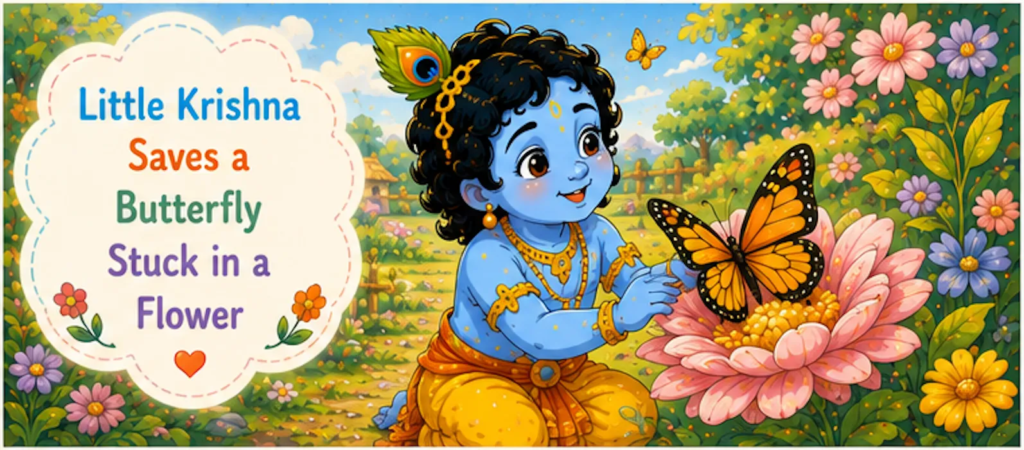
One bright spring morning, little Krishna was walking through a beautiful garden in Gokul. Colorful flowers bloomed all around, and butterflies danced happily in the warm sunshine. Suddenly, Krishna noticed a tiny butterfly struggling inside a large flower. Its delicate wings had become trapped between the petals.
Krishna carefully knelt beside the flower and gently opened the petals with his small hands. The butterfly slowly fluttered free and rested on Krishna’s finger for a moment, as if thanking him. Soon, it flew gracefully into the sky, joining the other butterflies.
Krishna’s friends watched with smiles and asked why he had helped such a tiny creature. Krishna replied, “Every living being, no matter how small, deserves love and care.” The children nodded and promised to always protect nature and never harm animals or insects without reason.
They spent the rest of the day enjoying the garden and admiring its beauty with grateful hearts.
Moral: Every living creature is precious. Kindness and compassion make the world a safer and happier place for all.
Krishna Brings Peace After a Small Argument
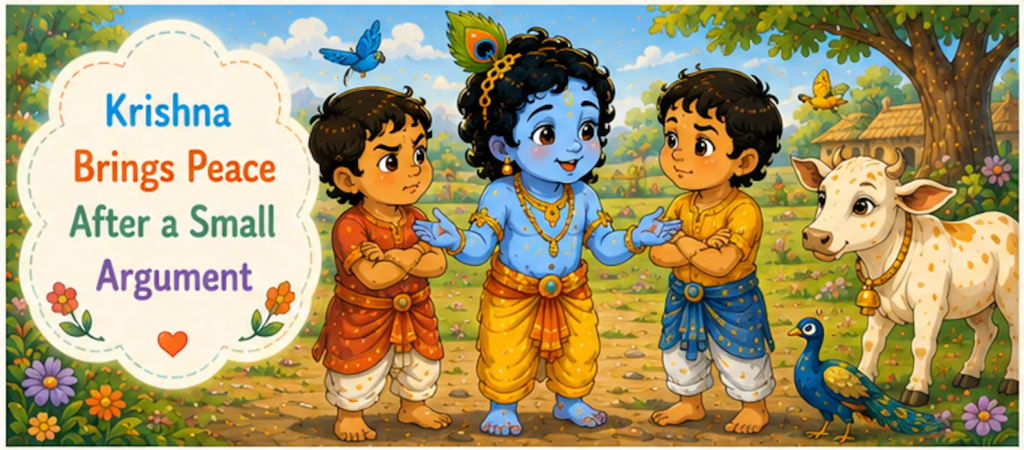
One afternoon in Gokul, little Krishna saw two of his friends arguing over a colorful wooden cart. Both wanted to play with it first, and soon they stopped talking to each other. The other children felt sad because the fun had come to an end.
Krishna walked over with a gentle smile and listened patiently to both friends. He said, “A good friend thinks about others, not just himself.” Then he suggested that they take turns playing with the cart. While one child played, the other could help build a small track using stones and sticks.
The friends liked Krishna’s idea. They apologized to each other, shook hands, and soon everyone was laughing and playing together again. The game became even more enjoyable because everyone worked as a team.
As they returned home, the children thanked Krishna for helping them solve the problem with kindness and understanding.
Moral: Listening patiently, sharing fairly, and forgiving others can turn arguments into friendship and bring peace to everyone.
Krishna Surprises Everyone with His Beautiful Flute Tune
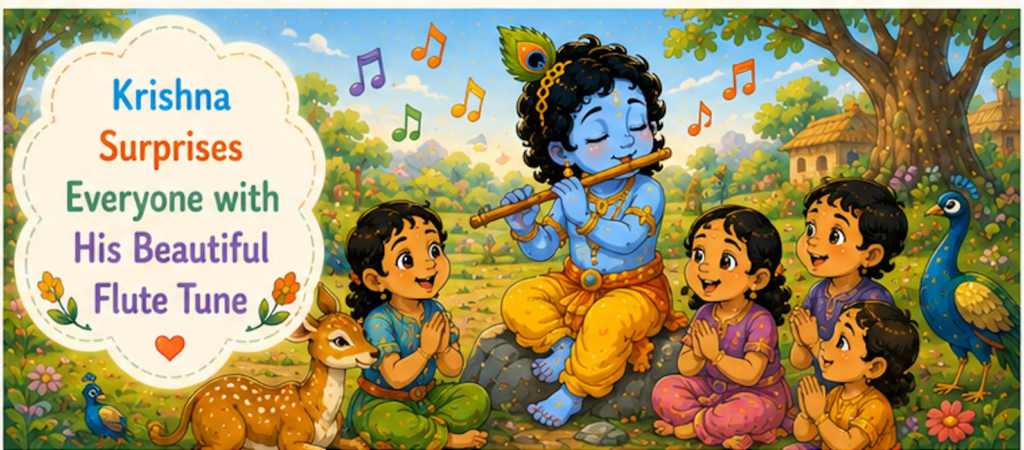
One peaceful evening in Gokul, little Krishna picked up a small flute that Nanda Baba had lovingly made for him. Sitting under a shady tree, Krishna gently blew into the flute. A soft and sweet melody filled the air, making everyone stop and listen.
The birds perched quietly on the branches, the calves gathered nearby, and the cool breeze seemed to dance with the music. The village children smiled with delight and sat beside Krishna, enjoying the beautiful tune. Even the elders closed their eyes for a moment, feeling calm and peaceful.
When the music ended, the villagers praised Krishna for sharing such joy through his flute. Krishna smiled and said, “Music becomes more beautiful when it brings happiness to others.” Inspired by his words, the children sang cheerful songs together as they walked home.
That evening, Gokul was filled with harmony, laughter, and thankful hearts.
Moral: Music has the power to spread peace, bring people together, and fill every heart with joy.
Little Krishna’s Picnic by the Yamuna River
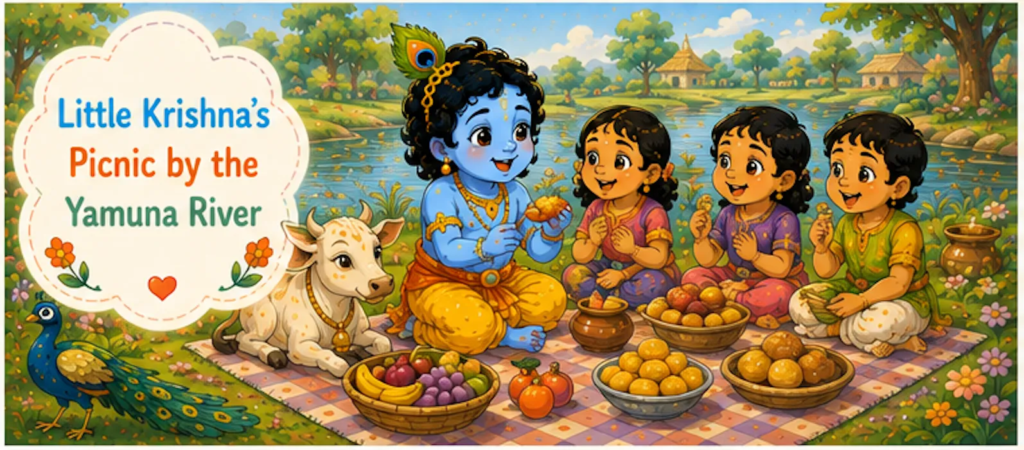
One bright morning, Mother Yashoda packed a basket of fresh fruits, butter, rotis, and sweets for little Krishna and his friends. Together, they walked to the peaceful banks of the Yamuna River. The cool breeze, green trees, and singing birds made the place perfect for a picnic.
Before eating, Krishna reminded everyone to wash their hands and thank God for the delicious food. The children sat in a circle and happily shared everything from the basket. After the meal, they collected the fruit peels and other waste instead of leaving the place dirty. Krishna explained that nature should always be kept clean and beautiful.
The friends spent the afternoon playing games, watching fish swim in the river, and listening to the cheerful songs of birds. As the sun began to set, they returned home with joyful hearts and wonderful memories.
Moral: Sharing with friends, keeping nature clean, and being thankful for what we have bring true happiness.
A Day Full of Fun in Little Krishna’s Childhood
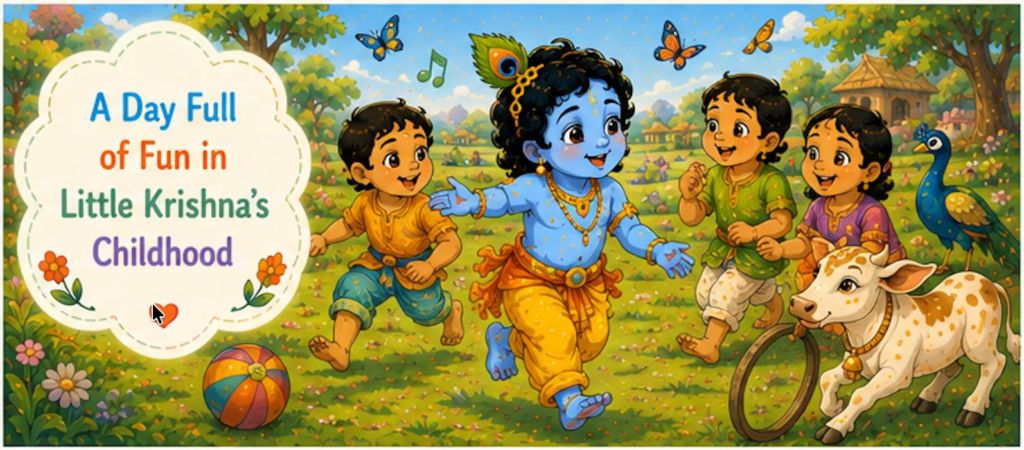
One sunny day in Gokul, little Krishna woke up early with a bright smile. After enjoying breakfast with Mother Yashoda and Nanda Baba, he ran outside to meet his friends. They played hide-and-seek, flew colorful kites, and laughed as they chased each other through the green fields.
Later, Krishna helped an elderly villager carry a basket of fresh vegetables. The grateful villager blessed him for his kindness. In the afternoon, Krishna and his friends sat under a large tree, sharing fruits and telling cheerful stories. They also gave water to thirsty birds and calves before returning home.
As evening arrived, Krishna watched the golden sunset with his family. Mother Yashoda lovingly tucked him into bed, and Krishna thanked her for such a happy day filled with love, friendship, and fun.
He closed his eyes with a peaceful smile, looking forward to another joyful adventure.
Moral: A happy life is built through kindness, helping others, sharing with friends, and being thankful for every day.
What Kids Can Learn from These Little Krishna Stories
The Little Krishna stories teach children many important values in a simple and enjoyable way. Through Krishna’s everyday adventures, kids learn that kindness, honesty, and sharing make life happier. They understand the importance of helping others, respecting parents, teachers, elders, friends, animals, and nature.
These stories also encourage children to be grateful for what they have, include everyone in games, solve problems peacefully, and never give up when learning something new. Krishna’s cheerful nature reminds children to smile, stay positive, and spread happiness wherever they go.
By reading these stories, children also develop good habits such as saying “thank you,” caring for the environment, keeping places clean, taking turns, playing fairly, and showing compassion to all living beings. They learn that even small acts of kindness can make a big difference.
Most importantly, these stories inspire children to grow into loving, responsible, respectful, and confident individuals who make the world a better place through their actions.
How These Little Krishna Stories Help Kids Respect Older People
The Little Krishna stories teach children to respect older people through Krishna’s loving words and thoughtful actions. In many stories, Krishna listens carefully to Mother Yashoda, Nanda Baba, elders, and teachers. He speaks politely, follows their guidance, and shows gratitude for their love and care. These examples encourage children to treat parents, grandparents, teachers, and other elders with kindness and respect.
The stories also show that older people have valuable knowledge and life experience. By listening to their advice, children learn important lessons about honesty, patience, responsibility, and good behavior. Krishna’s habit of helping elders with small tasks teaches children to be caring and thoughtful in everyday life.
As children read these stories, they understand that respect is shown through polite words, good manners, helping hands, and a grateful heart. These positive habits strengthen family relationships, build good character, and help children become responsible and compassionate individuals who value and honor older people throughout their lives.
Conclusion
Little Krishna stories are more than entertaining tales—they are a wonderful way to teach children positive values that last a lifetime. Through Krishna’s kindness, honesty, courage, gratitude, and compassion, kids learn how to become caring, respectful, and responsible individuals. These stories also encourage children to protect nature, help others, play fairly, and always choose what is right. With simple language and meaningful lessons, they inspire young minds to grow with confidence and good character. Reading Little Krishna stories regularly can strengthen a child’s imagination, improve language skills, and fill their hearts with love, wisdom, and happiness every day.
