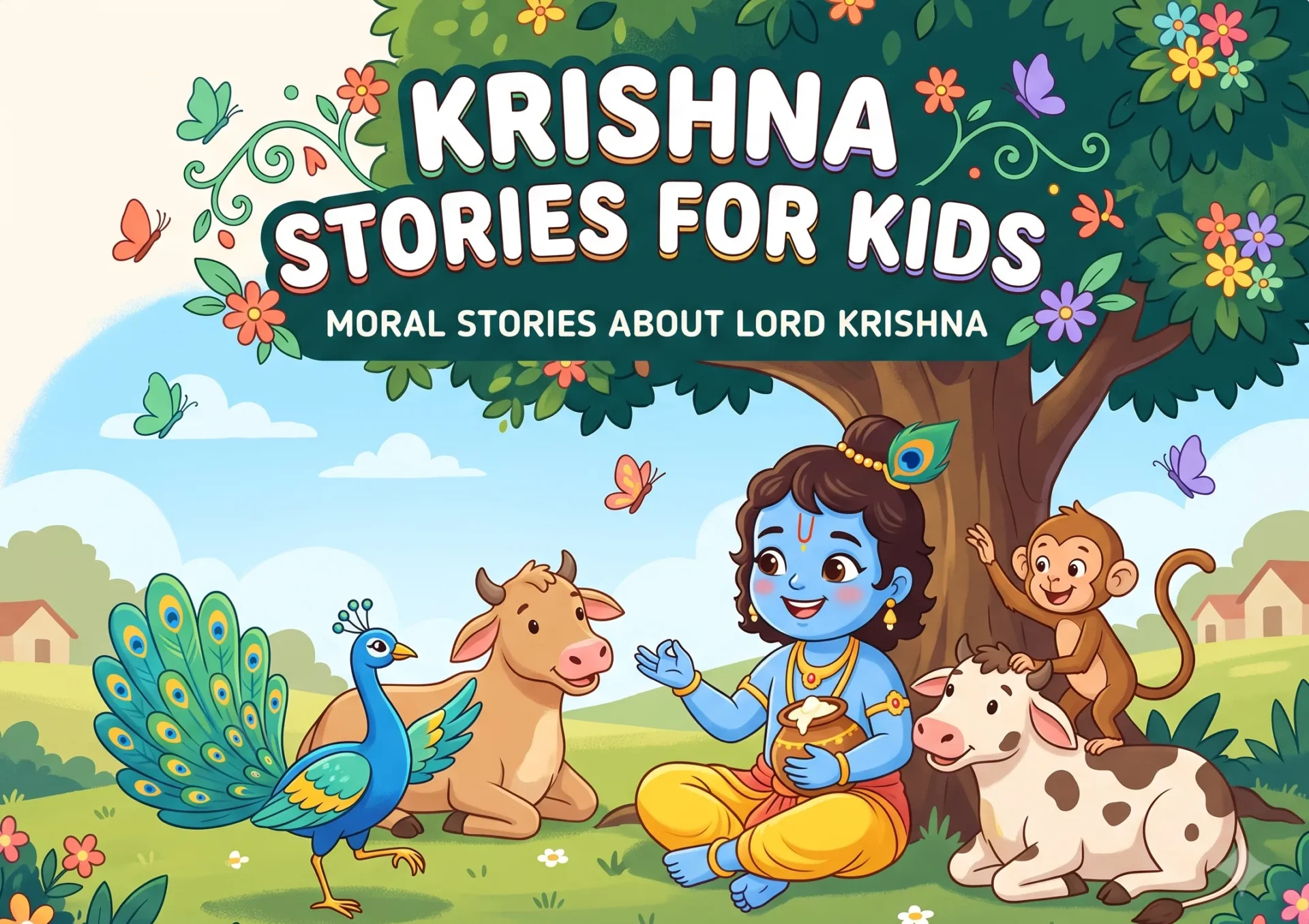
Krishna stories for kids are a wonderful way to introduce children to timeless values through fun and meaningful adventures.
From Baby Krishna’s playful butter pranks to his acts of courage, kindness, and friendship, each story teaches an important life lesson in a simple and engaging way.
These stories help children understand values like honesty, sharing, compassion, respect, and bravery while enjoying exciting tales from Indian tradition.
Whether you are a parent, teacher, or caregiver, these Krishna stories are perfect for bedtime, classroom reading, or family story time.
They inspire young minds to become kind, confident, and thoughtful individuals while making reading enjoyable.
21 Best Krishna Stories for Kids in English
Table of Contents
Baby Krishna and the Butter Pot
Little Krishna loved butter more than anything.
One morning, Mother Yashoda carefully hung a pot of fresh butter high from the ceiling, thinking Krishna could never reach it.
But clever Krishna smiled. He called his friends, and together they stacked small wooden stools. Krishna climbed to the top, reached the butter pot, and happily shared the butter with everyone.
Just then, Mother Yashoda walked in. Instead of getting angry, she laughed because Krishna had shared the butter with his friends instead of keeping it all for himself.
From that day, everyone in the village remembered that true happiness grows when we share what we have with others.
Moral: Sharing with others brings more joy than keeping everything for yourself.
The Day Krishna Defeated the Serpent Kaliya
The River Yamuna had become dangerous because a giant serpent named Kaliya lived in its waters.
The poison from the serpent made the water unsafe for people, animals, and birds.
One day, little Krishna saw everyone living in fear.
Without hesitation, he jumped into the river to face Kaliya.
The serpent tried to scare Krishna, but Krishna remained calm and brave.
He climbed onto Kaliya’s many heads and danced gracefully until the serpent realized his mistake.
Kaliya promised never to harm anyone again and left the river with his family. Soon, the Yamuna became clean, and the villagers rejoiced.
Everyone thanked Krishna for protecting them and teaching mercy along with courage.
Moral: True courage means protecting others and showing kindness even to those who make mistakes.
Krishna Lifts Govardhan Hill to Save the Village
Dark clouds covered the sky, and heavy rain began to fall over Gokul.
The strong winds frightened the villagers and their cows. Everyone wondered how they could stay safe.
Little Krishna smiled and gently lifted the mighty Govardhan Hill with just one finger.
The villagers, along with all the animals, gathered safely beneath the hill.
For seven days and seven nights, Krishna held the hill without getting tired.
The people of Gokul helped one another, shared food, and cared for every animal.
At last, the rain stopped, and the sun shone brightly again.
The villagers thanked Krishna for saving them and for showing the power of faith, courage, and unity.
Moral: When we stay brave, help one another, and trust in goodness, we can overcome even the biggest challenges.
The Little Cowherd Who Loved Every Cow
Every morning, young Krishna took the village cows to the green meadows.
He knew each cow by name and treated them with love and care. If a calf was hungry, Krishna made sure it found its mother.
If a cow was tired, he let it rest under the cool shade of a tree.
As he played his flute, the cows gathered happily around him and followed him wherever he went.
One evening, a little calf wandered away from the herd.
Krishna searched patiently until he found it and safely brought it back.
The villagers admired his kindness toward every living creature and learned that even small acts of care make a big difference.
Moral: Kindness and compassion toward animals show the goodness in our hearts.
Also Read:
How Krishna Became Friends with Sudama
Krishna and Sudama studied together in the same gurukul.
They learned their lessons, played games, and helped each other every day.
Although Krishna was a prince and Sudama came from a poor family, they never cared about money or status.
Their friendship was built on love, trust, and respect.
Years later, Sudama visited Krishna with a small bag of flattened rice as a gift.
Krishna welcomed his old friend with great joy, hugged him warmly, and treated him like a special guest.
He happily accepted Sudama’s simple gift because it was given with love.
Sudama returned home with a grateful heart and found that his family had been blessed with everything they needed.
Moral: True friendship is based on love, kindness, and respect, not on wealth or social status.
Krishna and the Mischievous Monkey’s Lesson
One sunny morning,
a playful monkey kept snatching fruits from the villagers’ baskets and running away.
The villagers became upset and chased the monkey, but it only became more frightened.
Little Krishna gently called the monkey and offered it a ripe banana. The monkey slowly came closer and ate it peacefully.
Krishna softly patted the monkey and showed it that there was enough food for everyone without stealing.
From that day, the monkey stopped troubling the villagers.
Instead, it happily ate fruits from the forest and even shared them with other monkeys.
The villagers smiled as peace returned to the village.
Krishna taught everyone that patience and kindness can change hearts better than anger.
Moral: Kindness and patience can solve problems better than anger or punishment.
Also Read:


The Flute That Filled the Forest with Joy
Every evening,
Krishna sat beneath a large banyan tree and played his beautiful flute.
Its sweet melody spread through the forest.
Birds stopped singing to listen, butterflies fluttered around the flowers, and gentle deer gathered nearby.
Even the cows peacefully grazed while enjoying the music.
One day, two little boys were arguing over a toy.
When they heard Krishna’s flute, they became calm and forgot their anger.
They smiled, shared the toy, and began playing together.
The villagers noticed how Krishna’s music filled every heart with happiness and peace.
They learned that gentle words and a calm heart can bring people together, just like a beautiful song.
Moral: Peace, kindness, and love can bring happiness wherever we go.
Krishna and the Fruit Seller’s Kind Reward
One morning,
a kind fruit seller walked through Gokul calling, “Fresh fruits!
Sweet fruits!” Little Krishna ran to her with a handful of grains to exchange for some fruit.
As he hurried, most of the grains slipped through his tiny fingers and fell onto the ground.
Even though only a few grains reached her basket, the fruit seller smiled warmly and filled Krishna’s arms with fresh, juicy fruits.
When she returned home, she looked into her basket and was amazed to find it filled with sparkling jewels instead of grains.
She realized that her kindness had been richly rewarded. From that day on, she continued to help others with a generous heart.
Moral: When we give with kindness and love, good things come back to us in wonderful ways.
Also Read:


The Brave Boy Who Saved His Friends from a Forest Fire
One afternoon,
Krishna and his friends were playing in the forest while their cows grazed nearby.
Suddenly, they noticed smoke rising between the trees.
A forest fire had started, and the flames quickly surrounded them.
The children became frightened and did not know what to do.
Krishna stayed calm and told everyone to stand close together and trust him.
With his divine power, he protected his friends and safely removed the danger.
Soon, the fire disappeared, and everyone was safe.
The children thanked Krishna for his courage and kindness.
They learned that staying calm during difficult times helps us make wise decisions and protect those around us.
Moral: Courage, calm thinking, and helping others can overcome even the greatest dangers.
Krishna’s Dance on the Snake’s Many Heads
The poisonous serpent Kaliya had made the River Yamuna unsafe for everyone.
Birds avoided the river, animals stayed away, and the villagers lived in fear.
Seeing their trouble, little Krishna jumped into the river to stop the serpent.
Kaliya rose from the water and tried to frighten him, but Krishna remained fearless.
He leaped onto the serpent’s many heads and danced gracefully.
With every step, Kaliya grew weaker and realized that hurting others was wrong.
At last, the serpent bowed before Krishna and promised never to spread poison again.
Krishna forgave him and asked him to leave the river peacefully.
The Yamuna became clean once more, and all the villagers celebrated with joy.
Moral: Real strength is shown through courage, forgiveness, and protecting others from harm.
Also Read:
Why Krishna Loved Sharing Butter with Everyone
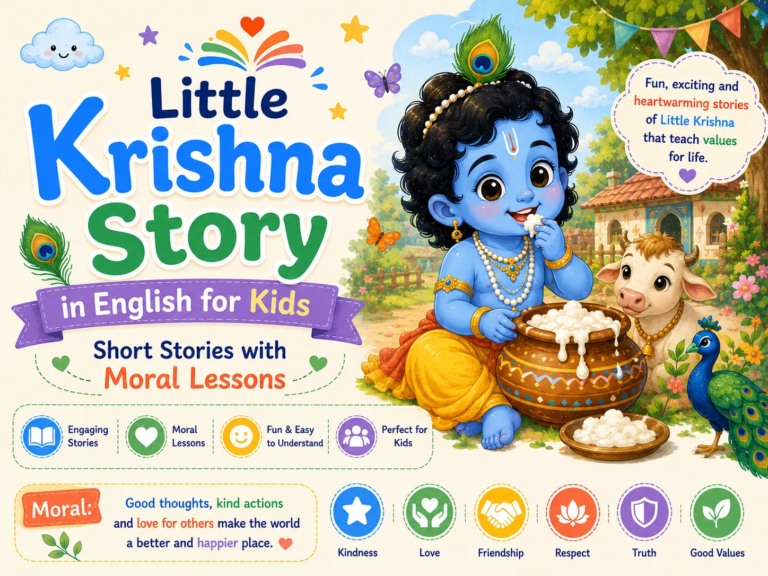
Little Krishna was famous for his love of fresh butter.
Whenever he found a pot of butter, he never kept it all for himself.
He happily shared it with his friends, the village children, and even the hungry monkeys.
Everyone laughed and enjoyed the delicious treat together.
One day,
a new boy in the village stood quietly, feeling shy because he had nothing to eat.
Krishna noticed him, smiled warmly, and offered him some butter.
The boy’s face lit up with happiness, and soon he joined the other children in playing and laughing.
The villagers realized that Krishna’s greatest joy was not eating butter but sharing it with others and making everyone feel included.
Moral: Sharing what we have with others spreads happiness and brings everyone closer together.
The Peacock Feather That Became Krishna’s Crown
One morning,
Krishna was walking through the green forests of Vrindavan when he saw a beautiful peacock dancing happily in the gentle rain.
As the dance ended, one colorful feather floated softly to the ground.
Krishna carefully picked it up and admired its bright blue and green colors.
Instead of keeping it as a toy, he placed the feather on his crown to remember the beauty of nature and the joy of every living creature.
From that day, the peacock feather became a special part of Krishna’s appearance.
Whenever children saw it, they remembered to love birds, animals, trees, and rivers.
Krishna taught everyone that nature is a precious gift that should be respected and protected.
Moral: Love and care for nature because every living creature is a valuable part of God’s creation.
Krishna and the Lost Calf Adventure
One peaceful morning,
Krishna was taking the cows and calves to the green fields.
While everyone was grazing, a little calf wandered deep into the forest, chasing colorful butterflies.
Soon, it could not find its way back and began to cry.
When Krishna noticed the missing calf, he gently searched through the trees, calling its name.
At last, he found the frightened calf hiding behind a bush.
Krishna comforted it with kind words and carefully led it back to the herd.
The other cows happily welcomed the little calf home.
The villagers praised Krishna for his patience and caring heart.
They learned that no one should ever be left behind, no matter how small they are.
Moral: Caring for others and helping those in need are true signs of kindness and responsibility.
The Little Bird That Sang for Krishna
Every morning,
Krishna sat beneath a shady tree and played his sweet flute.
A tiny bird loved the beautiful music and perched on a nearby branch to listen.
Soon, it began singing along with Krishna.
The gentle melody filled the forest with happiness, and the animals gathered peacefully to enjoy it.
One day, a strong wind frightened the little bird, and it was too scared to sing.
Krishna smiled kindly and played a soft, comforting tune on his flute.
Hearing the music, the bird found its courage and sang once again.
Its cheerful song spread joy throughout the forest.
The villagers realized that a little kindness and encouragement can help someone find confidence again.
Moral: Kind words and encouragement can give others the courage to do their best.
Krishna’s Birthday: The Night of Miracles
Long ago,
on a dark and stormy night, Baby Krishna was born in a prison where his parents, Vasudeva and Devaki, were being held by the cruel King Kansa.
To keep the baby safe, Vasudeva placed Krishna in a small basket and carried him across the overflowing Yamuna River.
Though the rain poured heavily, the river made way for him, and the great serpent Sheshnag spread his hood over the baby to protect him from the storm.
Vasudeva safely reached Gokul and lovingly placed Krishna in Mother Yashoda’s home.
The villagers later celebrated Krishna’s birth with songs, prayers, and joyful hearts, thanking God for sending hope and goodness into the world.
Moral: Hope, faith, and courage help goodness shine even in the darkest times.
The Kind Heart of Krishna and the Hungry Beggar
One afternoon,
Krishna was walking through the streets of Gokul when he met an old beggar sitting under a tree.
The man looked weak and hungry because he had not eaten all day.
Krishna gently smiled, shared his lunch with the beggar, and offered him cool water to drink.
The beggar thanked Krishna with tears of joy and blessed him for his kindness.
The villagers saw what Krishna had done and realized that helping someone in need does not require great wealth—only a caring heart.
Inspired by Krishna, they began sharing food with anyone who was hungry.
Soon, kindness spread throughout the village, and no one had to go without a meal.
Moral: A kind heart that helps those in need makes the world a happier and better place.
Krishna Teaches the Value of Keeping Promises
One day,
Krishna promised his friends that he would meet them by the river after finishing his chores.
Before he could leave, an old neighbor asked for help carrying a heavy basket home.
Krishna kindly helped without complaining.
Even though it took extra time, he hurried to the river as soon as he finished.
His friends had waited patiently because they trusted Krishna’s word.
When he arrived, Krishna explained why he was late, and everyone appreciated his honesty.
They spent the rest of the afternoon playing together.
Krishna reminded his friends that promises should never be forgotten and that honesty builds strong friendships.
From then on, the children always tried to keep their promises, just as Krishna did.
Moral: Keeping your promises and being honest helps others trust and respect you.
The Magical Sound of Krishna’s Flute
Every evening,
Krishna played his flute on the banks of the Yamuna River.
The sweet melody floated through the air, filling the village and forest with peace.
Birds sang happily, cows gathered around him, and even the trees seemed to sway gently with the music.
Everyone who heard the flute forgot their worries and smiled with joy.
One day, two neighbors were arguing over a small piece of land.
As Krishna’s flute echoed nearby, they stopped to listen.
The calming music softened their hearts, and they realized that friendship was more valuable than any argument.
They apologized to each other and settled the matter peacefully.
The villagers learned that love and kindness can bring people together better than anger.
Moral: A calm heart and kind words can turn disagreements into friendship.
How Krishna Protected the Cows During a Storm
One afternoon,
Krishna was grazing the village cows when dark clouds suddenly covered the sky.
Strong winds blew, thunder roared, and heavy rain poured down.
The frightened cows huddled together, not knowing where to go.
Krishna calmly gathered the herd and led them to a safe shelter beneath large trees and rocky hills.
He comforted the animals with gentle words and played his flute until they became peaceful.
The storm soon passed, and the bright sun appeared again.
The villagers were thankful to see that every cow was safe and unharmed.
They admired Krishna’s courage, kindness, and sense of responsibility.
His love for every living creature reminded everyone to protect those who depend on us.
Moral: True kindness means caring for and protecting those who cannot protect themselves.
Krishna and the Broken Clay Pot Lesson
One morning,
Mother Yashoda was carrying a clay pot filled with fresh milk when she accidentally dropped it.
The pot broke into many pieces, and the milk spilled onto the floor.
Seeing this, some children began to laugh.
Krishna gently stopped them and helped Mother Yashoda clean the floor.
He reminded everyone that accidents can happen to anyone and that kindness is more important than making fun of others.
The children felt sorry for laughing. Together, they collected the broken pieces and brought another pot for Mother Yashoda.
She smiled proudly at Krishna’s caring nature.
From that day, the children learned to help others instead of teasing them when mistakes happened.
Moral: Be kind and helpful when others make mistakes, because everyone deserves understanding and respect.
The Boy Who Learned Courage from Little Krishna
A young boy named Madhav was afraid of almost everything.
He was scared of crossing small streams, climbing hills, and even speaking in front of others.
One day, he watched little Krishna calmly helping the villagers and protecting the cows without fear.
Krishna smiled at Madhav and said, “Being brave does not mean you never feel afraid.
It means doing the right thing even when you are afraid.”
The next day, Madhav gathered his courage and helped a lost calf find its way back to the herd.
The villagers praised his kindness, and his confidence grew stronger.
From then on, Madhav faced every challenge with faith and a cheerful heart, remembering Krishna’s wise words.
Moral: True courage is doing the right thing, even when you feel afraid.
What Kids Can Learn from Krishna Stories to Make Their Childhood Better
Krishna stories are more than entertaining tales—they teach children important life values that help them grow into kind, honest, and confident people. Through Krishna’s actions, kids learn how to care for others, solve problems peacefully, and make good choices every day.
Here are some valuable lessons with simple examples:
- Sharing: Krishna shared butter with his friends.
Example: Share your lunch or toys with a classmate who forgot theirs. - Kindness: Krishna helped people and animals with love.
Example: Offer water to a thirsty person or feed birds in your garden. - Courage: Krishna faced challenges without fear.
Example: Speak up if you see someone being bullied at school. - Friendship: Krishna valued his friendship with Sudama.
Example: Stand by your friends and help them when they need support. - Honesty: Krishna taught the importance of keeping promises.
Example: Finish your homework after promising your parents you would. - Compassion for Animals: Krishna cared deeply for cows and calves.
Example: Treat pets gently and never hurt animals. - Helping Others: Krishna always helped people in need.
Example: Help your parents carry groceries or assist a younger sibling. - Forgiveness: Krishna forgave those who realized their mistakes.
Example: Forgive a friend who says sorry after an argument. - Respect for Nature: Krishna loved rivers, forests, birds, and animals.
Example: Plant a tree, save water, and avoid throwing litter on the ground. - Staying Calm: Krishna remained peaceful during difficult situations.
Example: Take a deep breath and think before reacting when something goes wrong.
By following these simple lessons, children can become caring, responsible, and confident individuals. Krishna’s stories remind us that even small acts of kindness, honesty, courage, and love can make our homes, schools, and communities happier places.
How Krishna Stories Help Kids Improve Communication Skills
Krishna stories help children develop strong communication skills by teaching them how to speak with kindness, listen carefully, and express their thoughts clearly. As kids read or listen to these stories, they learn how good communication builds friendships, solves problems, and brings people together.
Here are some ways these stories improve communication skills:
- Speaking Kindly: Krishna always spoke gently and respectfully. Children learn to use polite words like “please,” “thank you,” and “sorry.”
- Listening Carefully: Krishna listened to his friends, parents, and villagers before helping them. This teaches children to pay attention when others are speaking.
- Expressing Feelings: The stories encourage kids to share their emotions instead of hiding them.
Example: Saying, “I feel sad because my toy broke,” instead of crying silently. - Building Friendships: Krishna’s friendship with Sudama shows children how honest conversations and trust create lasting friendships.
Example: Talking kindly to a new classmate and inviting them to play. - Solving Problems Peacefully: Krishna often settled difficult situations without shouting or fighting.
Example: Talking to a friend to solve a disagreement instead of arguing. - Growing Confidence: Reading stories aloud improves pronunciation, vocabulary, and speaking confidence.
Example: A child who reads one Krishna story every day becomes more comfortable speaking in class. - Learning New Words: Krishna stories introduce children to meaningful words such as kindness, courage, honesty, respect, compassion, and gratitude, helping them build a stronger vocabulary.
- Storytelling Skills: After reading a story, children can retell it in their own words, improving memory, sentence formation, and public speaking.
By reading and discussing Krishna stories regularly, children become better listeners, more confident speakers, and kinder communicators. These skills help them at home, in school, and in everyday life, making it easier to build strong relationships and express themselves with confidence.
How Krishna Stories Help Kids Learn Empathy
Krishna stories help children understand empathy by teaching them to care about other people’s feelings and to show kindness to everyone. Through Krishna’s actions, kids learn to imagine how others feel and to respond with love, patience, and compassion. These lessons help children build stronger friendships and become thoughtful, caring individuals.
Here are some ways these stories help children develop empathy:
- Understanding Others’ Feelings: Krishna always noticed when someone was sad, afraid, or lonely.
Example: Comforting a classmate who is upset instead of ignoring them. - Helping Those in Need: Krishna gladly helped people and animals without expecting anything in return.
Example: Sharing your lunch with a friend who forgot theirs. - Showing Kindness to Animals: Krishna cared deeply for cows, calves, birds, and other animals.
Example: Feeding birds, giving water to animals on hot days, or treating pets gently. - Forgiving Mistakes: Krishna forgave those who admitted their mistakes and chose to do better.
Example: Accepting a friend’s apology after an argument and becoming friends again. - Including Everyone: Krishna made everyone feel welcome, no matter who they were.
Example: Inviting a new student to join your games during recess. - Being Patient: Krishna stayed calm and understanding, even in difficult situations.
Example: Helping a younger sibling learn something instead of getting angry. - Sharing Happiness: Krishna believed that joy grows when it is shared.
Example: Celebrating a friend’s success instead of feeling jealous. - Respecting Everyone: Krishna treated all people with kindness, whether they were rich or poor.
Example: Speaking politely to classmates, teachers, helpers, and elders alike.
By reading Krishna stories, children learn that empathy means understanding, caring, and helping others with a kind heart. These valuable lessons encourage them to become compassionate friends, thoughtful family members, and responsible citizens who make the world a happier place through their everyday actions.
Conclusion
The stories of Lord Krishna continue to inspire children with lessons that remain meaningful even today. Every story encourages kids to make good choices, care for others, speak kindly, and face challenges with courage and confidence. Along with teaching strong moral values, these stories also improve reading, vocabulary, imagination, communication, and critical thinking skills. Reading Krishna stories regularly can help children build positive habits and develop a caring attitude toward people, animals, and nature. We hope these inspiring tales bring joy to your family and encourage young readers to grow into kind, responsible, and compassionate individuals, one story at a time.
