Key Takeaways
- Short stories make reading easier – Simple plots and short sentences help young children understand stories and enjoy reading.
- Stories teach valuable life lessons – Children can learn about honesty, kindness, patience, teamwork, responsibility, gratitude, and caring for nature.
- Everyday situations make stories relatable – Stories about school, family, friends, hobbies, and community activities help children connect lessons with real life.
- Reading builds important skills – Regular storytelling can improve vocabulary, imagination, comprehension, creativity, and reading confidence.
- Stories can become fun learning activities – Parents and teachers can add coloring pages, vocabulary exercises, questions, drawing tasks, and discussions to make reading more interactive.
24 best Easy Short Stories for Kids 2026
Easy short stories for kids are a fun way to help children enjoy reading and learn valuable lessons. Simple characters, familiar situations, and short plots make stories easy to understand. From kindness and honesty to teamwork and creativity, these stories can entertain children while helping them develop good habits.
The Boy Who Returned a Lost Library Book
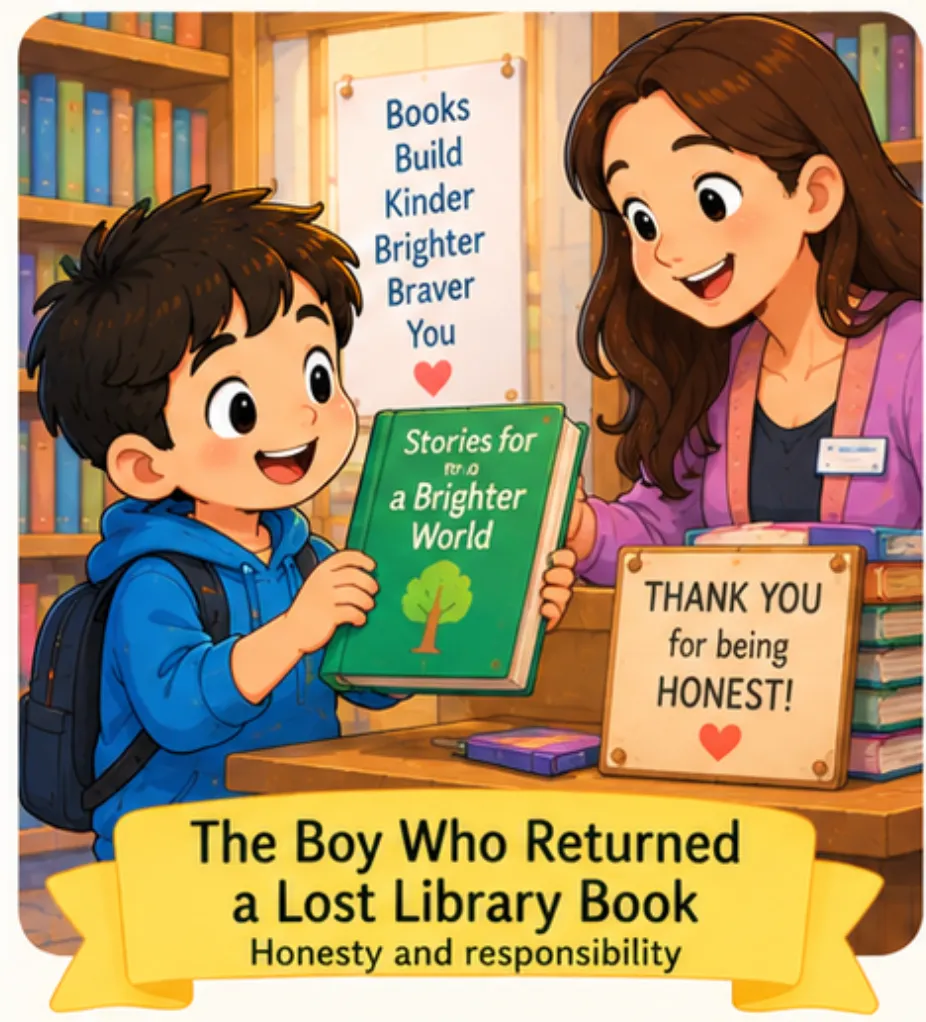
Aarav loved visiting the school library. One afternoon, while walking home, he found a blue library book lying near a park bench. He picked it up and noticed the school library sticker on its cover.
Aarav could have kept the book, because he really wanted to read it. But he knew someone else might be looking for it.
The next morning, Aarav took the book to his librarian, Mrs. Mehta. She smiled and said, “You did the right thing. Someone must be worried about their missing book.”
Later that day, a girl named Riya came running to the library. She had lost the same book and was very happy to get it back.
Aarav felt proud. He learned that being honest and responsible can make someone else happy.
Also Read:
Mia’s First Day at the Community Garden
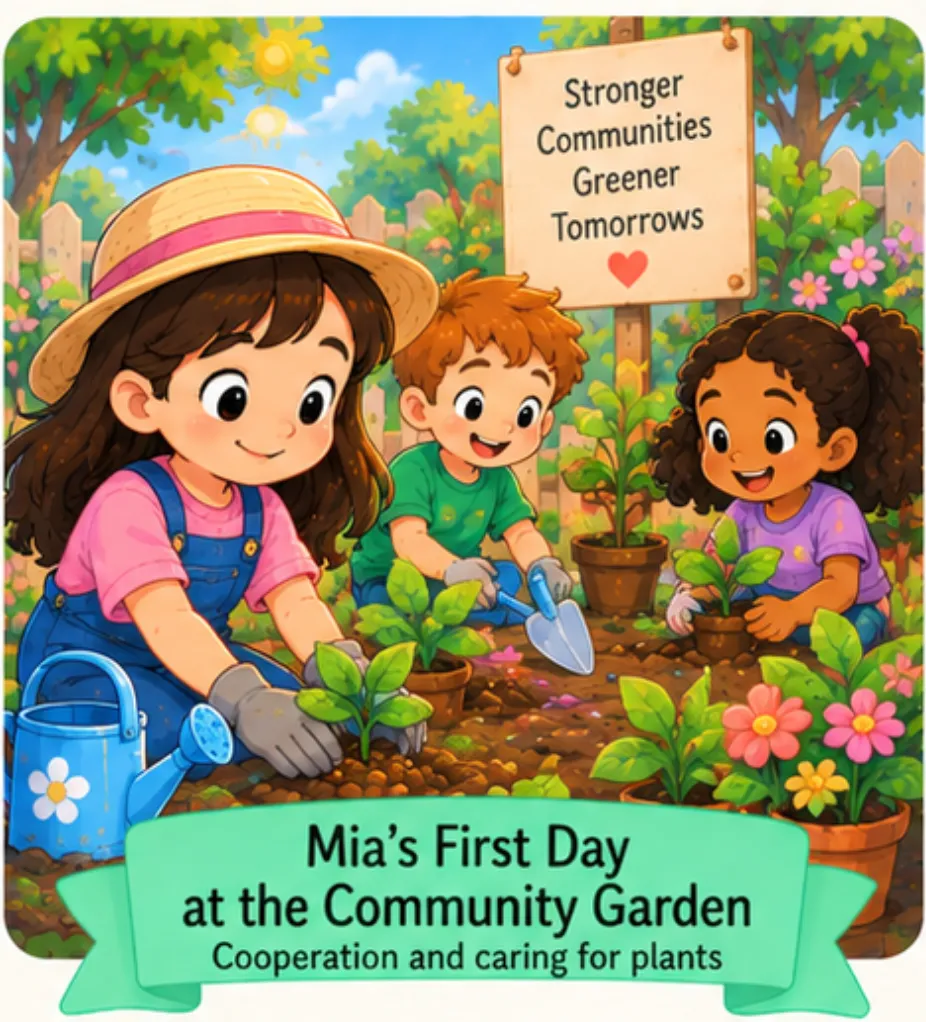
Mia loved watching plants grow, but she had never planted anything herself. One Saturday, her mother took her to the community garden near their home.
The garden had many small vegetable beds. The garden leader, Mr. Sam, gave Mia a tiny shovel and showed her how to plant tomato seeds.
Mia carefully dug a little hole and placed the seeds inside. She covered them with soil and gave them some water.
Then she noticed that some plants were dry. Mia helped other children water them. Soon, everyone was working together. Some pulled out weeds, while others picked up fallen leaves.
At the end of the day, Mia looked at the garden and smiled. She realized that when people work together and care for nature, beautiful things can grow.
- 21+ Short Stories for Student Motivation 2026
- 21+ Kindergarten Short Stories for Kids in English 2026
The Little Baker Who Made Too Many Cookies
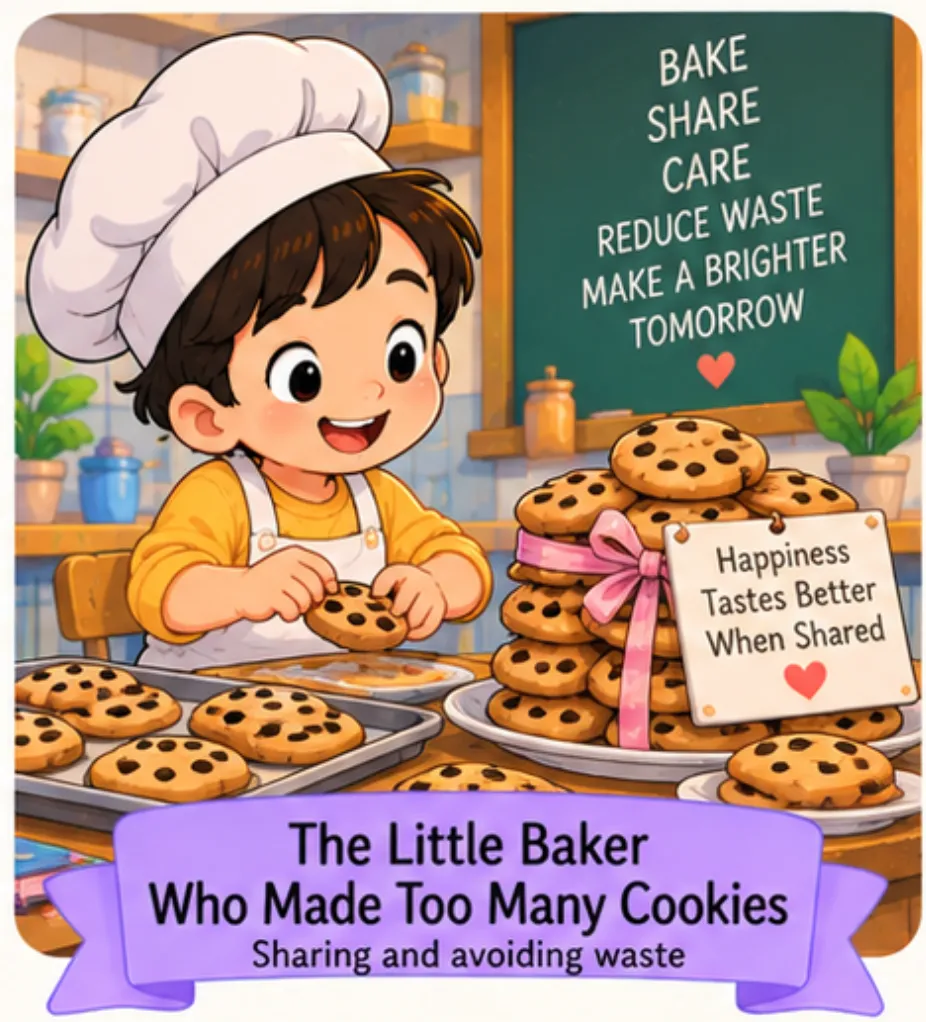
Lily loved baking with her father. One Sunday morning, they decided to make chocolate chip cookies. Lily mixed the flour, sugar, and butter while her father helped with the oven.
When the cookies were ready, Lily counted them. There were far more cookies than she and her family could eat!
“Maybe we can share them,” Dad suggested.
Lily packed some cookies into small boxes. She gave one box to her grandmother, another to the friendly neighbor, and took the rest to her friends in the park.
Everyone smiled when Lily shared the cookies. Her grandmother thanked her, and her friends happily enjoyed the sweet treat.
Lily realized that making too much had not been a problem after all. Sharing food with others can turn an ordinary day into a happy one.
Also Read:
Ravi and the Broken School Bell
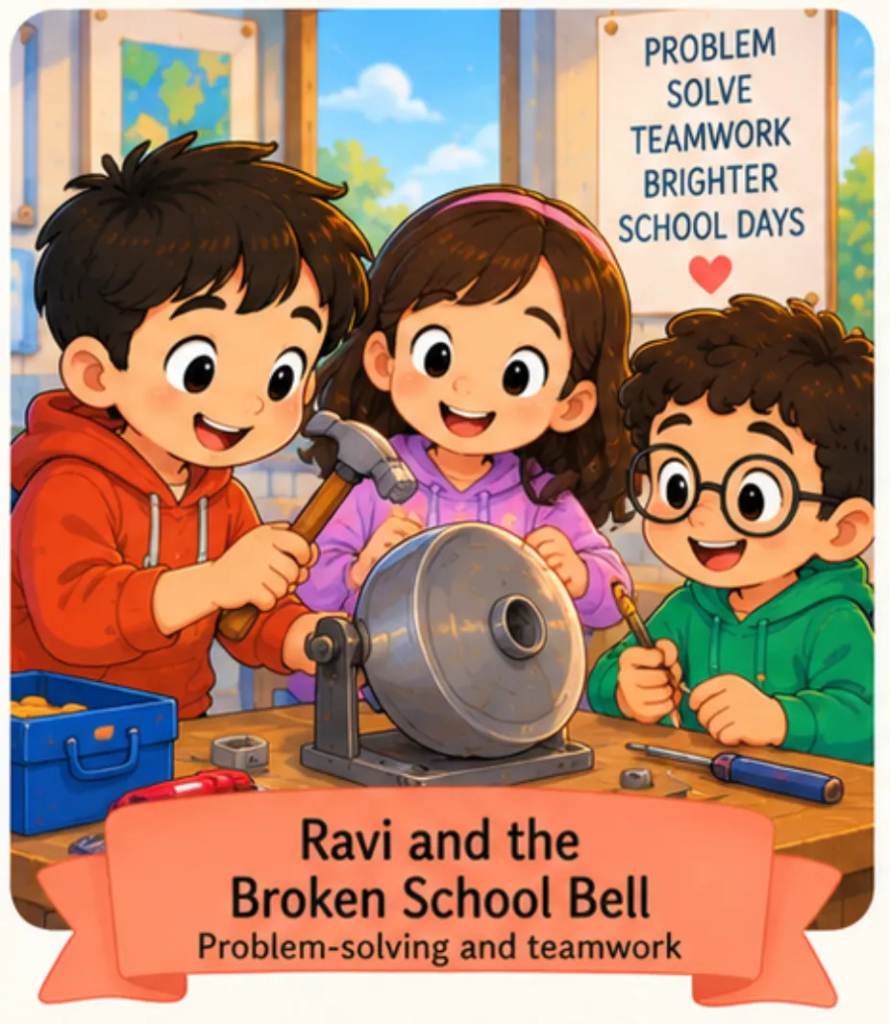
One morning, Ravi arrived at school and noticed something strange. The school bell was not ringing. Without the bell, students did not know when classes started or ended.
Ravi told his teacher, Mrs. Sharma. She checked the bell but could not fix it. Instead of giving up, Ravi asked his classmates for ideas.
One student suggested using the classroom clock. Another offered to write the class timings on the board. Ravi made a simple schedule and placed it outside every classroom.
For the rest of the day, the students followed the schedule carefully. After school, the electrician repaired the bell.
Mrs. Sharma praised the children for working together. Ravi smiled because everyone had helped solve the problem.
He learned that when we work together and share ideas, even difficult problems become easier.
Also Read:
21+ Short Mysterious Stories for Students
The Girl Who Built a Bird Feeder
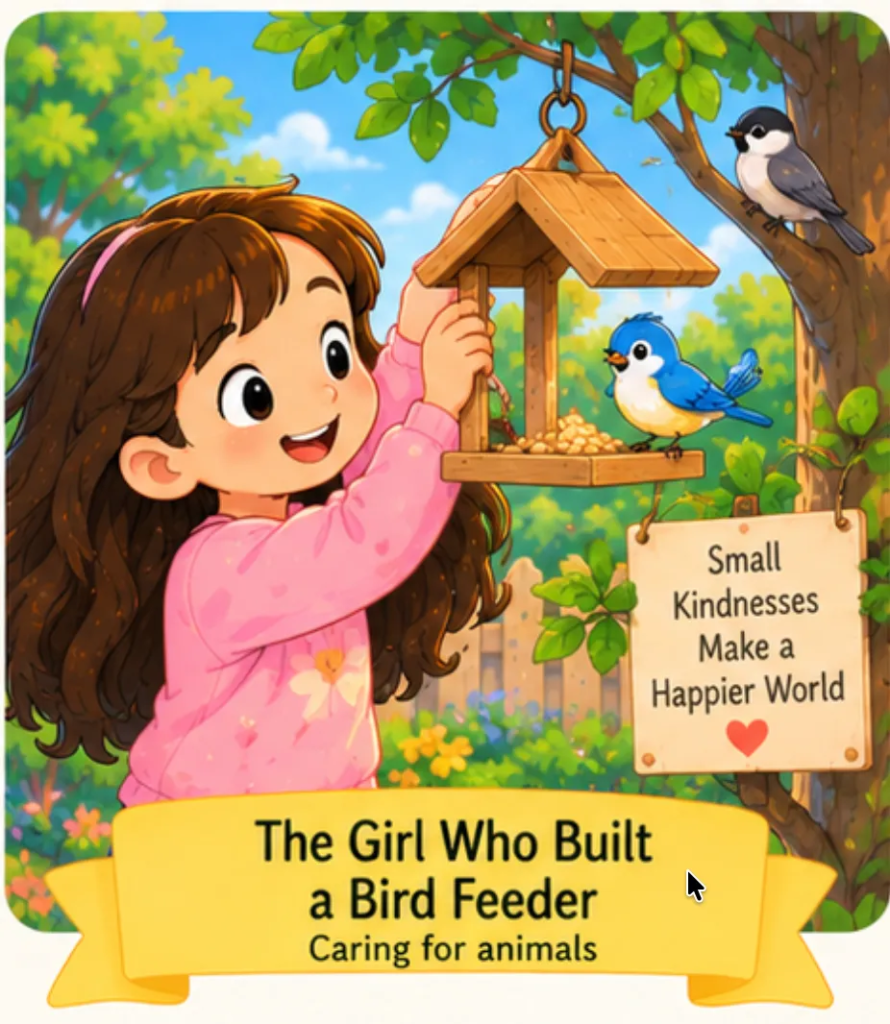
Sana loved watching birds from her bedroom window. Every morning, she saw sparrows, pigeons, and tiny sunbirds flying around the garden.
One day, Sana noticed that the birds had very little food. She decided to make a bird feeder. With her father’s help, she cleaned an old wooden box and made a small opening in it. They placed some grains inside and hung it from a tree.
At first, no birds came. Sana waited patiently. The next morning, she saw two sparrows sitting near the feeder. Soon, more birds arrived.
Sana was excited, but she also learned to refill the feeder regularly and keep it clean.
She understood that small acts of kindness can make a big difference to animals around us.
Also Read:
Oscar’s Three-Minute Cleaning Challenge
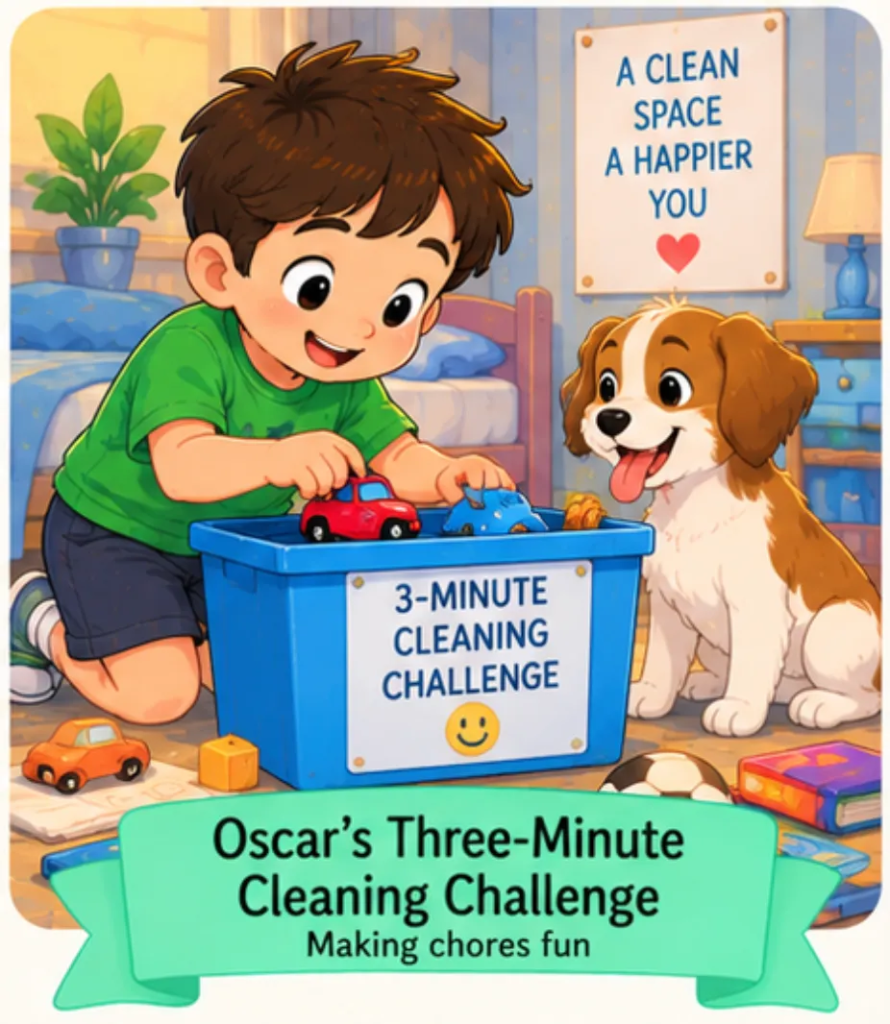
Oscar did not like cleaning his room. His toys were scattered across the floor, books were under his bed, and crayons were everywhere.
One Saturday, his mother gave him a fun idea. “Let’s see how much you can clean in three minutes!”
Oscar set a timer and started quickly. He put his toys in a box, placed his books on the shelf, and collected his crayons. When the timer rang, Oscar looked around. His room was much cleaner!
“I did all that in just three minutes?” he asked.
His mother smiled. “Small jobs become easier when you do them little by little.”
Oscar decided to repeat the challenge every day. Soon, keeping his room tidy became a habit.
He learned that even boring chores can become fun when you turn them into a game.
Also Read:
The Mystery of the Missing Lunchbox
Rohan arrived at school and opened his bag. His lunchbox was missing!
“I think someone took it,” he told his friend Kabir. Rohan looked around and saw a red lunchbox on another desk. He quickly thought Kabir might have taken his.
Before blaming anyone, their teacher, Mrs. Rao, asked Rohan to check his bag carefully. They looked inside every pocket. Then they checked the classroom shelf and the school bus.
Finally, Rohan found his lunchbox inside his sports bag. He had packed it there by mistake that morning!
Rohan felt embarrassed. He apologized to Kabir and thanked his teacher for helping him look for it.
That day, Rohan learned an important lesson: we should check the facts and ask questions before blaming someone else.
Sara’s Homemade Weather Station
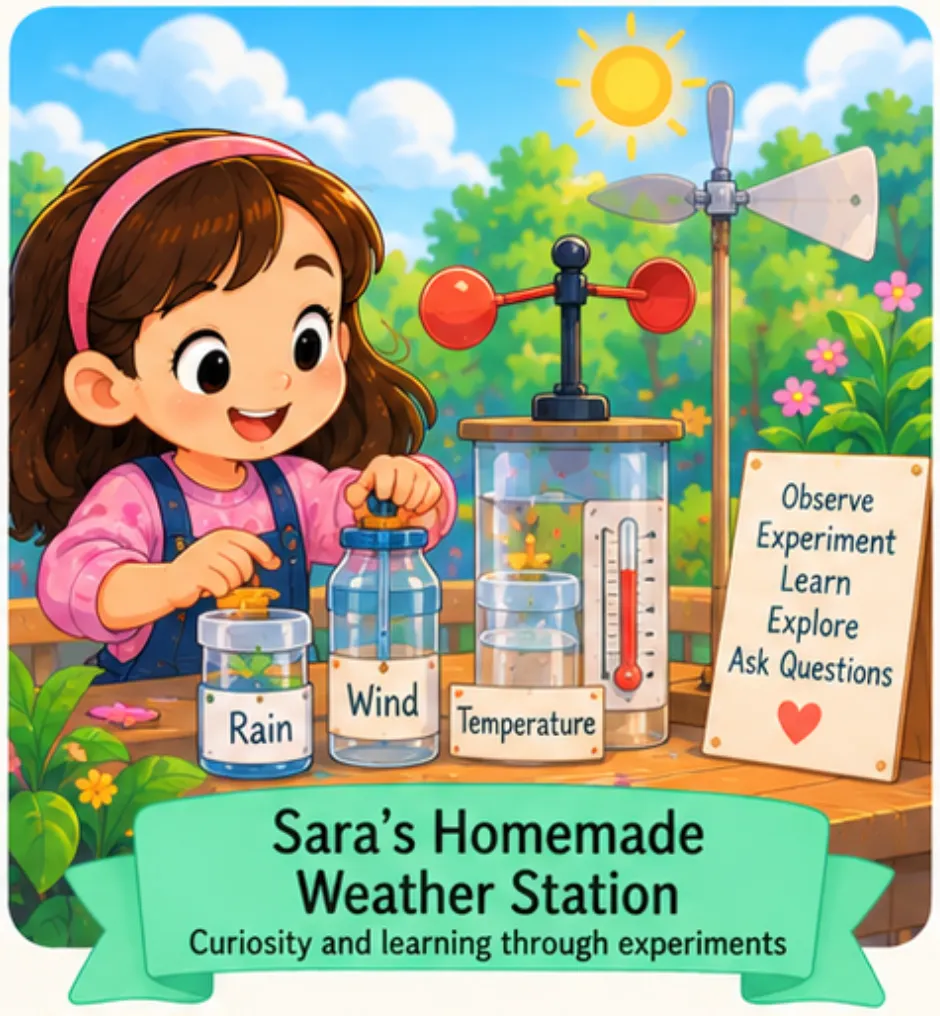
Sara loved looking at the sky. She often wondered how people knew when it would rain or how strong the wind was.
One weekend, her science teacher gave the class a small project: make a simple weather station.
Sara collected a plastic bottle, paper, a ruler, and some string. With her mother’s help, she made a rain gauge from the bottle and a small wind spinner from paper.
Every morning, Sara checked her weather station and wrote down what she observed. On sunny days, she recorded the temperature. When it rained, she measured the water in her rain gauge.
After one week, Sara showed her notes to her teacher. She was surprised by how much she had learned just by observing nature.
Sara discovered that asking questions and experimenting can make learning exciting.
The Bicycle That Needed a New Bell
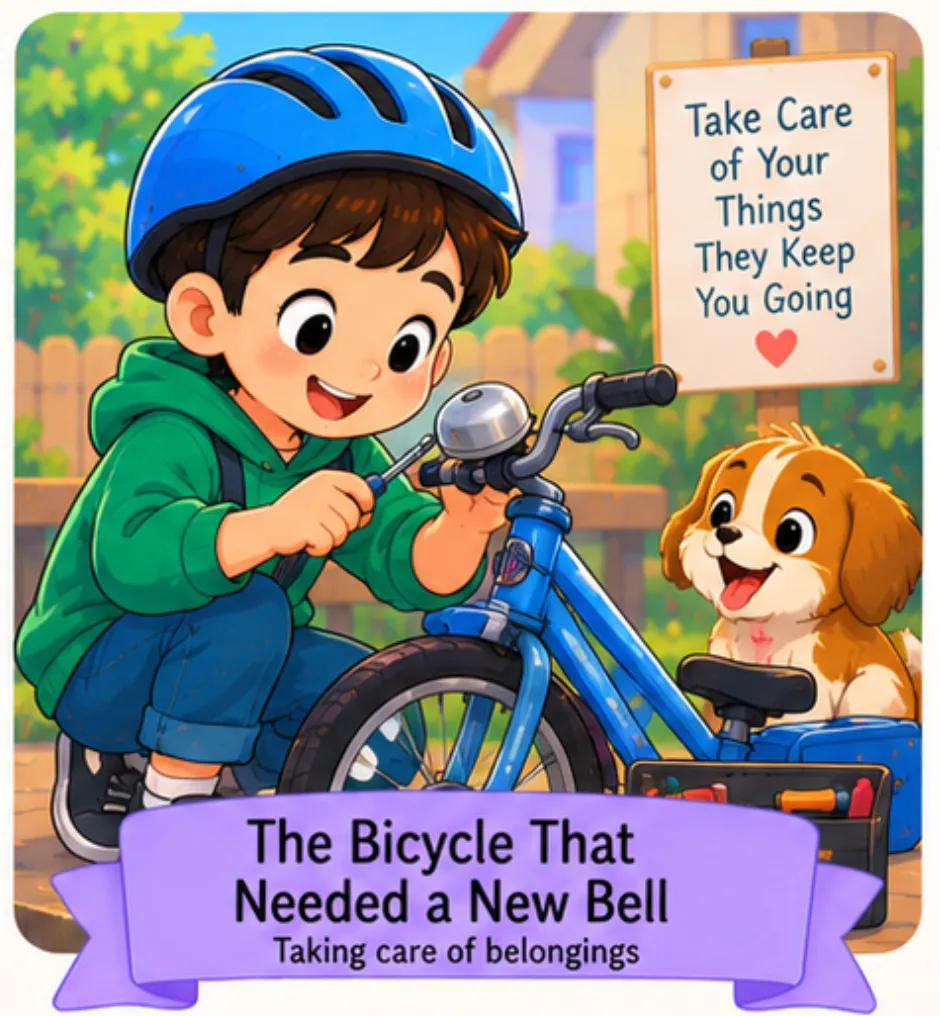
Neel loved riding his blue bicycle around the park. One evening, he noticed that his bicycle bell was not making any sound.
The next morning, Neel wanted to ride to school, but he knew the broken bell could make it harder to warn people on the road. Instead of ignoring the problem, he told his father.
Together, they took the bicycle to a repair shop. The mechanic checked it and replaced the old bell with a shiny new one.
On the way home, Neel tested the bell. “Ring-ring!” it sounded.
Neel was happy, but his father reminded him, “A bicycle needs regular care, just like we do.”
From that day, Neel checked his bicycle before every ride.
He learned that taking care of our belongings keeps them safe and useful for longer.
Leo’s Day Without Complaining
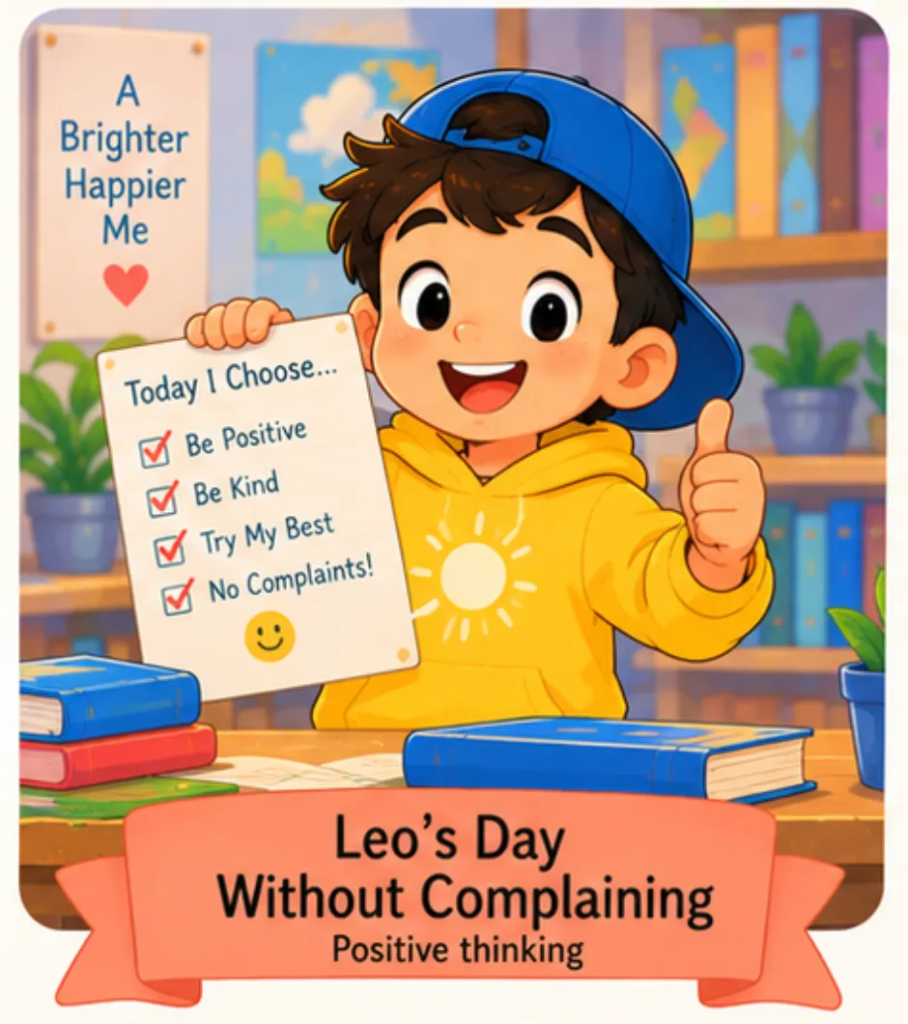
Leo often complained about little things. He complained when his breakfast was not his favorite, when it rained, and when his little sister borrowed his crayons.
One morning, Leo’s teacher gave the class a challenge. “Try to go through the whole day without complaining. If something goes wrong, think of a solution instead.”
Leo decided to try.
At breakfast, there were no pancakes, but Leo ate his toast happily. At school, his favorite pencil broke, so he borrowed another one. During recess, rain stopped everyone from playing outside, so Leo played a board game with his friends.
At the end of the day, Leo felt proud. He realized that complaining had not fixed his problems, but staying positive had helped him enjoy his day.
Leo learned that a positive attitude can make difficult moments easier.
The Class Pet’s Unexpected Escape
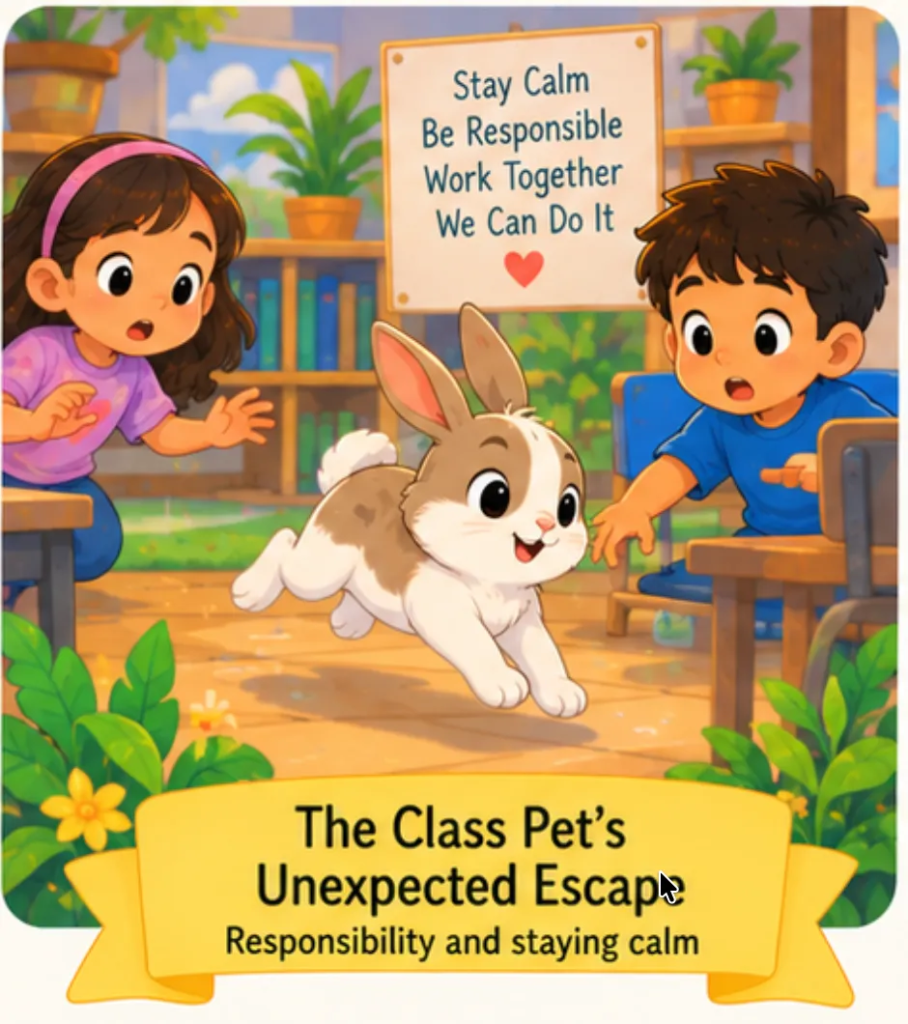
Milo was the class hamster, and everyone loved watching him run on his little wheel. One morning, the children arrived at school and found his cage door open.
“Milo is missing!” shouted Priya.
The teacher, Mrs. Green, asked everyone to stay calm. The children searched quietly instead of running around. They checked behind the bookshelves, under the tables, and near the cupboards.
Then they heard a tiny scratching sound.
Milo was hiding inside an empty cardboard box near the reading corner! Priya carefully placed some food near the box. Milo came out, and the teacher gently returned him to his cage.
Everyone cheered.
Mrs. Green reminded the class to check the cage door properly each day. The children agreed.
They learned that staying calm, working together, and taking responsibility can help solve unexpected problems.
A Rainy Day at the Bus Stop
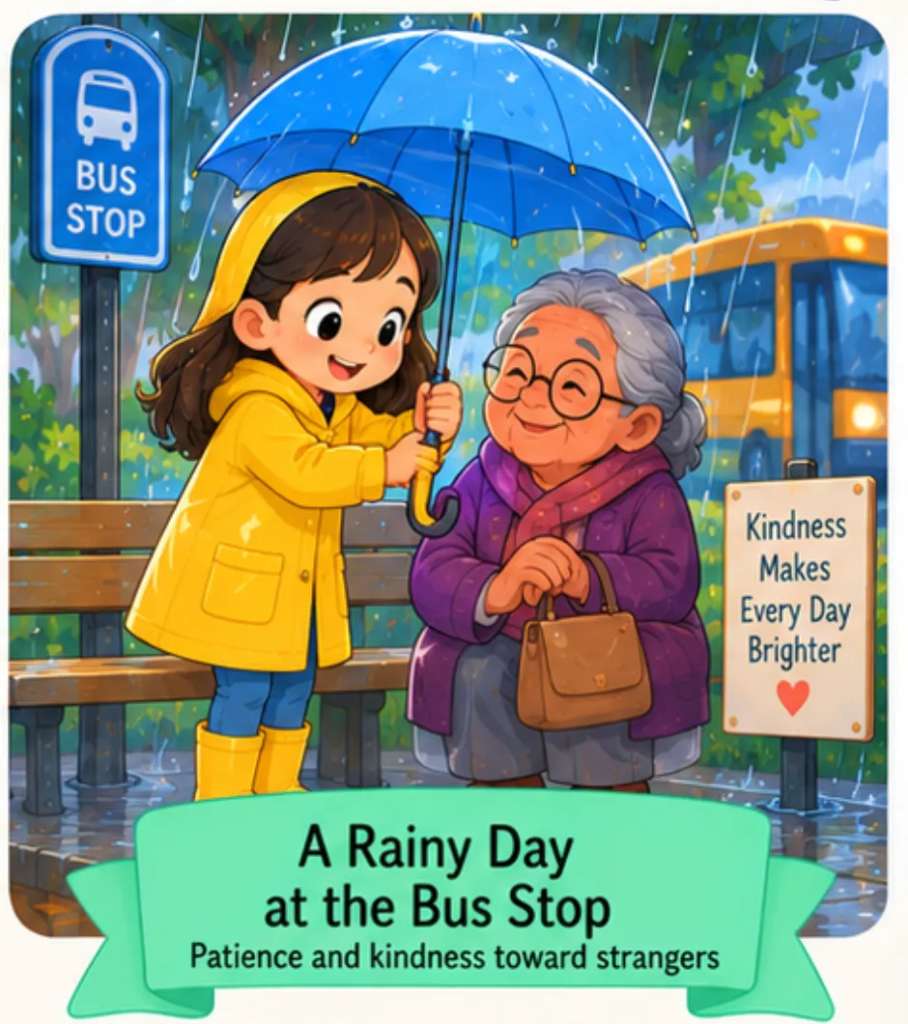
One afternoon, Anaya stood at the bus stop with her yellow raincoat. Dark clouds covered the sky, and soon heavy rain began to fall.
The bus was late. Some people started looking at their watches, while others became impatient.
Anaya noticed an old woman standing without an umbrella. Anaya moved closer and held her raincoat over the woman’s head.
“Thank you, dear,” the woman said with a smile.
A few minutes later, the bus finally arrived. Everyone climbed aboard carefully.
Anaya sat by the window and watched the raindrops slide down the glass. She realized that waiting had been easier because she had spent the time helping someone.
That rainy afternoon taught Anaya an important lesson: patience makes waiting easier, and a small act of kindness can brighten someone’s day.
The Secret Recipe in Grandma’s Notebook
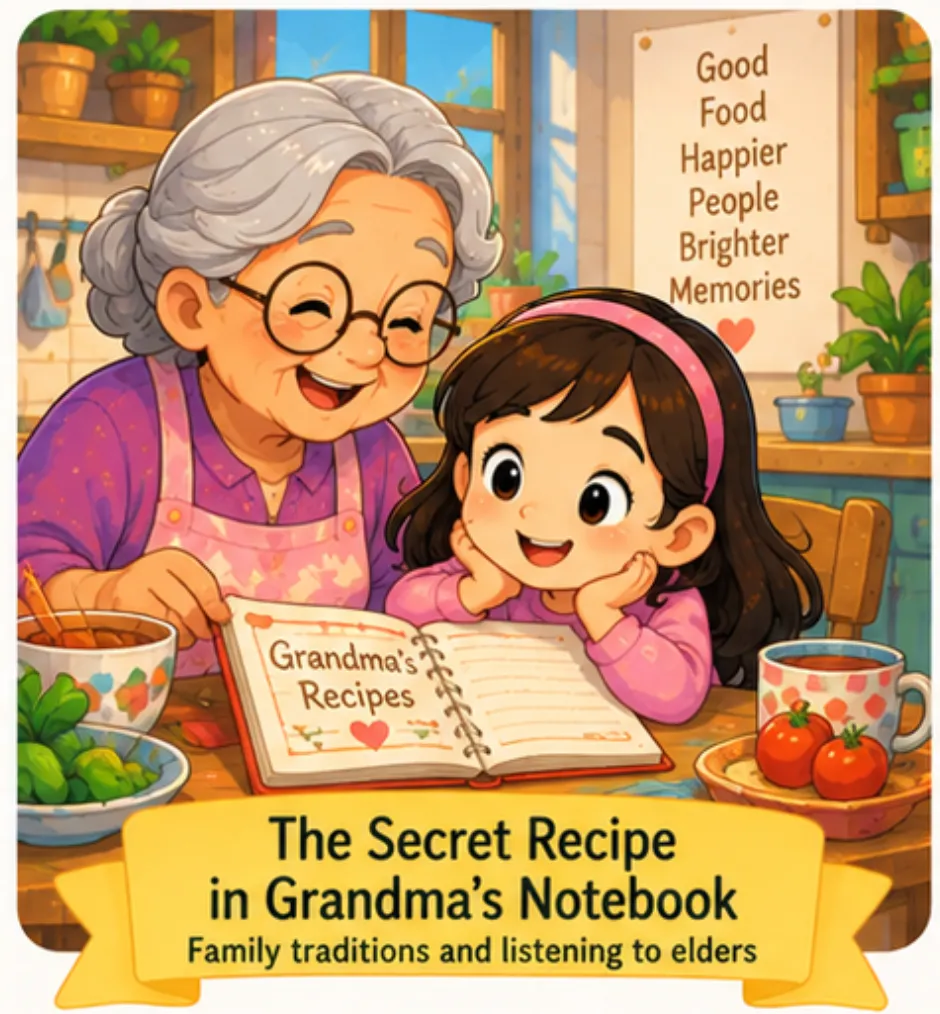
Meera loved visiting her grandmother, especially when Grandma cooked delicious food. One Saturday, Meera noticed an old notebook on the kitchen shelf.
“What is this?” she asked.
Grandma smiled. “It is my recipe notebook. I wrote my favorite recipes when I was young.”
Meera carefully opened the pages. She found a recipe for Grandma’s famous sweet rice. The instructions were written in Grandma’s handwriting, with little notes beside each ingredient.
“Can you teach me how to make it?” Meera asked.
Grandma happily agreed. Together, they measured the ingredients, stirred the pot, and waited patiently. When the sweet rice was ready, Meera tasted it and smiled.
Grandma gave her the notebook to keep.
Meera learned that family recipes are more than food—they can carry memories, love, and traditions from one generation to another.
The Kid Who Turned Boxes into a Castle
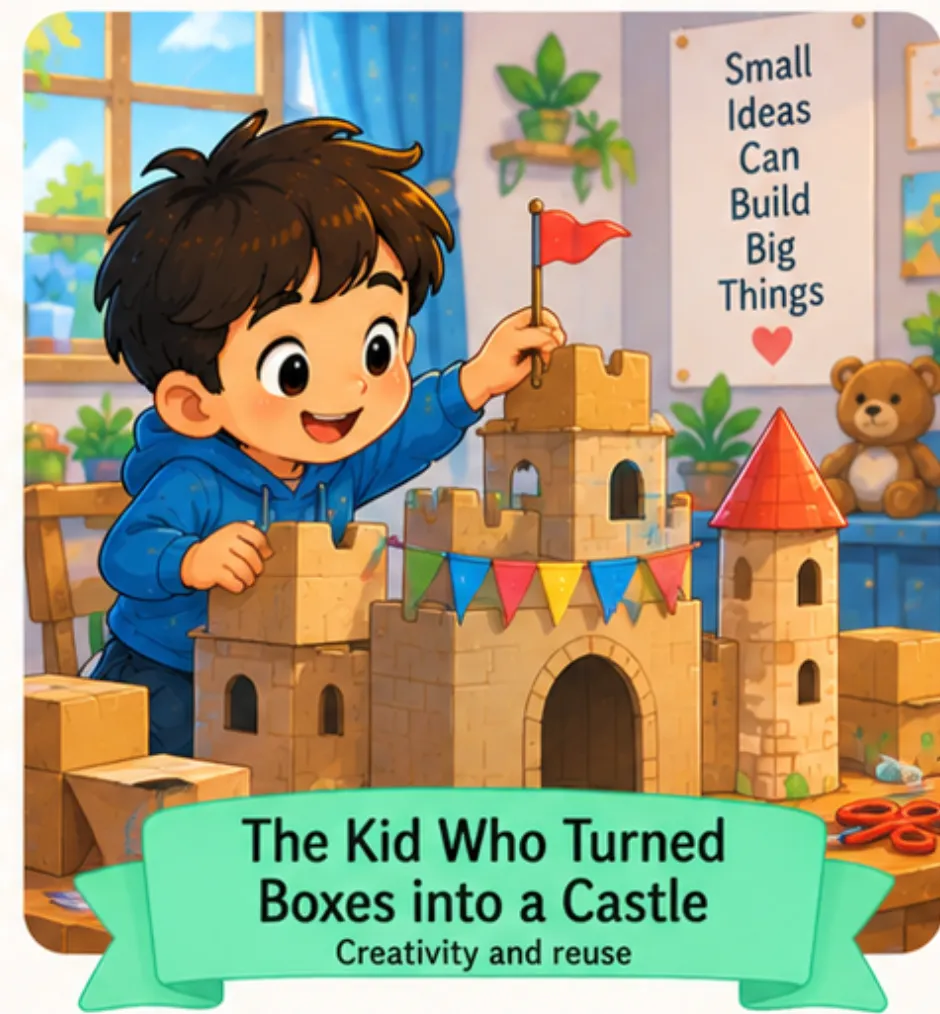
Ayaan’s family had several empty cardboard boxes after moving to a new house. While everyone thought the boxes were useless, Ayaan had a different idea.
He stacked three large boxes together and cut small windows in them. With some paper and crayons, he decorated the walls with flags, stars, and colorful drawings.
Soon, his sister joined him. Together, they made a cardboard door and a small “royal” chair from another box.
By evening, the empty boxes had become a wonderful pretend castle. Ayaan and his sister played inside it for hours.
Their mother smiled and said, “You turned something we wanted to throw away into something useful.”
Ayaan learned that creativity can give old and simple things a new purpose. He also discovered that reusing things can reduce waste and make playtime more exciting.
The New Student With No Pencil
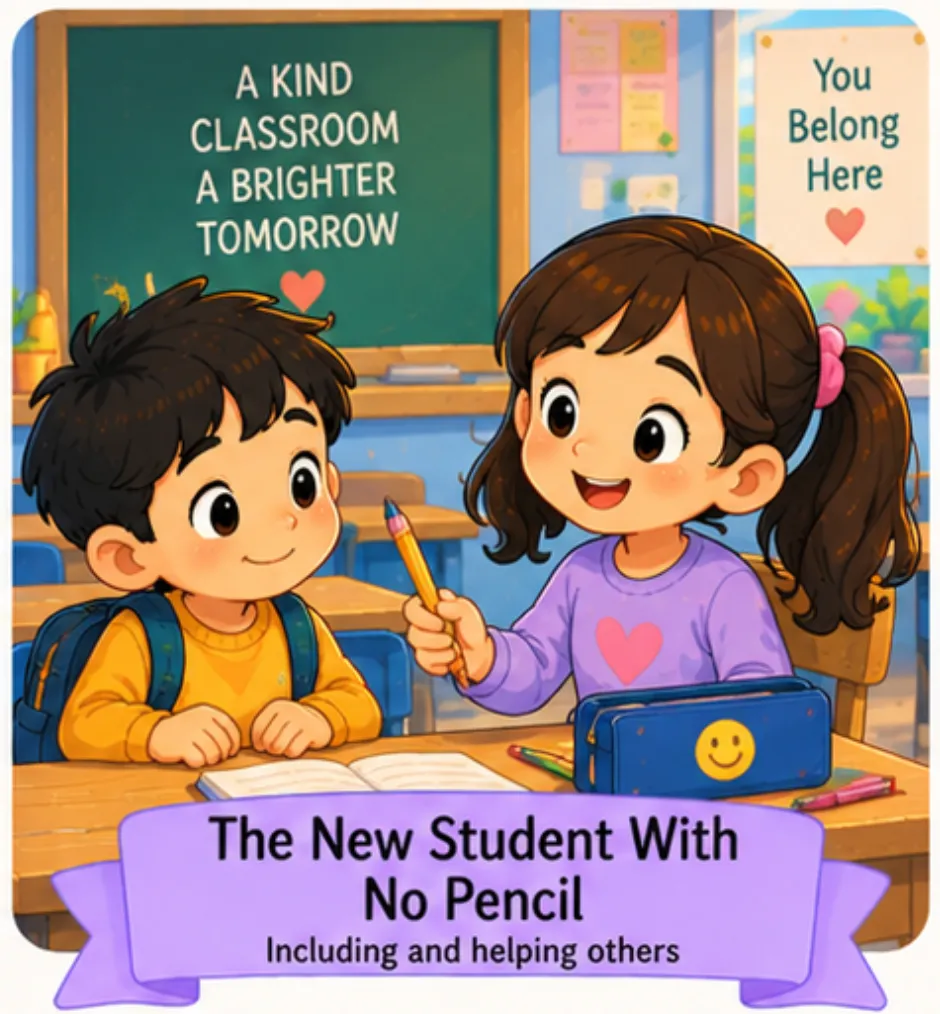
It was Monday morning when a new student named Kabir joined Maya’s class. He sat quietly at his desk and looked nervous.
When the teacher asked everyone to take out their pencils, Kabir searched his bag. He had forgotten to bring one.
Maya noticed him looking worried. She had two pencils in her pencil case, so she gave one to Kabir.
“Here, you can use mine,” she said with a smile.
Kabir thanked her and soon began writing. During recess, Maya introduced him to her friends. They played together and showed Kabir around the school.
By the end of the day, Kabir was smiling and felt much more comfortable.
Maya learned that a small act of kindness can help someone feel welcome, especially when they are new or nervous.
The Neighborhood Treasure Hunt
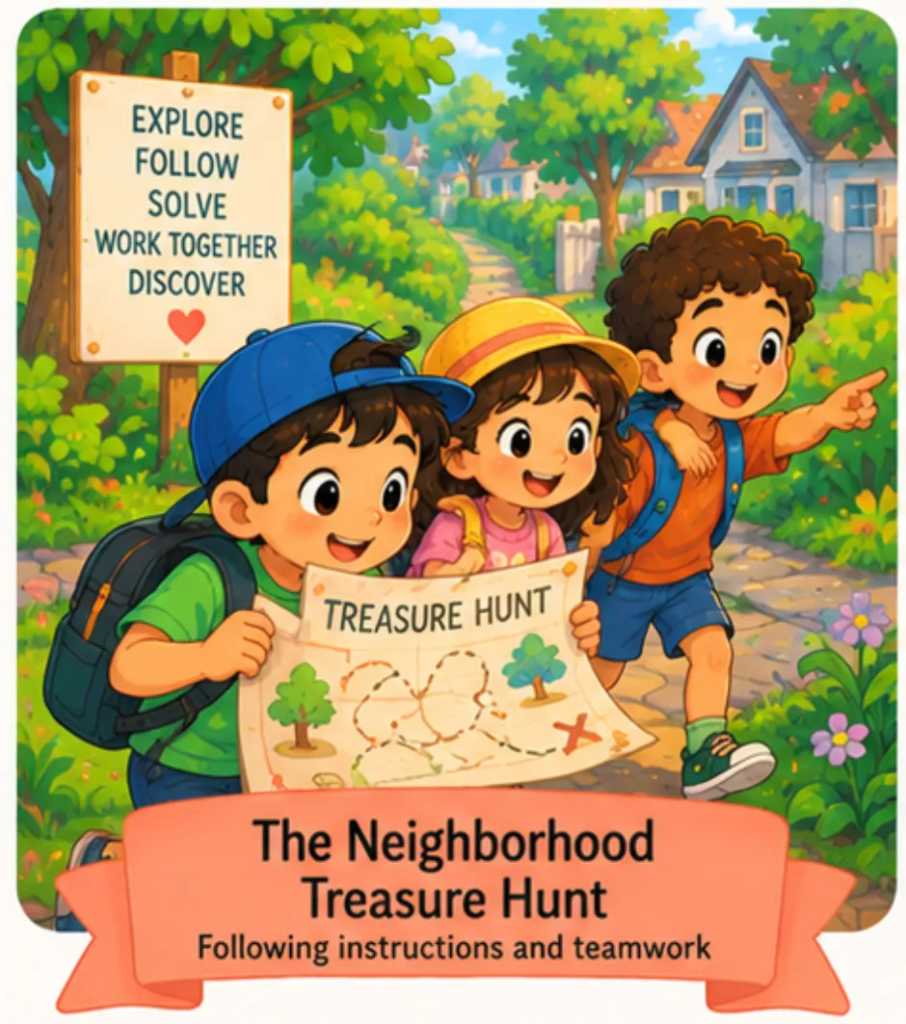
On Saturday morning, twelve-year-old Tara found a colorful note tucked under her front door. It said, “Follow the clues and find the hidden treasure!”
Tara invited her friends, Rohan and Zoya, to join her. Their first clue led them to the old park bench. The next clue was hidden near the community notice board.
The friends carefully read each clue and followed the instructions. They worked together, taking turns to solve the little puzzles.
Finally, they reached the community garden. Under a large flowerpot, they found a small wooden box. Inside were colorful stickers, pencils, and friendship badges.
The friends were excited, but they discovered one final note: “The real treasure is teamwork.”
Tara smiled. She realized that working together, listening to others, and following instructions can make an adventure even more special.
Emma and the Seeds in Her Pocket
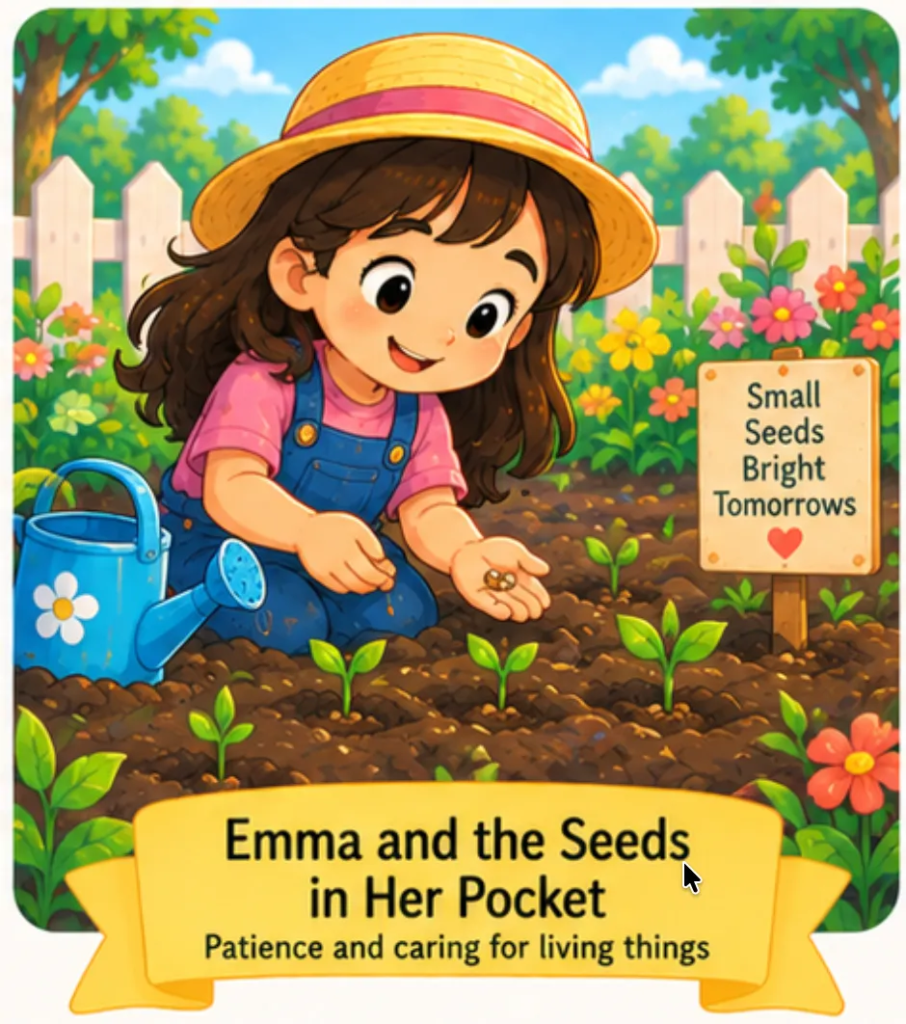
Emma loved collecting interesting things during her walks. One afternoon, she found a few sunflower seeds on the ground near her grandmother’s garden. She carefully put them in her pocket.
When she reached home, Emma decided to plant them. She made small holes in the soil, placed the seeds inside, and covered them gently.
Every morning, Emma checked the soil. For several days, nothing happened.
“Maybe they will never grow,” she thought.
Grandma smiled and said, “Good things often need time and care.”
Emma continued watering the soil a little each day. After a week, tiny green shoots appeared.
Emma was delighted. She continued caring for the plants until bright sunflowers opened.
Emma learned that patience and regular care can help small beginnings grow into something beautiful.
The Day the Playground Went Quiet
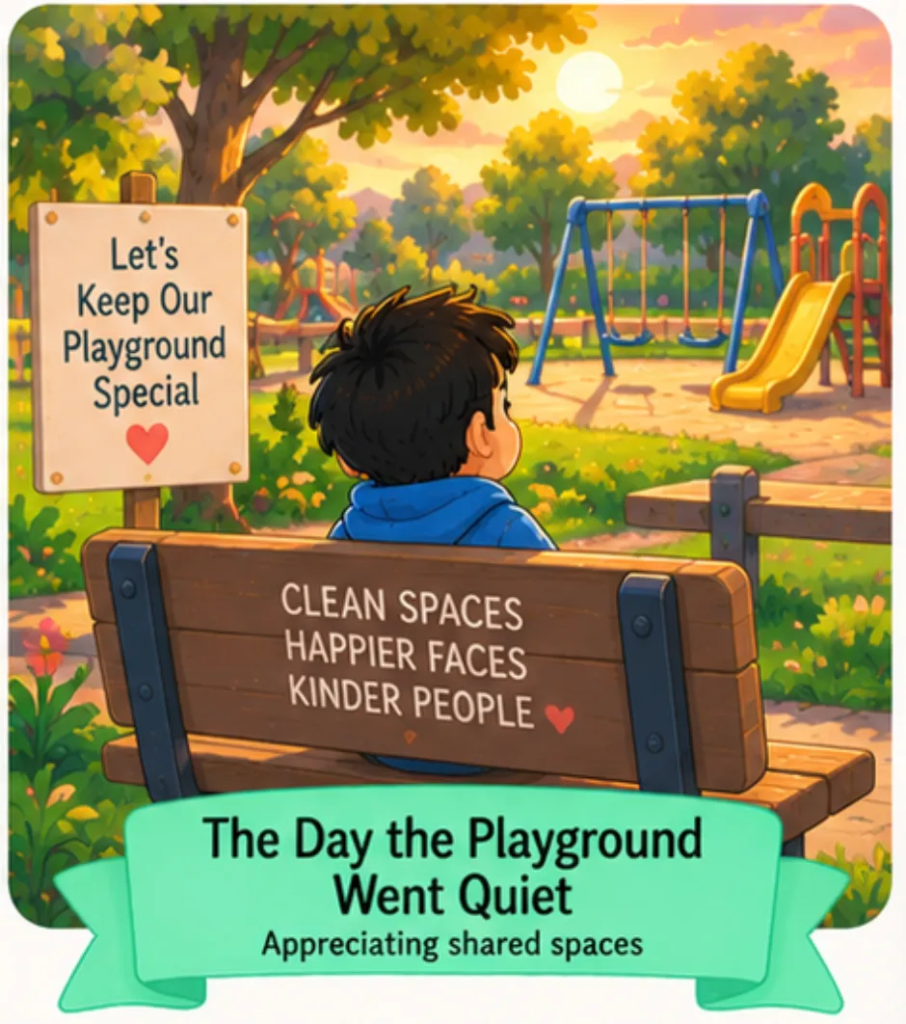
Every afternoon, children in the neighborhood played at their favorite playground. They ran, climbed, and laughed together.
One Saturday, Aarav arrived and noticed that the playground looked different. There were snack wrappers on the ground, leaves covering the slide, and empty bottles near the swings.
Nobody wanted to play in the messy space.
Aarav decided to clean it. He picked up the wrappers and put them in the correct bins. Soon, his friends joined him. Some collected leaves, while others picked up bottles.
After an hour, the playground looked clean again. The children happily returned to their games.
Aarav realized that everyone enjoyed the playground, so everyone had a responsibility to care for it.
He learned that shared places stay enjoyable when people respect them and do their part to keep them clean.
Arjun’s Homemade Kite Contest
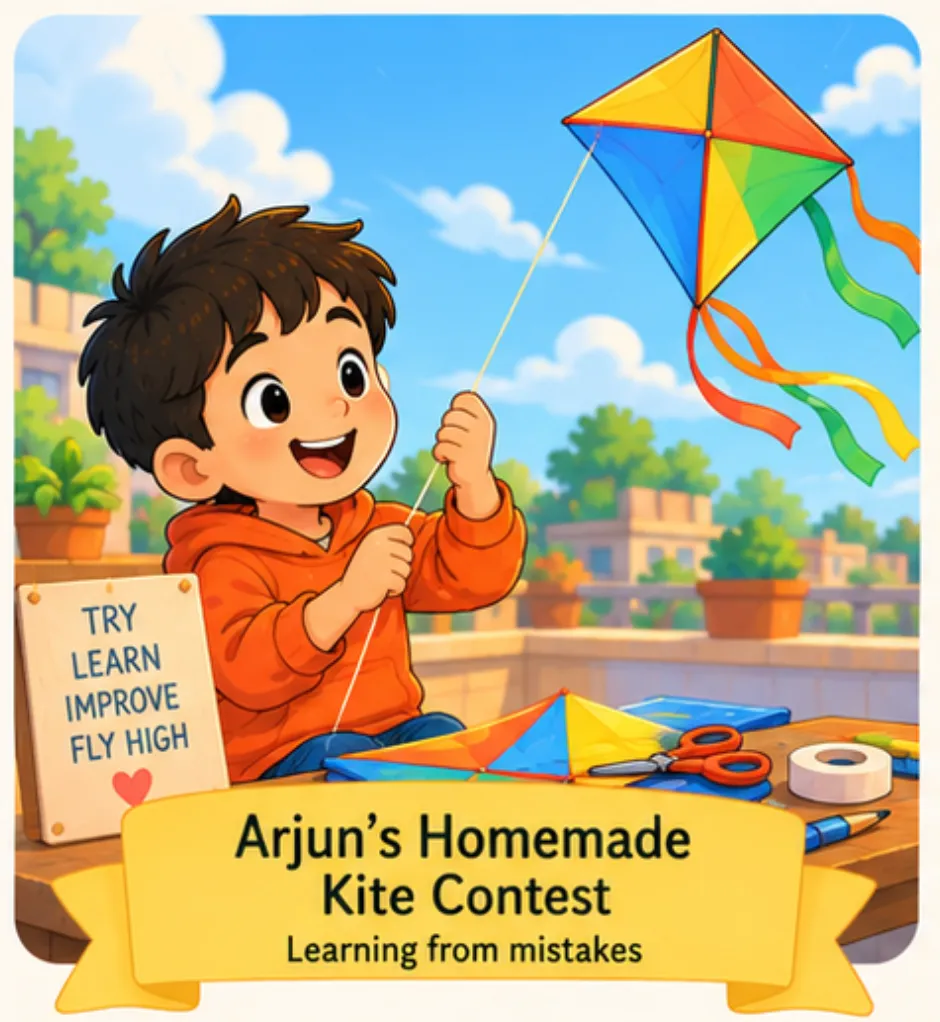
Arjun loved watching colorful kites fly in the sky. One Sunday, his neighborhood announced a homemade kite contest. Arjun decided to make his own kite.
He used paper, two thin sticks, and some string. He carefully put everything together, but when he tried to fly it, the kite fell straight to the ground.
Arjun felt disappointed. His father encouraged him to try again. Arjun checked the kite and noticed that one side was heavier than the other.
He adjusted the sticks and added a small piece of paper to balance it. On his second try, the kite rose into the sky!
Arjun did not win the contest, but he was proud of his kite.
He learned that mistakes are not failures; they help us learn, improve, and try again.
The Little Librarian for a Day
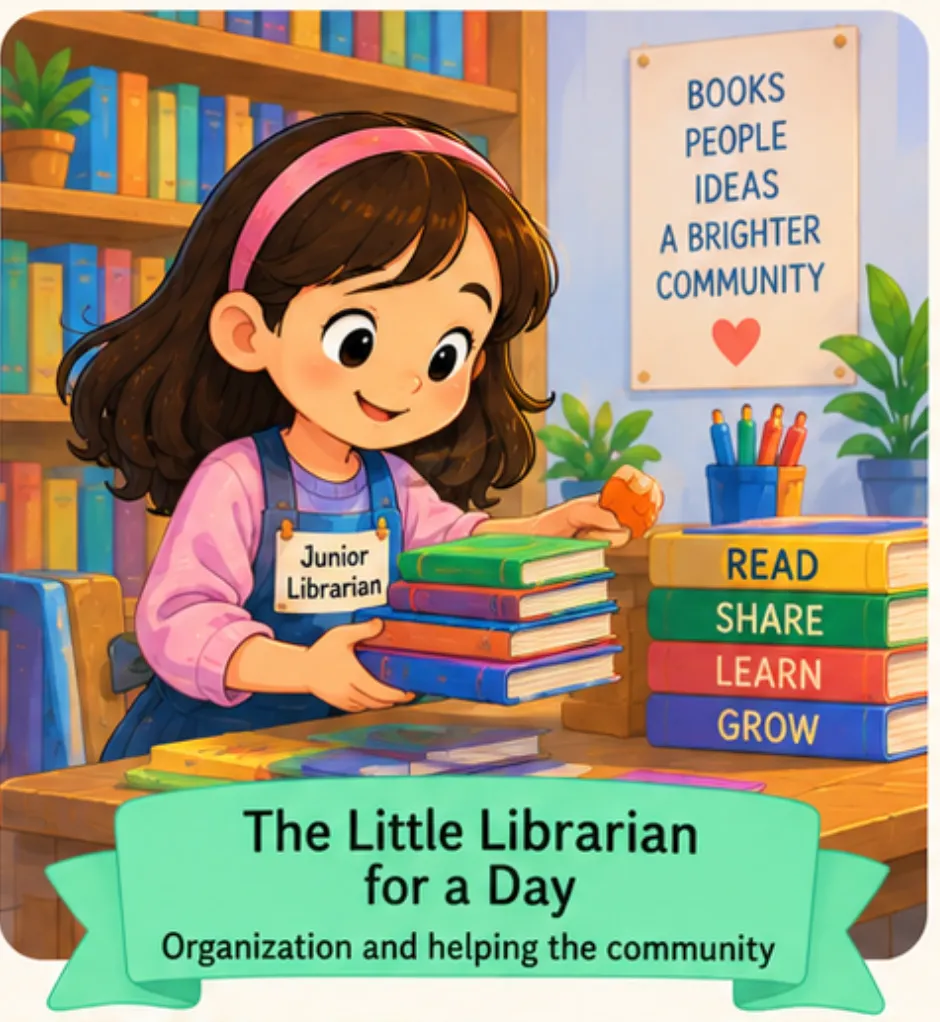
Nisha loved books and often visited the library after school. One day, her librarian, Mrs. Kapoor, asked her to help organize the children’s section.
Nisha was excited to become a “little librarian” for the afternoon.
She sorted the books by subject and placed storybooks, picture books, and science books on different shelves. She also checked that every book was returned to the correct place.
At first, the job seemed easy. Soon, Nisha noticed that several books were mixed up. She carefully checked their titles and fixed the shelves.
Before leaving, she made a small sign that said, “Please Return Books to Their Place.”
Mrs. Kapoor thanked her for the help.
Nisha learned that being organized and helping others can make a shared place easier and more enjoyable for everyone.
The Mystery Footprints on the Classroom Floor
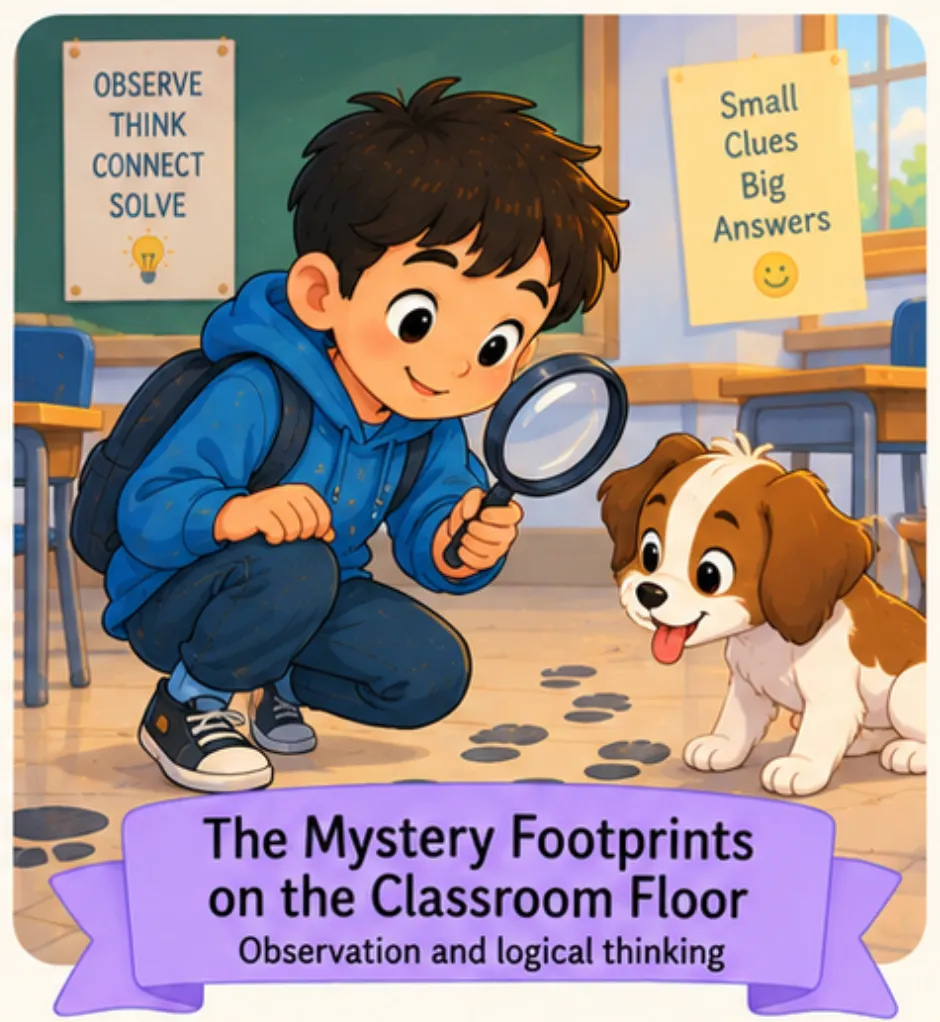
One Monday morning, Riya noticed a trail of tiny footprints across her classroom floor. They started near the door and disappeared behind the teacher’s desk.
“Who made these?” Riya wondered.
Her classmates gathered around, but nobody knew the answer. Instead of guessing, Riya decided to investigate.
She carefully followed the footprints. Near the desk, she found a small piece of clay. Then she noticed that the footprints matched the pattern on a pair of muddy shoes outside the classroom.
Riya asked her teacher about it. The teacher smiled and explained that she had walked through a wet garden before entering the classroom to bring some plants for a science lesson.
Everyone laughed.
Riya was happy that she had solved the mystery by looking carefully at the clues.
She learned that good observation and careful thinking can help us find answers without making quick guesses.
Nora’s Very Long Thank-You List
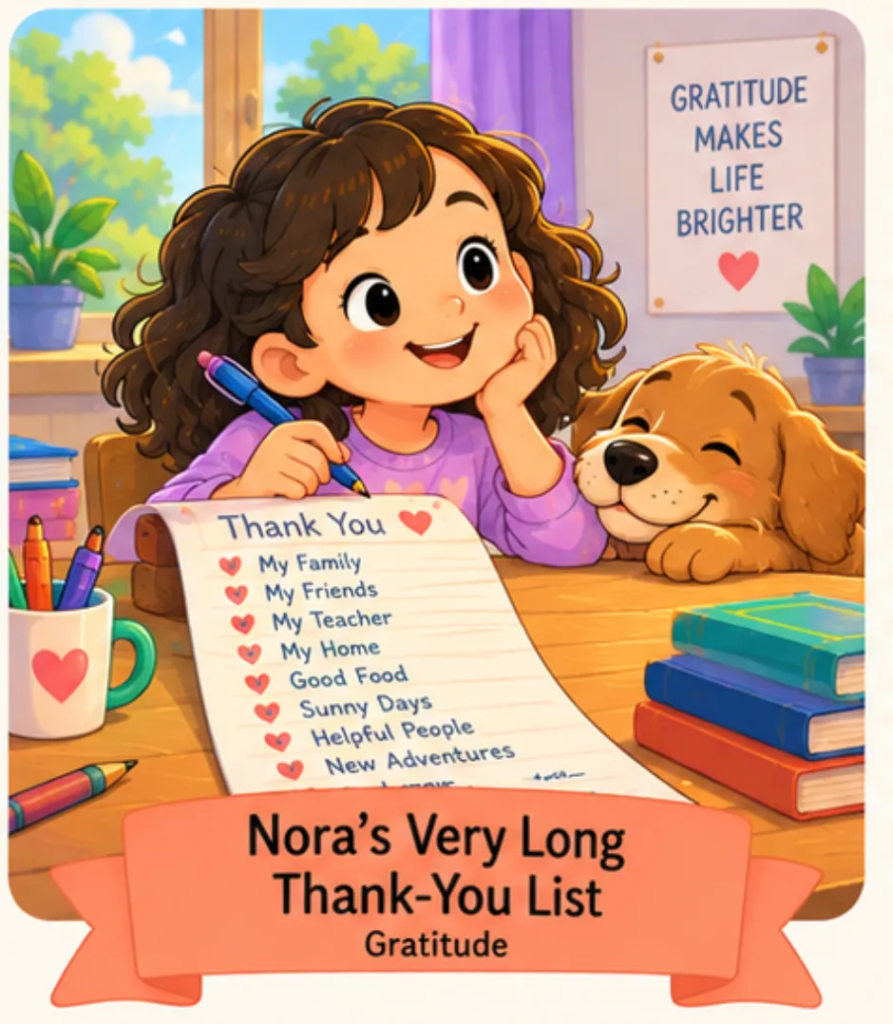
Nora’s teacher asked the class to write down three things they were thankful for. Nora thought for a moment.
“I’m thankful for my family, my friends, and my favorite toy,” she wrote.
Then she wondered about all the other people who helped her every day. She added her teacher, the school bus driver, the gardener, the shopkeeper, and the person who cleaned her classroom.
Soon, Nora’s list became very long.
The next morning, she decided to thank some of these people personally. She thanked her bus driver for driving safely and her teacher for helping her learn. She even thanked the school gardener for taking care of the flowers.
Everyone smiled when they heard her kind words.
Nora discovered that many people helped make her day better.
She learned that showing gratitude helps us notice and appreciate the kindness of others.
Nora’s Very Long Thank-You List
Nora received a small notebook for her birthday. She decided to use it as her “Thank-You Book.”
Every evening, she wrote down one person or thing she was grateful for. On Monday, she thanked her brother for helping her tie her shoelaces. On Tuesday, she thanked her friend for sharing crayons. On Wednesday, she thanked her father for reading a bedtime story.
Soon, Nora began noticing kindness everywhere. She thanked the teacher who helped her with a difficult question and the gardener who watered the flowers outside her classroom.
One day, Nora read her list aloud to her family. Everyone smiled.
Nora realized that her days were filled with many small acts of kindness.
From then on, she made gratitude a daily habit and learned that being thankful helps us notice the good things around us.
The Recycling Race Between Two Friends
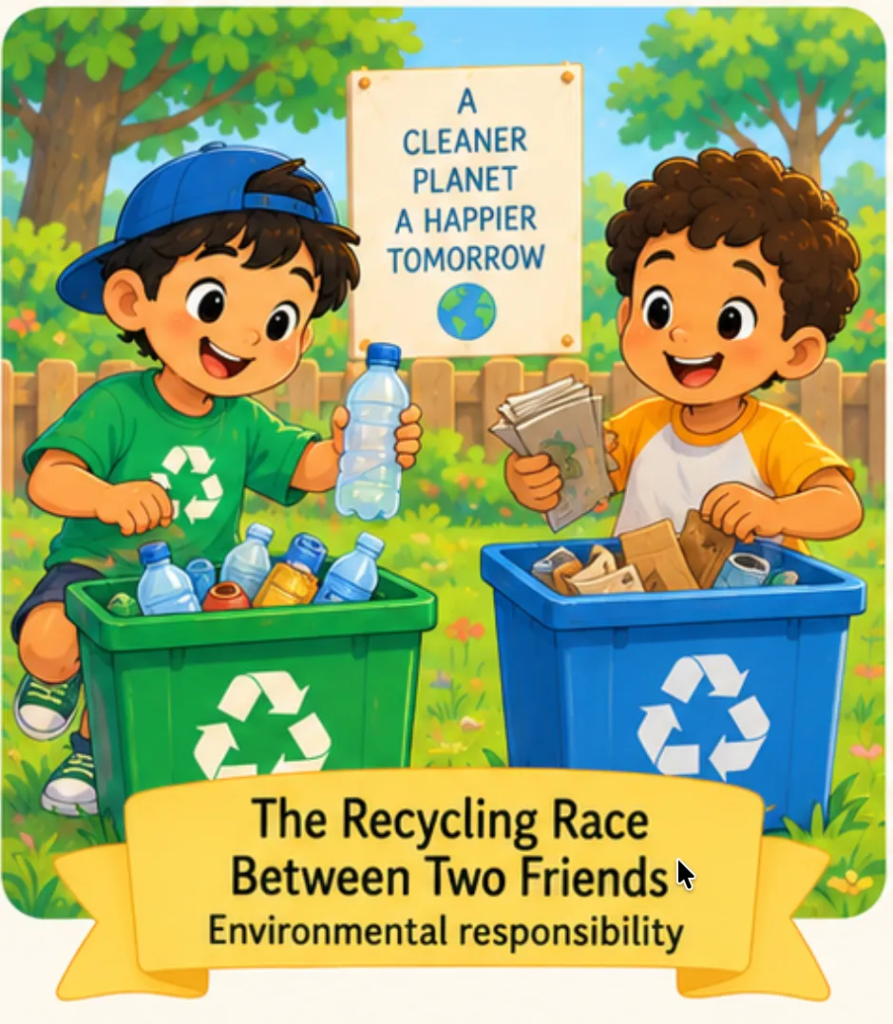
One Saturday, Neha and Arjun were playing outside when they noticed many empty bottles and paper wrappers near the park.
“Let’s see who can collect and sort them faster!” Arjun said.
They turned it into a recycling race. Neha collected paper, while Arjun picked up plastic bottles. Instead of throwing everything into one bin, they carefully separated the waste.
Soon, other children joined them. They filled the recycling bins and left the park looking clean.
Neha and Arjun did not care who won the race. They were happy to see the difference their small effort had made.
Their teacher, who was passing by, praised them for taking care of the park.
The friends learned that recycling keeps our surroundings cleaner and that working together can make caring for the environment more fun.
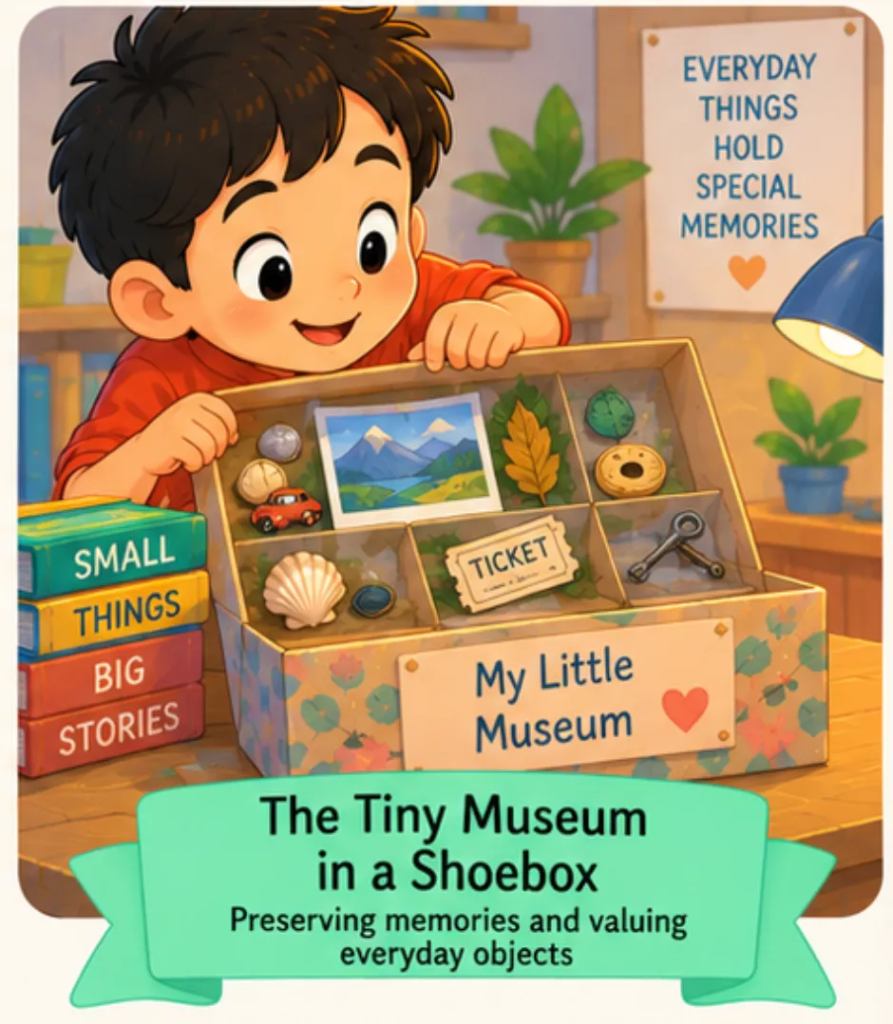
The Tiny Museum in a Shoebox
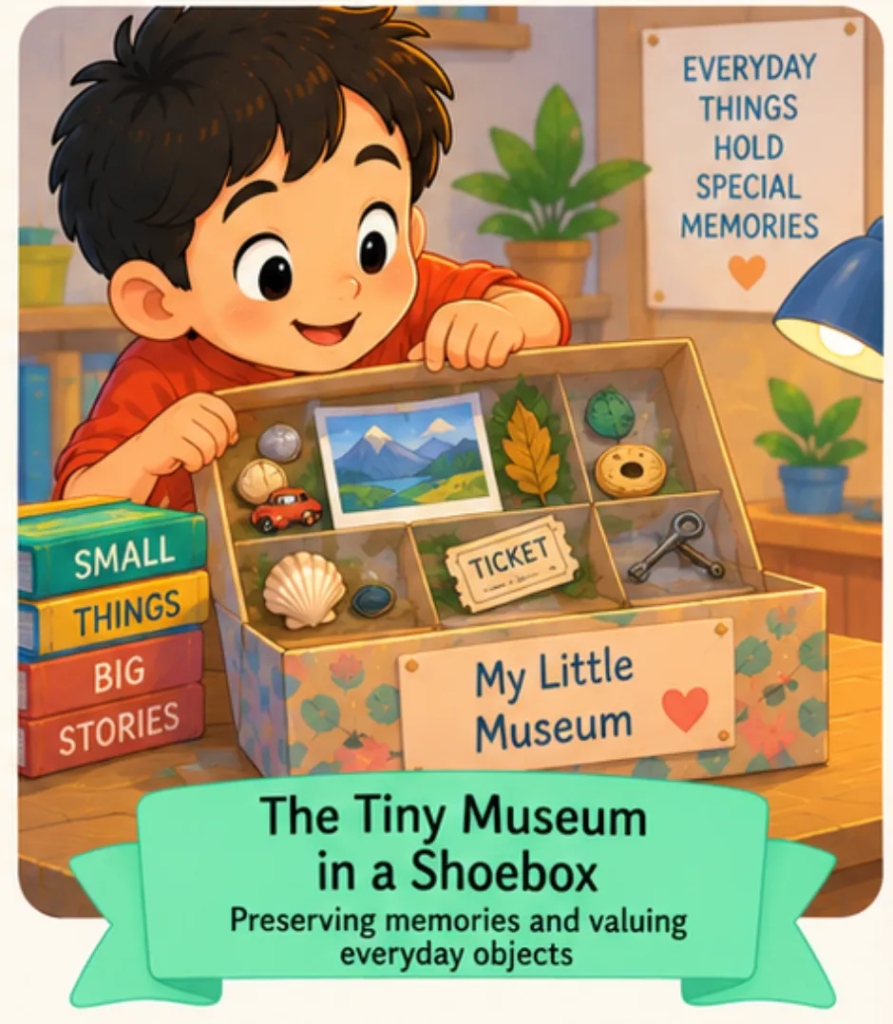
Kabir loved collecting small things. He had an old button from his grandfather’s coat, a smooth stone from a family trip, a colorful ticket, and a tiny toy car.
One rainy afternoon, Kabir decided to make a museum for his collection.
He found an empty shoebox and decorated it with paper. Then he carefully placed each item inside. He made tiny labels explaining where each object came from and why it was special.
When his family saw the little museum, they were surprised.
Grandpa smiled when he saw the old button. “That came from my favorite coat,” he said.
Kabir realized that ordinary objects could hold wonderful memories.
He decided to keep adding special things to his museum.
Kabir learned that preserving small objects can help us remember important people, places, and moments from our lives.
Conclusion
Easy short stories can make reading an enjoyable part of a child’s daily routine. Because they are short and simple, children can understand the story without feeling overwhelmed. Stories about school, family, friends, nature, and everyday adventures can also teach useful lessons such as honesty, patience, kindness, responsibility, gratitude, and teamwork. Parents and teachers can make reading more engaging by asking children questions about the characters and encouraging them to talk about the lesson. You can also turn stories into fun activities through coloring pages, drawing exercises, vocabulary games, and simple comprehension questions. With regular reading, children can gradually build their vocabulary, imagination, confidence, and love for books.
FAQs About Easy Short Stories for Kids
1. What are easy short stories for kids?
Easy short stories are simple stories with short plots, familiar words, and easy-to-understand characters. They are suitable for young children who are developing their reading skills.
2. What age are these short stories suitable for?
Most easy short stories are suitable for children between 4 and 8 years old, although the difficulty can be adjusted for younger or older children.
3. Why should children read short stories?
Short stories can help children improve their vocabulary, reading skills, imagination, comprehension, and confidence while making reading enjoyable.
4. What topics are good for children’s short stories?
Good topics include friendship, family, school, kindness, honesty, animals, nature, creativity, teamwork, and everyday adventures.
5. How long should a short story for kids be?
For young children, a story of around 100–300 words is often easy to read in one sitting.
6. What lessons can children learn from short stories?
Children can learn lessons about sharing, patience, honesty, responsibility, gratitude, kindness, courage, and helping others.
7. How can parents make story time more interesting?
Parents can ask questions, discuss the characters, encourage children to predict what happens next, and connect the story’s lesson with everyday life.
8. Can short stories help improve children’s vocabulary?
Yes. Stories introduce children to new words in a meaningful context. Parents can explain unfamiliar words and ask children to use them in simple sentences.
9. Are short stories useful for children learning to read?
Yes. Simple stories give beginner readers practice with sentences, common words, comprehension, and reading fluency without making the activity too difficult.
10. Should children read stories every day?
Daily reading can help children develop a regular reading habit. Even 10–15 minutes of reading can be a useful part of their routine.
11. What makes a children’s story easy to understand?
An easy children’s story usually has simple language, a clear beginning and ending, a small number of characters, and one main problem or idea.
12. Can short stories teach good habits?
Yes. Stories can show children the value of habits such as keeping things organized, helping others, caring for belongings, recycling, and being responsible.
13. How can teachers use short stories in the classroom?
Teachers can use stories for reading practice, comprehension questions, vocabulary activities, drawing exercises, role-play, and classroom discussions.
14. Can short stories be turned into printable activities?
Yes. A story can be combined with coloring pages, word searches, matching activities, worksheets, drawing prompts, comprehension questions, and vocabulary exercises.
15. How can I choose the right short story for my child?
Choose a story that matches the child’s age, reading level, interests, and attention span. Stories with familiar situations and clear lessons are often easier for young children to understand and enjoy.
