Key Takeaways from Short Moral Stories for Students
- Moral stories teach valuable life lessons – Students can learn honesty, kindness, responsibility, patience, courage, and respect through simple stories.
- Small actions can make a big difference – Everyday choices, such as helping someone, admitting a mistake, or listening carefully, can have meaningful results.
- Mistakes are opportunities to learn – Many stories show students that making mistakes is normal when they take responsibility and try to improve.
- Good values are useful beyond school – Lessons from moral stories can help students make better choices at home, in school, and in their daily lives.
- Reading can make learning enjoyable – Short, relatable stories combine entertainment with education, making important values easier for students to understand and remember.
24 Short Moral Stories for Students 2026
Short moral stories for students are a simple and enjoyable way to learn important life lessons. Through interesting characters and everyday situations, these stories teach values such as honesty, responsibility, kindness, patience, teamwork, and courage. They are easy to read, remember, and discuss, making learning meaningful and fun.
1. The Student Who Admitted He Was Wrong
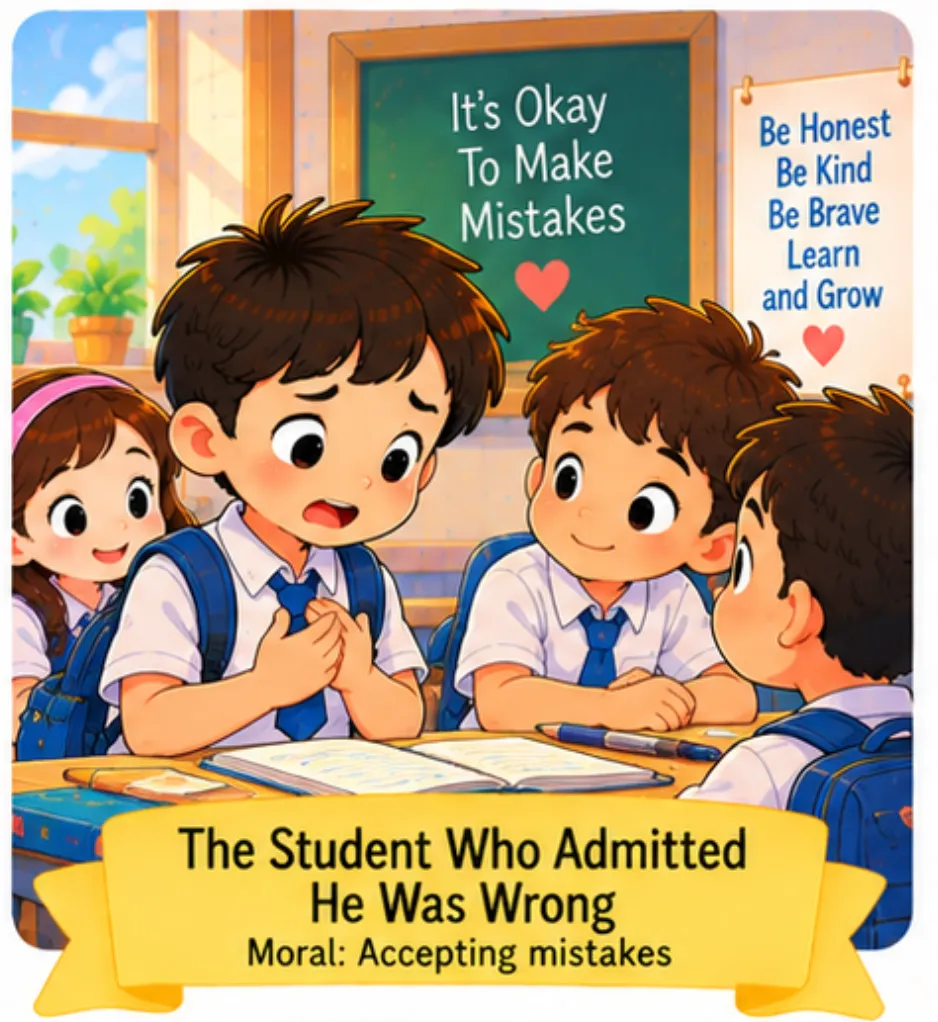
Rohan was working on a science project with his classmates. While making the model, he accidentally broke an important part. Nobody had seen what happened. Rohan felt nervous and thought about blaming another student.
But after a few minutes, he went to his teacher and said, “Ma’am, I made a mistake and broke the model. I am sorry.”
The teacher did not scold him. Instead, she said, “Thank you for telling the truth. Now let us see how we can fix it.”
Rohan and his classmates worked together and repaired the model before the presentation. His teacher praised him for being honest.
Rohan learned that admitting a mistake may feel difficult, but it is better than hiding it.
Moral: Accept your mistakes and learn from them.
Also Read:
2. The Notebook with One Missing Page
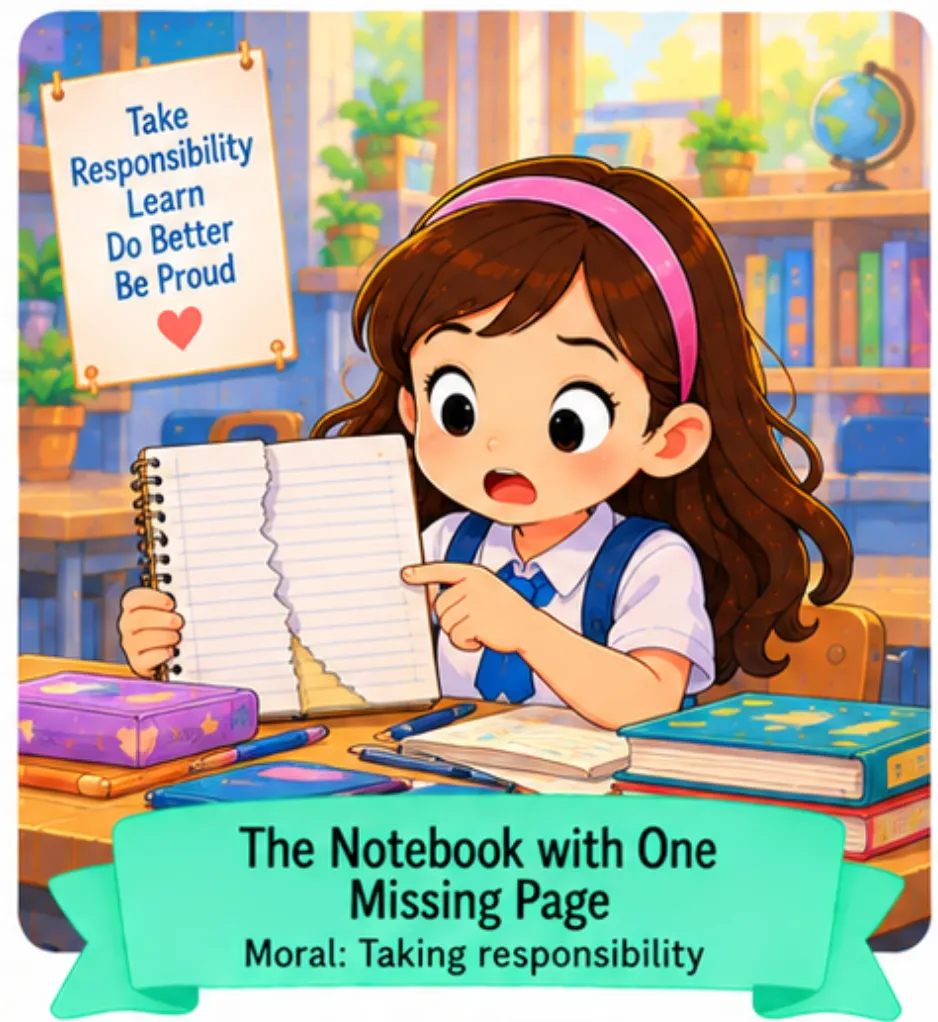
Anaya borrowed her friend’s notebook to copy some important notes. While turning the pages, she accidentally tore out one page. She quickly closed the notebook and thought nobody would notice.
The next day, her friend Meera asked, “Did you see my missing page?”
Anaya felt guilty. She decided to tell the truth.
“I accidentally tore it while copying the notes. I am really sorry,” she said.
Meera was disappointed, but she appreciated Anaya’s honesty. Anaya offered to rewrite all the notes on a fresh page.
Meera agreed, and they solved the problem together.
Anaya realized that hiding a mistake only makes it harder to solve. Taking responsibility helps us earn trust.
Moral: Take responsibility for your actions.
Also Read:
3. The Quiet Student Who Solved the Problem

During mathematics class, the teacher gave the students a difficult puzzle. Most students quickly started discussing different answers. Arjun, who was usually quiet, carefully studied the puzzle.
After several minutes, he raised his hand.
“I think I know the answer,” he said softly.
The teacher asked him to explain. Arjun calmly showed each step on the board. Everyone realized that his solution was correct.
His classmates were surprised because Arjun rarely spoke during class.
The teacher smiled and said, “Being quiet does not mean you have nothing valuable to say.”
Arjun felt more confident. His classmates also learned to listen to everyone instead of judging people by how much they speak.
Moral: Everyone has something valuable to offer.
Also Read:
4. The Borrowed Eraser
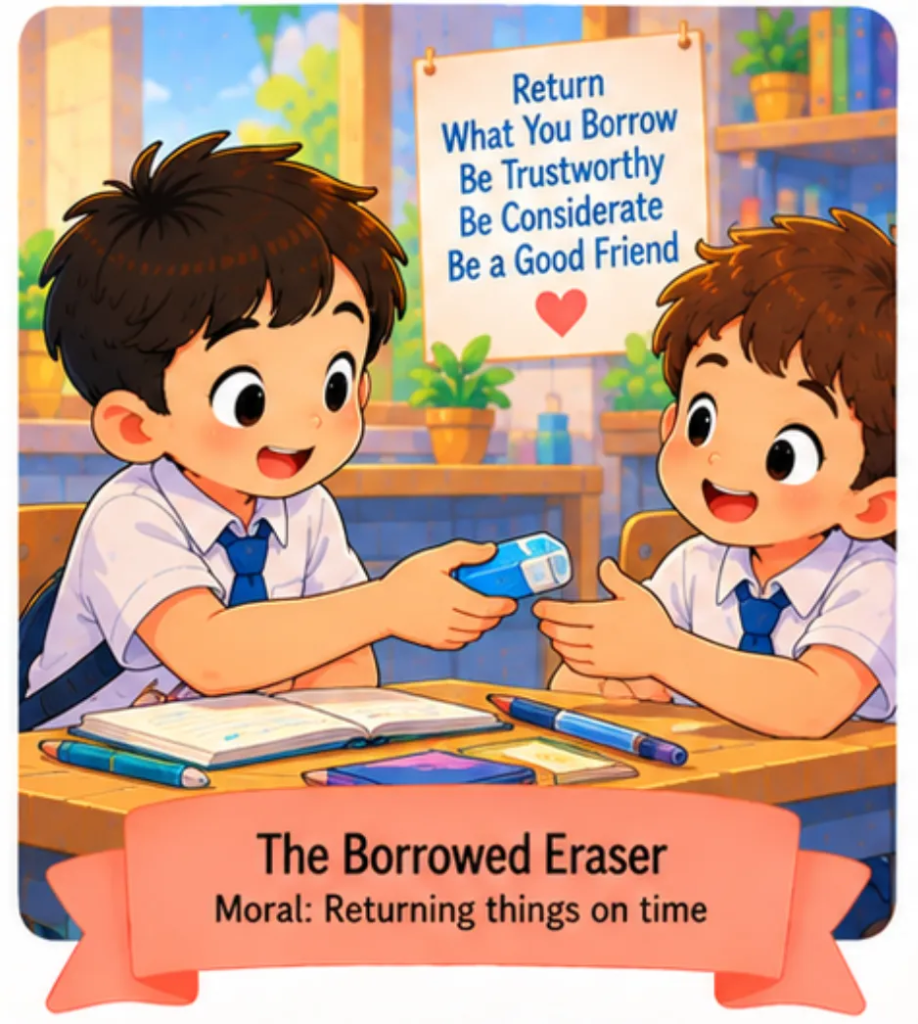
Kabir forgot his eraser before a class test. His friend Dev kindly gave him one to use.
After the test, Kabir packed his books quickly because he wanted to leave for sports practice. He accidentally kept Dev’s eraser in his pencil box.
At home, Kabir noticed it. He thought, “Dev probably has another eraser.” But he remembered that Dev had trusted him with it.
The next morning, Kabir returned the eraser and said, “Sorry, I took it home by mistake.”
Dev smiled and said, “Thanks for returning it.”
Kabir understood that even small borrowed things should be returned. Respecting other people’s belongings is an important part of being trustworthy.
Moral: Return borrowed things on time.
Also Read:
- 21+ Short Stories for Student Motivation 2026
- 21+ Kindergarten Short Stories for Kids in English 2026
5. The Group Project Secret

Four students were preparing a history project. Everyone had been given a different task. While checking the final project, Neha noticed that one student’s work had accidentally been left out.
The presentation was due the next morning. Some students suggested hiding the mistake so they could finish quickly.
Neha disagreed.
“We should tell everyone and fix it together,” she said.
The group informed their teacher and then worked together that evening. They added the missing information and completed the project on time.
During the presentation, the teacher praised the whole team for working fairly.
The students learned that teamwork does not mean only sharing success. It also means being fair when something goes wrong.
Moral: Fairness makes teamwork stronger.
Also Read:
6. The Student Who Changed His Mind

Vivek believed that group study was a waste of time. He always preferred studying alone. One day, his teacher asked the class to solve a difficult problem in groups.
Vivek joined a group reluctantly. At first, he wanted to solve everything himself. But when he got stuck, another student showed him a different method.
Vivek tried the method and understood the problem.
Later, he helped another classmate with a question he knew well.
Vivek realized that studying with others could help everyone learn something new.
He told his teacher, “I thought group study was useless, but I was wrong.”
His teacher smiled and said, “Changing your mind after learning something new is a sign of growth.”
Moral: Be open to new ideas.
Also Read:
21+ Short Mysterious Stories for Students
7. The Forgotten School Rule
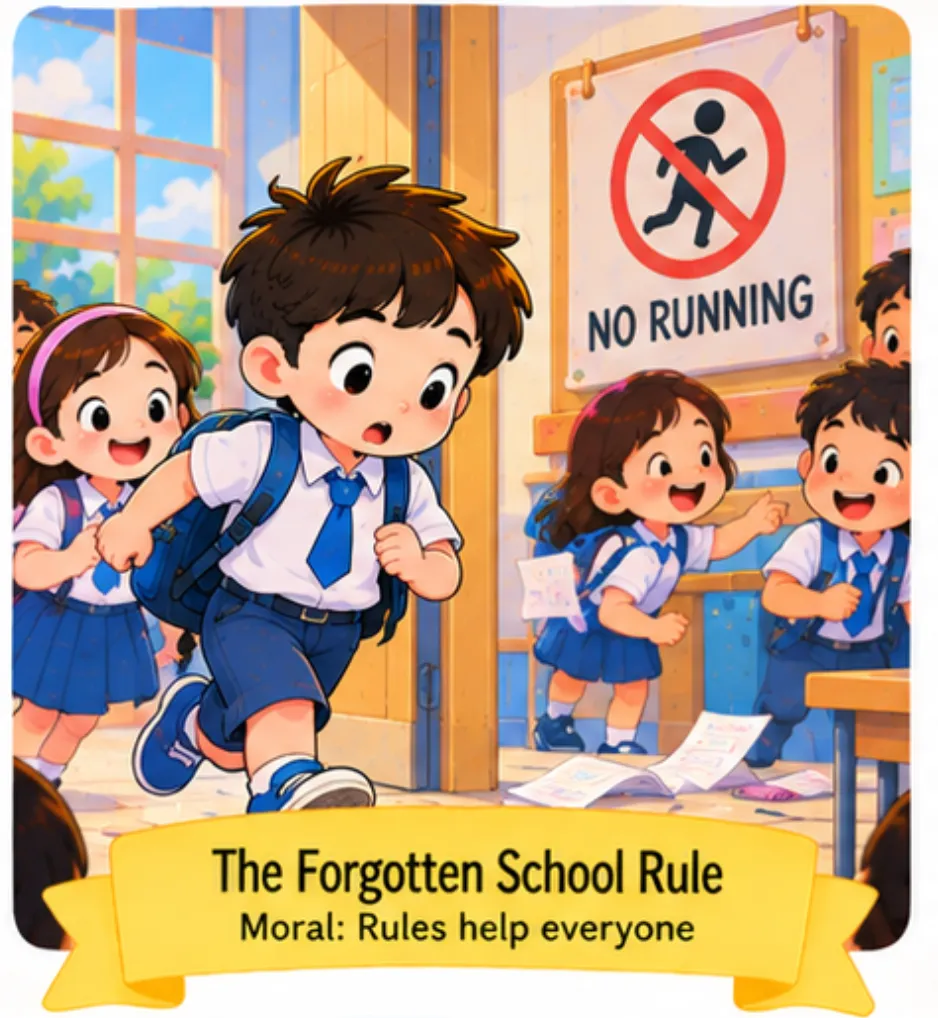
Every student in Maya’s school knew that sports equipment had to be returned after use. One afternoon, Maya borrowed a football and left it outside after practice.
The next morning, the football was wet because it had rained during the night.
Maya immediately remembered the school rule. She felt responsible because she had forgotten to return it.
She took the football to the sports teacher and explained what happened.
The teacher said, “Rules are not made just to control students. They help us take care of things that belong to everyone.”
Maya understood the importance of following simple rules. From then on, she always returned sports equipment after using it.
Moral: Rules help everyone and should be respected.
8. The Prize Nobody Wanted
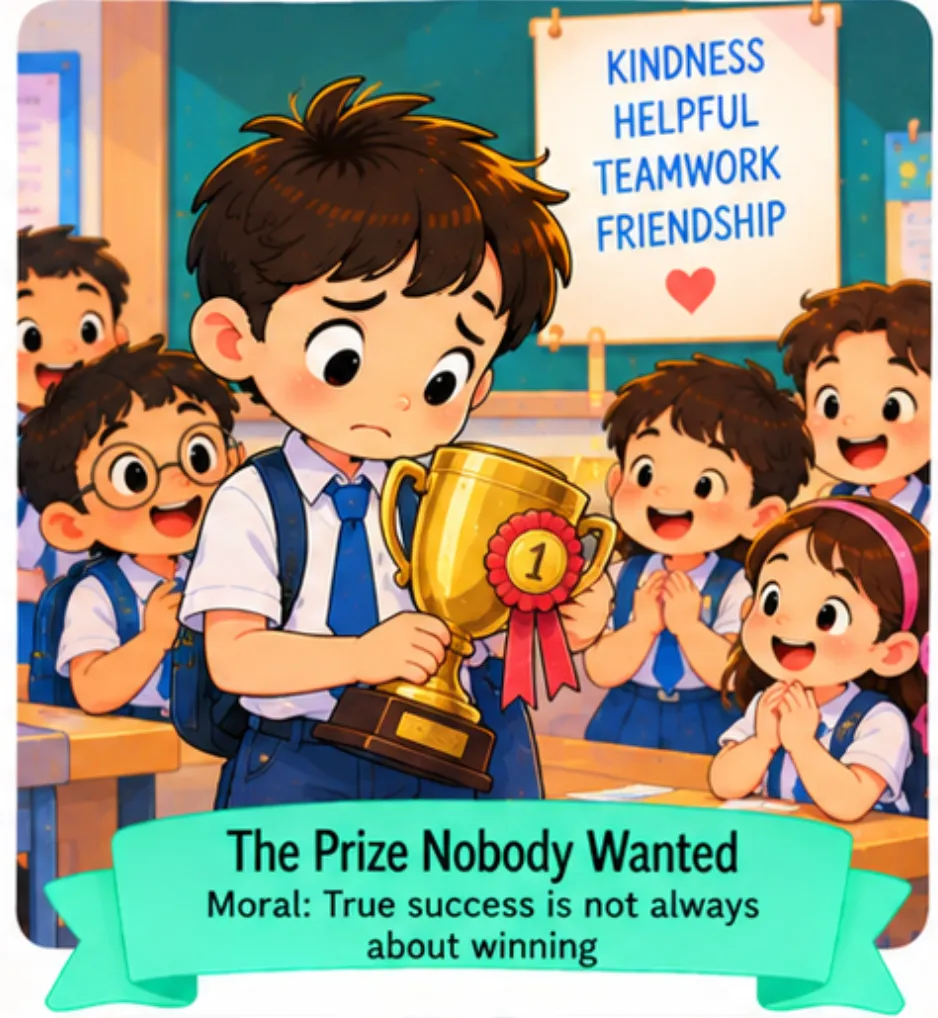
The school held a competition for the best classroom decoration. Class 8B worked hard and won the first prize.
The prize was a large box of expensive chocolates. However, the students noticed that the box had enough chocolates for only a few students.
Instead of fighting over them, they decided to share the prize with the school support staff who helped keep their classroom clean.
Their teacher was surprised.
“You worked hard for this prize. Why are you giving it away?” she asked.
One student replied, “Winning feels good, but sharing our happiness feels even better.”
The teacher smiled and congratulated them.
The students discovered that success is not only about receiving a reward. It can also be about making others happy.
Moral: True success is not always about winning rewards.
9. The Extra Seat on the Bus
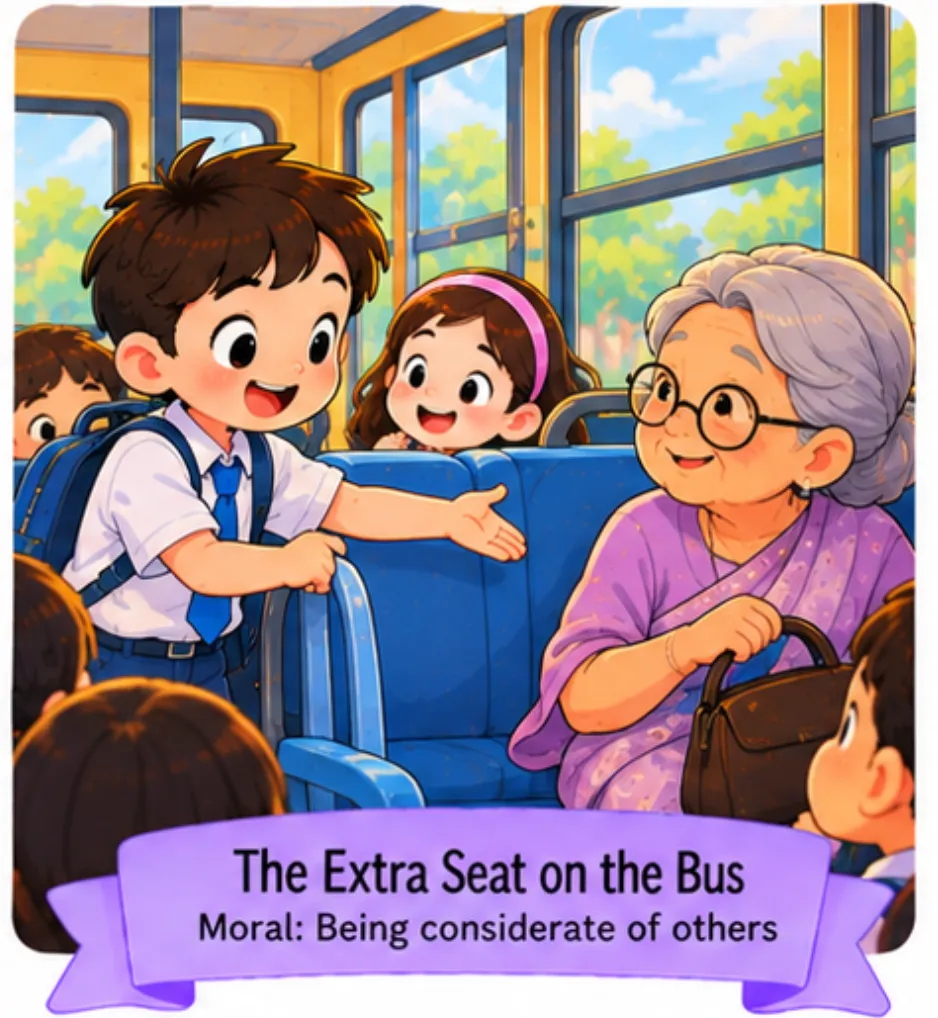
Every morning, Aarav travelled to school by bus. One day, the bus became crowded. Aarav was sitting comfortably near the window when an elderly passenger entered.
Aarav noticed that there were no empty seats.
For a moment, he looked away. Then he remembered how tired his grandparents sometimes became while standing.
He stood up and offered his seat.
“Please sit here,” he said.
The passenger thanked him warmly.
Aarav had to stand for the rest of the journey, but he felt happy. His small action had made someone else’s journey easier.
That day, Aarav understood that being considerate does not always require a big sacrifice. Sometimes, a small act can show great respect.
Moral: Be considerate of other people’s needs.
10. The Student Who Practiced Every Day
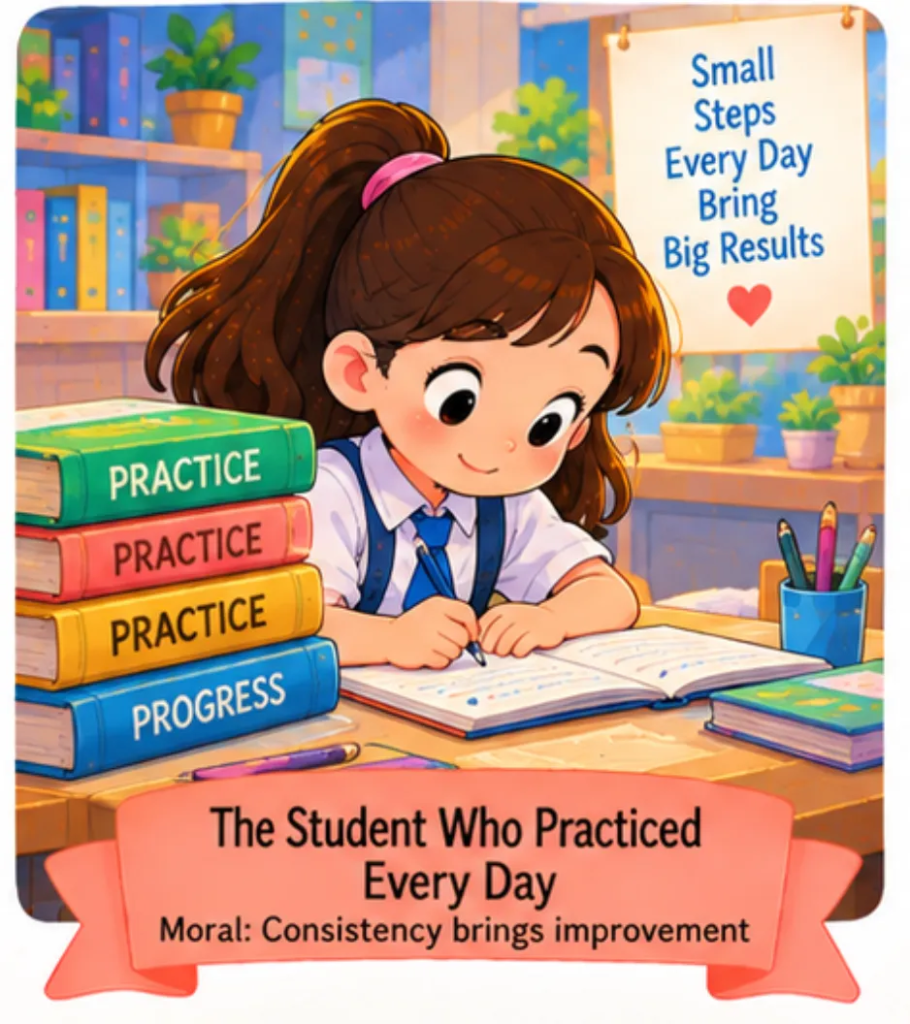
Sana wanted to become a good badminton player. During her first practice session, she missed the shuttle many times.
Some classmates laughed, and Sana felt embarrassed.
Her coach told her, “You do not need to become perfect in one day. Just practice a little every day.”
Sana followed the advice. She practiced her serves after school and worked on her footwork every morning.
After several weeks, she became much better. She still made mistakes, but she no longer gave up easily.
One day, she won a school match.
Sana understood that her improvement did not happen because of one special day. It happened because she kept practicing.
Moral: Consistent effort leads to improvement.
11. The Wrong Answer on the Board
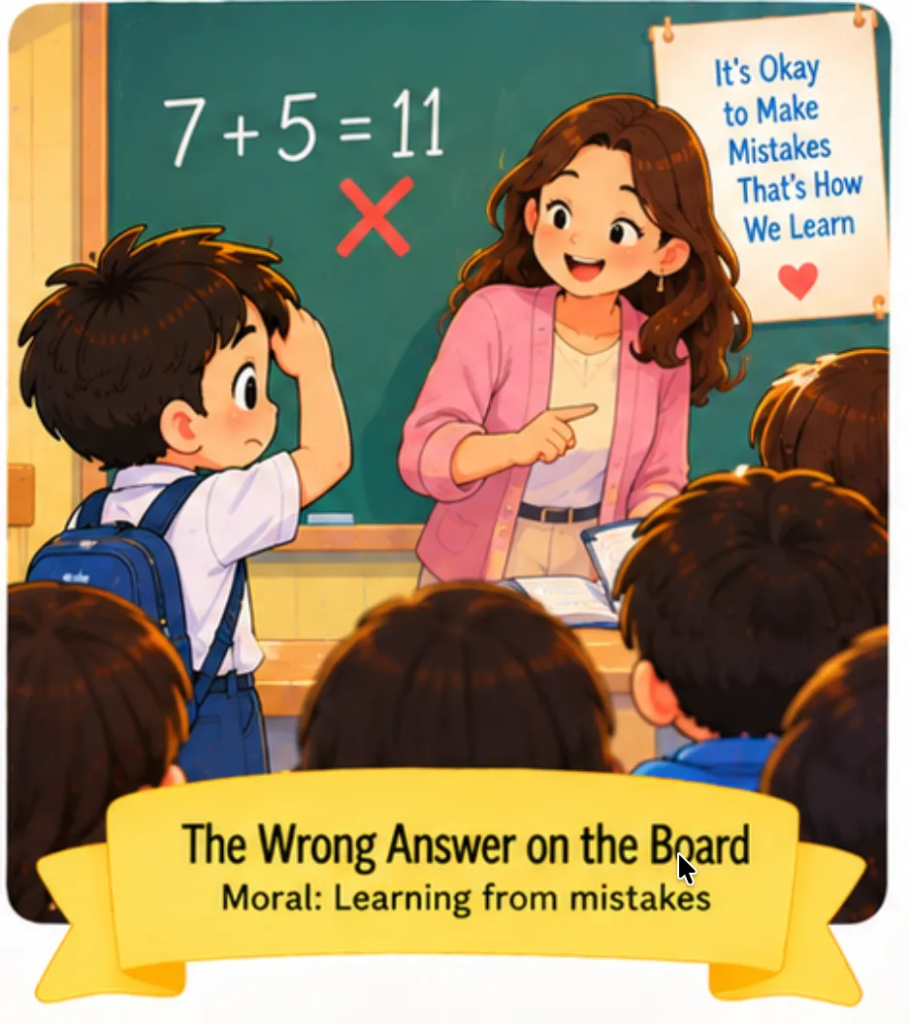
During a science class, Rahul confidently wrote an answer on the board. After checking it, the teacher said, “This answer is not correct.”
Rahul felt embarrassed because everyone was watching.
Instead of sitting down silently, he asked, “Can you please explain where I went wrong?”
The teacher explained the concept again. Rahul carefully listened and corrected his answer.
Later, he thanked the teacher for helping him understand his mistake.
His classmates also learned from the explanation.
Rahul realized that getting an answer wrong was not something to be ashamed of. It gave him a chance to learn something properly.
From that day, he stopped being afraid of making mistakes in class.
Moral: Mistakes can become valuable learning opportunities.
12. The Classmate Who Was Left Out
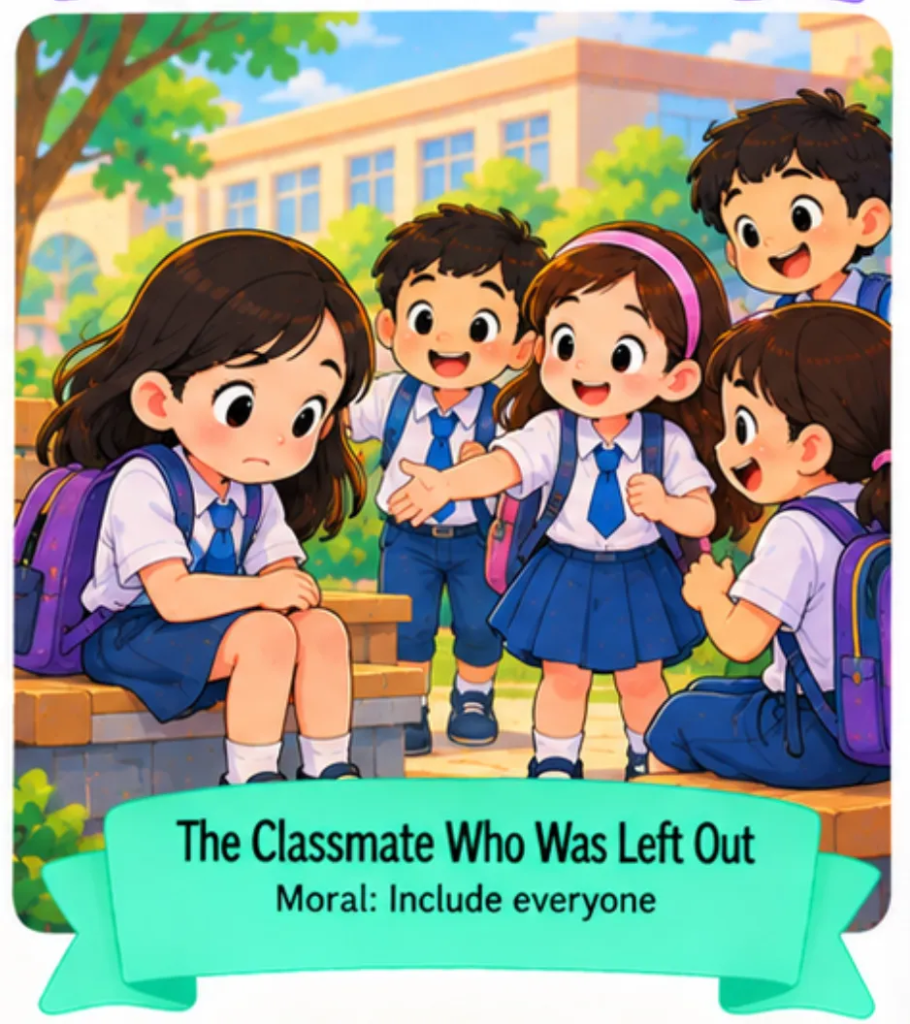
During lunch break, a group of students planned to play a game. They quickly divided themselves into teams but forgot to include Riya, a new student.
Riya stood nearby, unsure what to do.
Mehul noticed her and asked, “Would you like to join our team?”
The others agreed, and Riya happily joined the game.
At first, she was nervous because she did not know everyone. Soon, she started laughing and talking with the group.
By the end of the day, Riya had made several new friends.
Mehul realized that including someone can take only a few seconds but can make them feel welcome.
Moral: Make an effort to include everyone.
13. The Lunch Money Problem
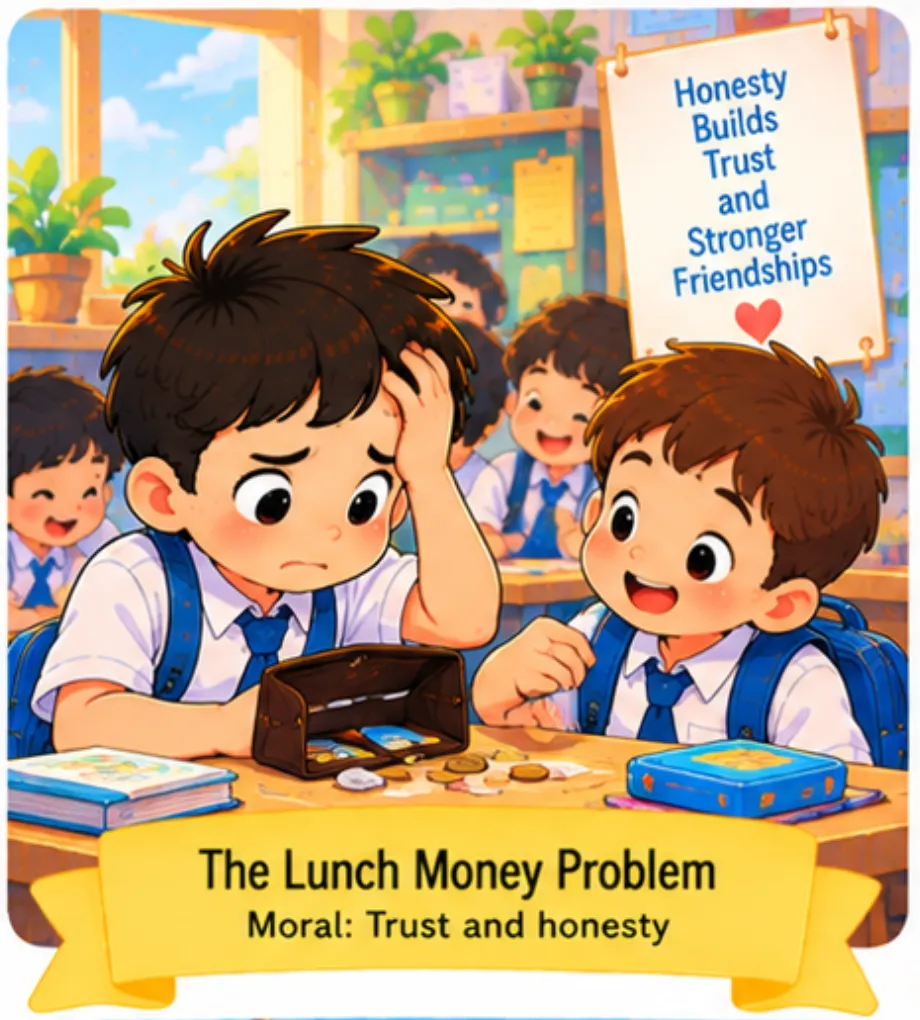
One morning, Ishaan noticed that his friend Sameer looked worried during lunch break.
“What happened?” Ishaan asked.
Sameer explained that he had accidentally lost the money his parents had given him for lunch.
Ishaan wanted to help but did not want to embarrass his friend. He quietly shared his own lunch and offered half of it.
Sameer thanked him.
Later that afternoon, Sameer found the money inside his school bag.
The next day, he thanked Ishaan again.
Ishaan told him, “You don’t have to repay me. Friends should help each other.”
Sameer smiled.
Both students understood that trust grows when people help each other honestly, especially when nobody is watching.
Moral: Trust grows through honesty and genuine support.
14. The Student Who Kept His Cool
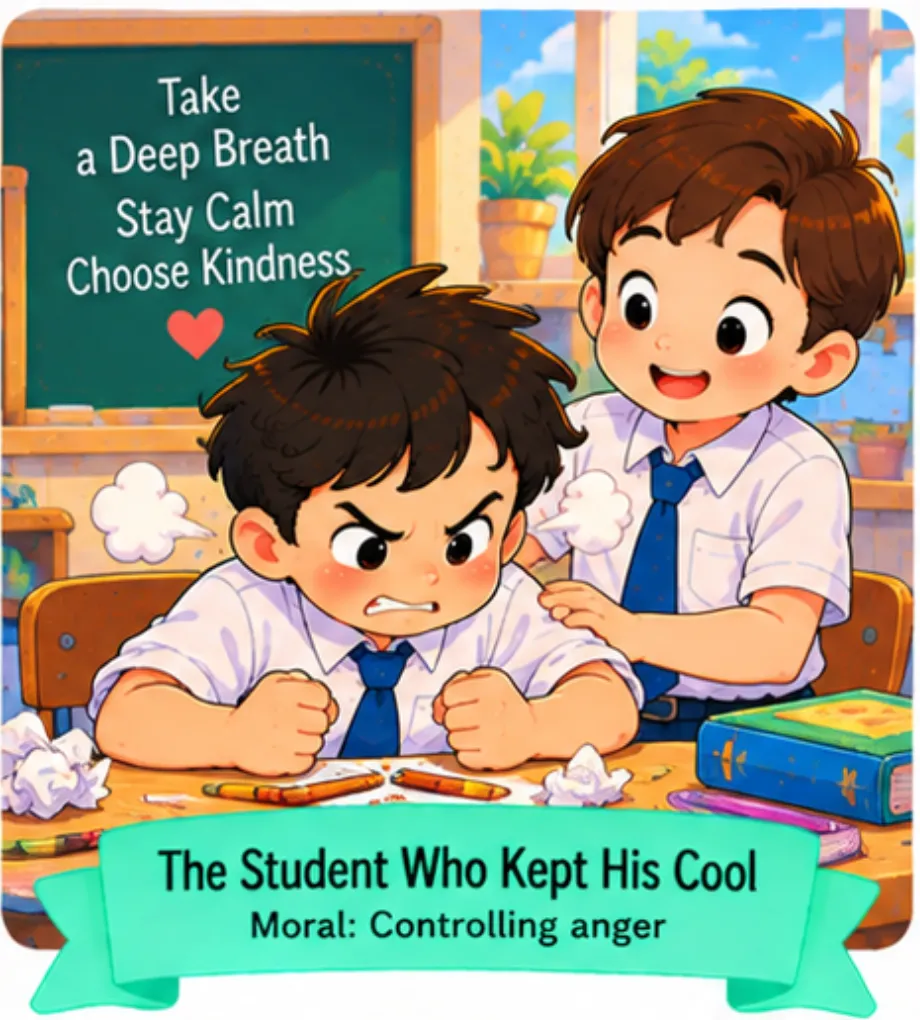
During a basketball game, Aditya’s classmate accidentally pushed him while trying to catch the ball. Aditya became angry.
“You did that on purpose!” he shouted.
The other student immediately apologized and said it was an accident.
Aditya wanted to argue, but he took a deep breath and walked away for a moment.
When he returned, he said, “It’s okay. Let’s continue playing.”
The game continued peacefully.
Afterward, the teacher told Aditya, “You controlled your anger instead of allowing it to control you.”
Aditya realized that reacting immediately could have turned a small accident into a big argument.
From then on, he tried to pause whenever he felt angry.
Moral: Stay calm before reacting in anger.
15. The School Bag Swap
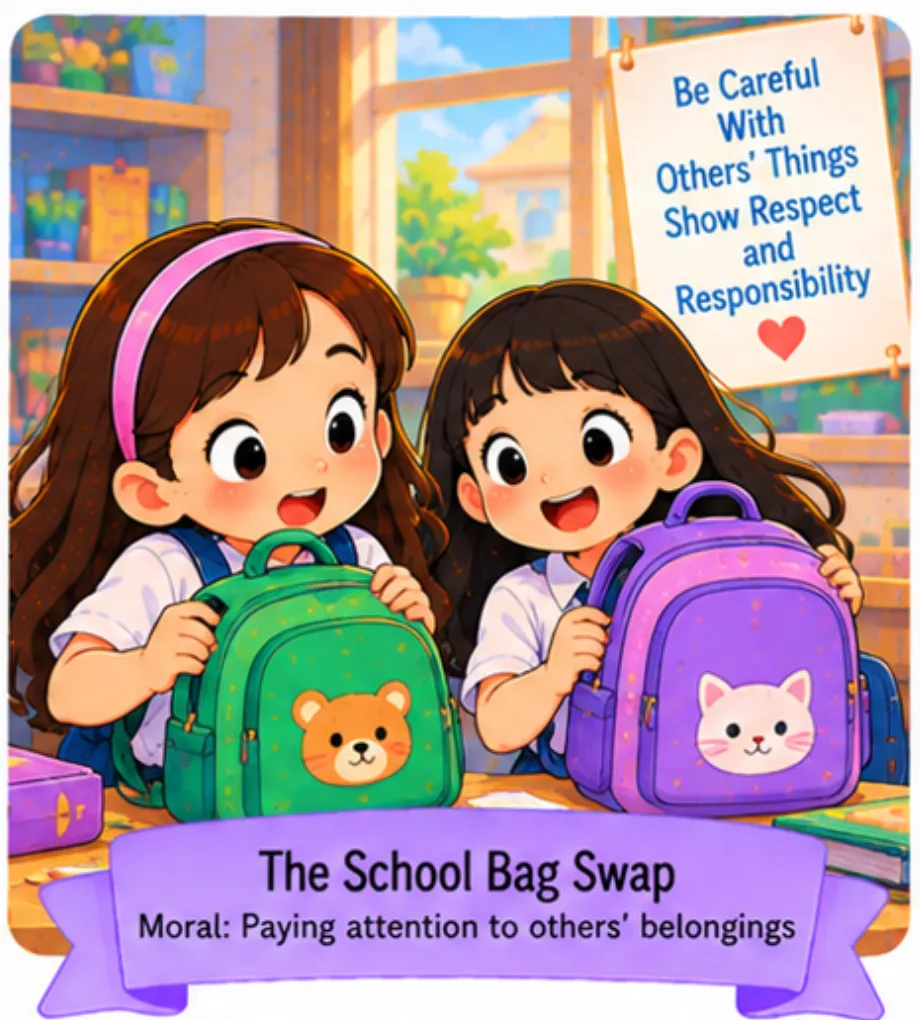
After school, Naman quickly picked up a black school bag from the classroom and went home.
When he opened it, he noticed that the books inside were not his.
He realized that he had taken his classmate Varun’s bag by mistake.
Naman could have waited until the next day, but he knew Varun might need his books for homework.
He immediately called Varun and apologized. The two students met nearby and exchanged their bags.
Varun laughed and said, “I was wondering why my bag suddenly felt different!”
Naman learned to check his belongings carefully before leaving school.
He also understood that fixing a mistake quickly can prevent unnecessary problems.
Moral: Pay attention to other people’s belongings and correct mistakes quickly.
16. The Competition Nobody Finished

The school organized a paper-airplane competition. Students had to make planes that could fly the farthest.
Everyone was excited. The competition began, but strong wind made it difficult for many planes to fly properly.
Some students became frustrated and wanted to quit.
The teacher said, “The goal is not only to win. Try different designs and enjoy the experiment.”
The students began changing their planes and testing them again.
Nobody managed to complete the original competition because the weather became worse. Still, the students had learned many new things about balance and design.
They realized that an activity can still be valuable even when the expected result does not happen.
Moral: Enjoy learning and the journey, not just the final result.
17. The Student Who Listened First
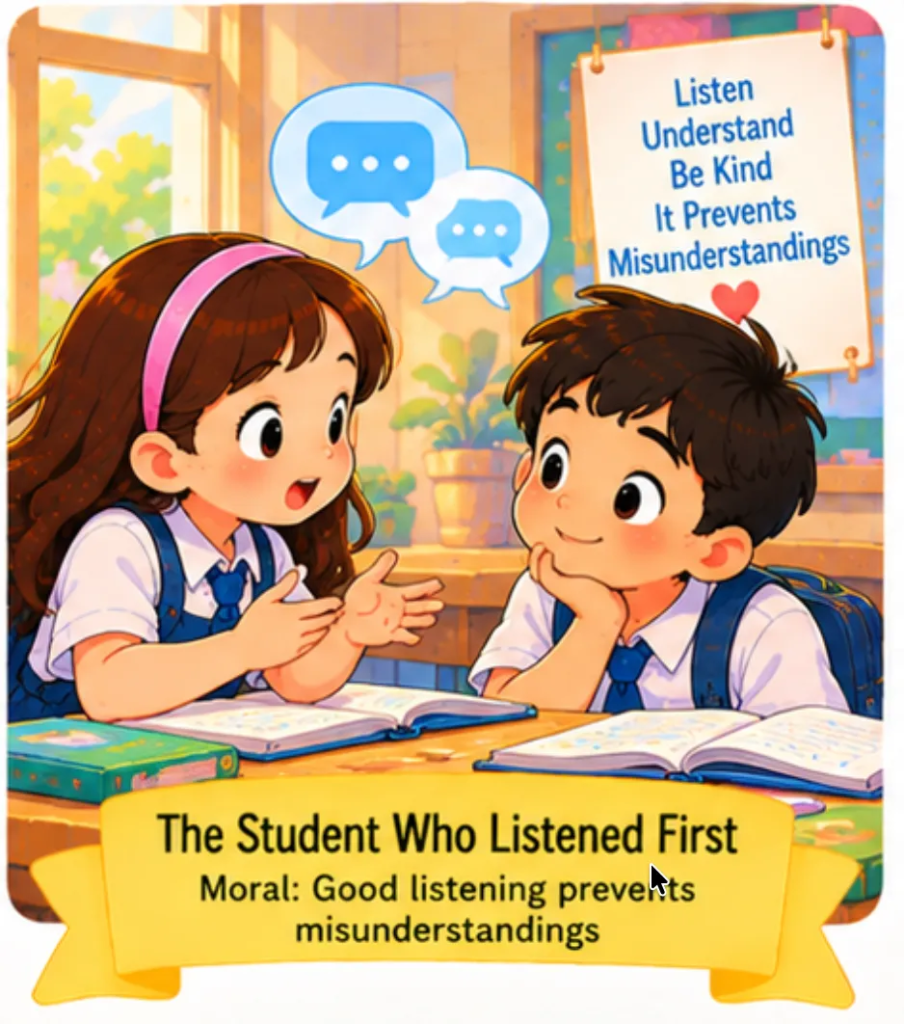
During a group assignment, Priya heard her teammate say that their project needed another section. Priya immediately interrupted.
“No, we already have enough,” she said.
Her teammate looked confused and explained that she was actually talking about a different part of the project.
Priya realized that she had misunderstood her.
“I am sorry. I should have listened first,” she said.
The group then discussed the idea properly and discovered that the extra section would improve their project.
Priya learned an important lesson that day. Sometimes, people respond too quickly because they think they already understand what someone is saying.
After that, she made an effort to listen completely before giving her opinion.
Moral: Good listening helps prevent misunderstandings.
18. The Art Competition Shortcut
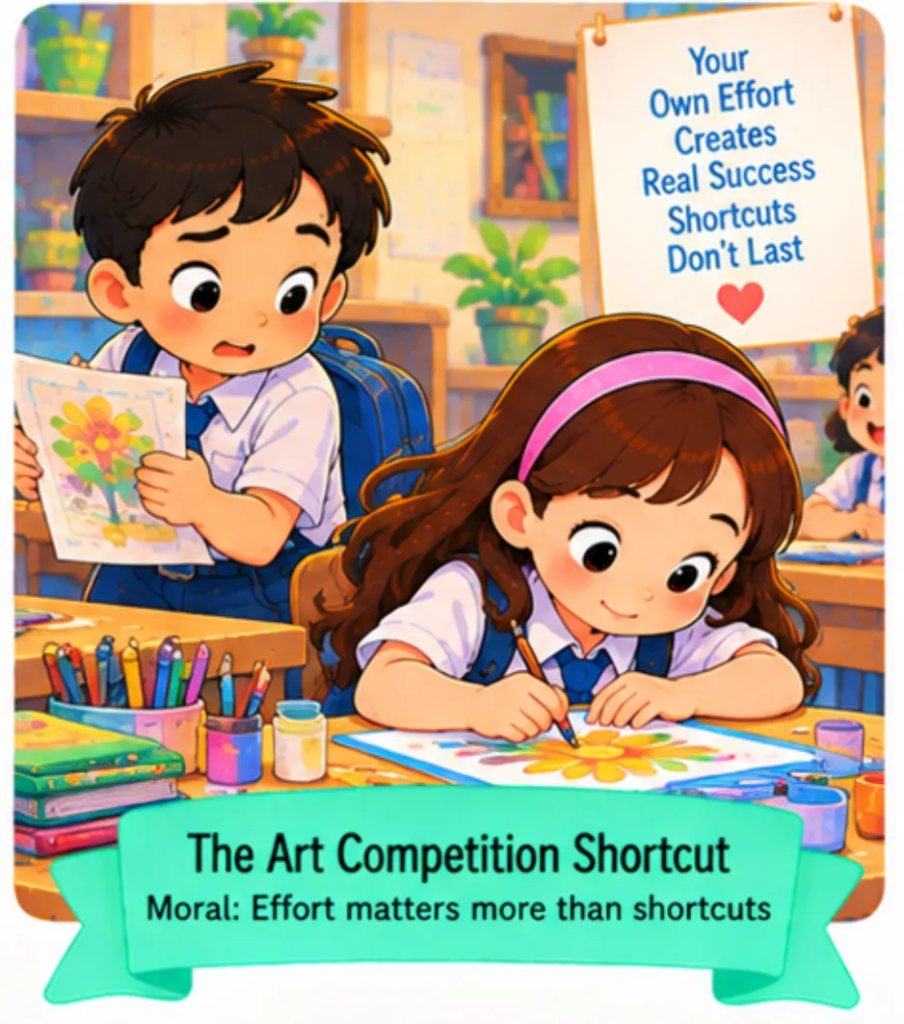
Tara entered a school drawing competition. She wanted to finish quickly, so she copied part of a picture from an old magazine.
Her teacher noticed the similarity.
“Tara, did you create this drawing yourself?” she asked.
Tara admitted that she had copied some parts.
The teacher explained that winning through copying would not help her improve as an artist.
Tara decided to start again. This time, she created her own drawing, even though it was simpler.
She did not win the competition, but her teacher praised her effort and originality.
Tara realized that an honest attempt teaches more than a prize earned through a shortcut.
Moral: Genuine effort is more valuable than shortcuts.
19. The Class Pet’s Missing Food
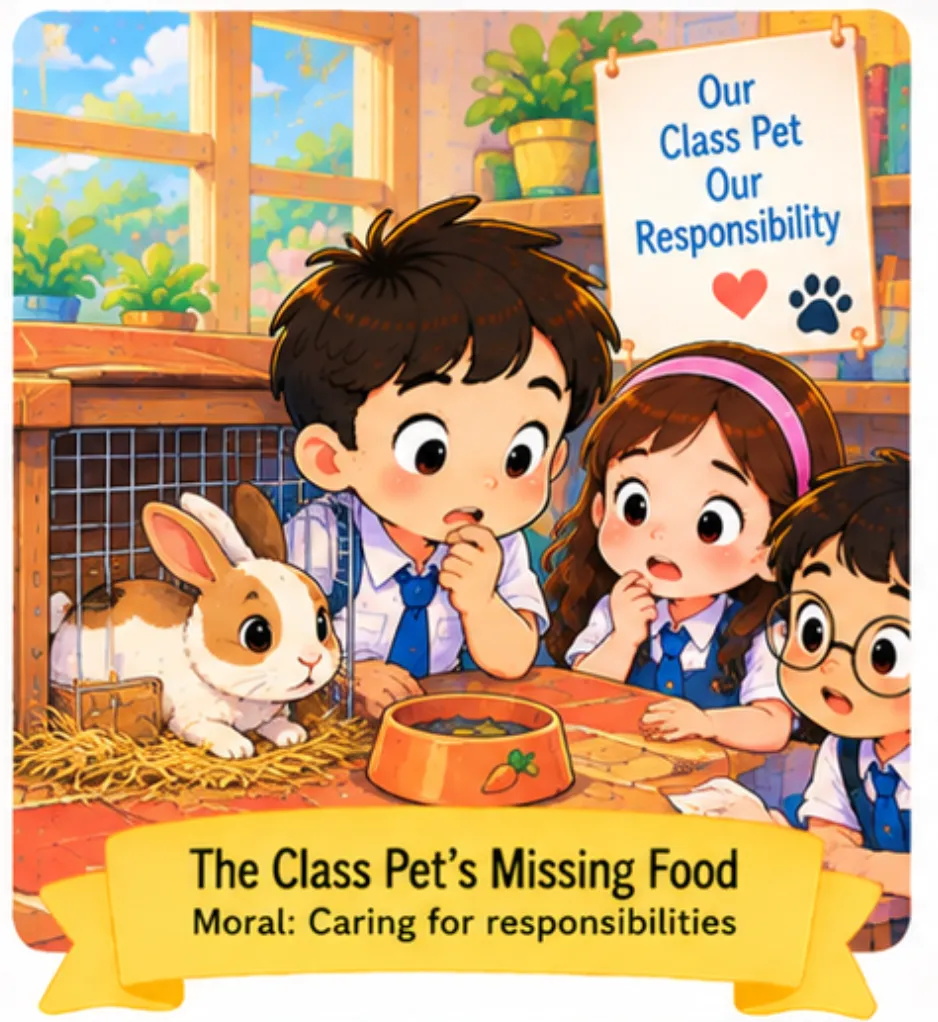
Class 7A had a small rabbit named Snowy as their class pet. Each week, different students were responsible for feeding it.
One Monday, it was Aman’s turn. He became busy preparing for a test and completely forgot.
The next morning, he remembered his responsibility and immediately told the teacher.
“I forgot to feed Snowy yesterday. I am sorry,” he said.
The teacher thanked him for being honest and asked him to make sure Snowy had fresh food and water.
Aman felt responsible and became more careful after that.
He started writing his duties in his notebook so he would not forget them again.
Aman learned that caring for something means remembering your responsibilities even when you are busy.
Moral: Take your responsibilities seriously.
20. The Student Who Gave Credit to a Friend
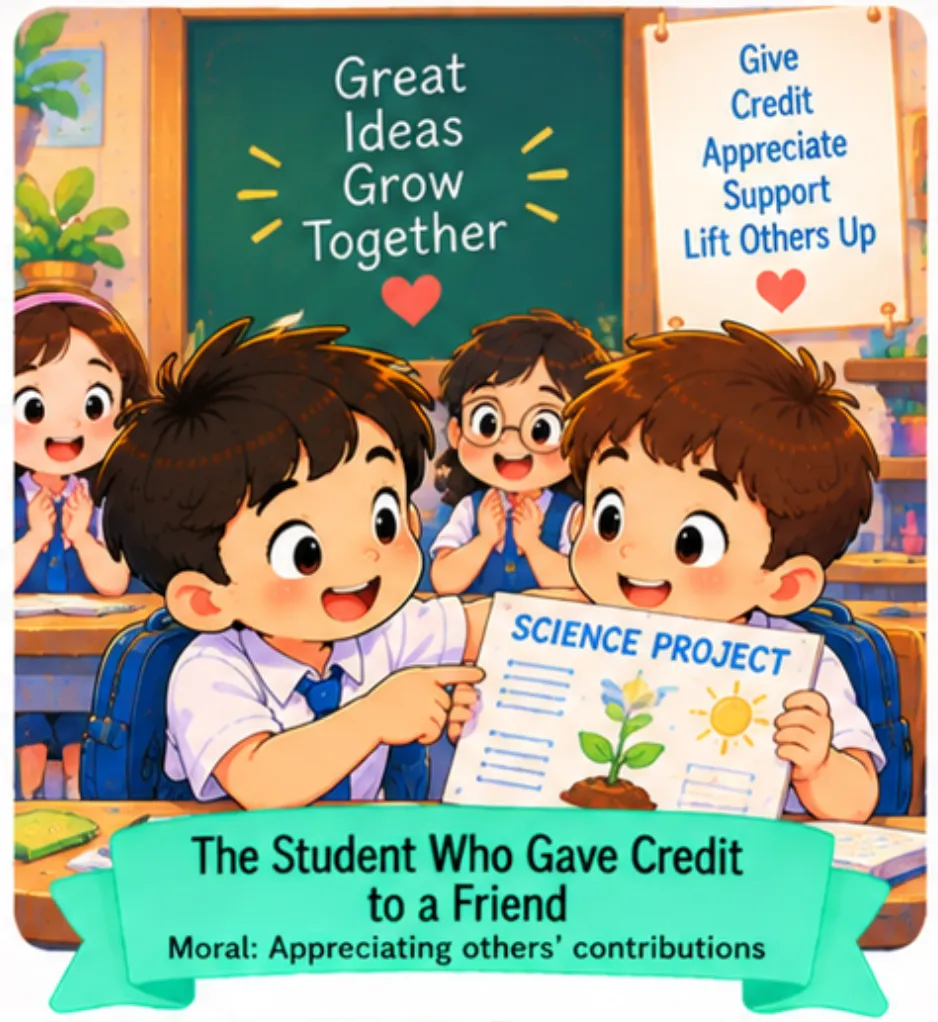
The school was preparing for a cultural event. Arjun designed a beautiful poster, but his friend Kunal had helped him create the layout.
When the teacher praised Arjun’s work, she asked, “Who helped you with the design?”
Arjun could have accepted all the praise himself. Instead, he said, “Kunal helped me plan the layout. The poster would not look this good without his ideas.”
Kunal smiled.
The teacher praised both students for working together.
Arjun realized that giving credit to others does not reduce our own achievement. Instead, it shows that we value the people who helped us.
Moral: Appreciate and give credit to people who contribute.
21. The Rainy-Day Classroom Challenge
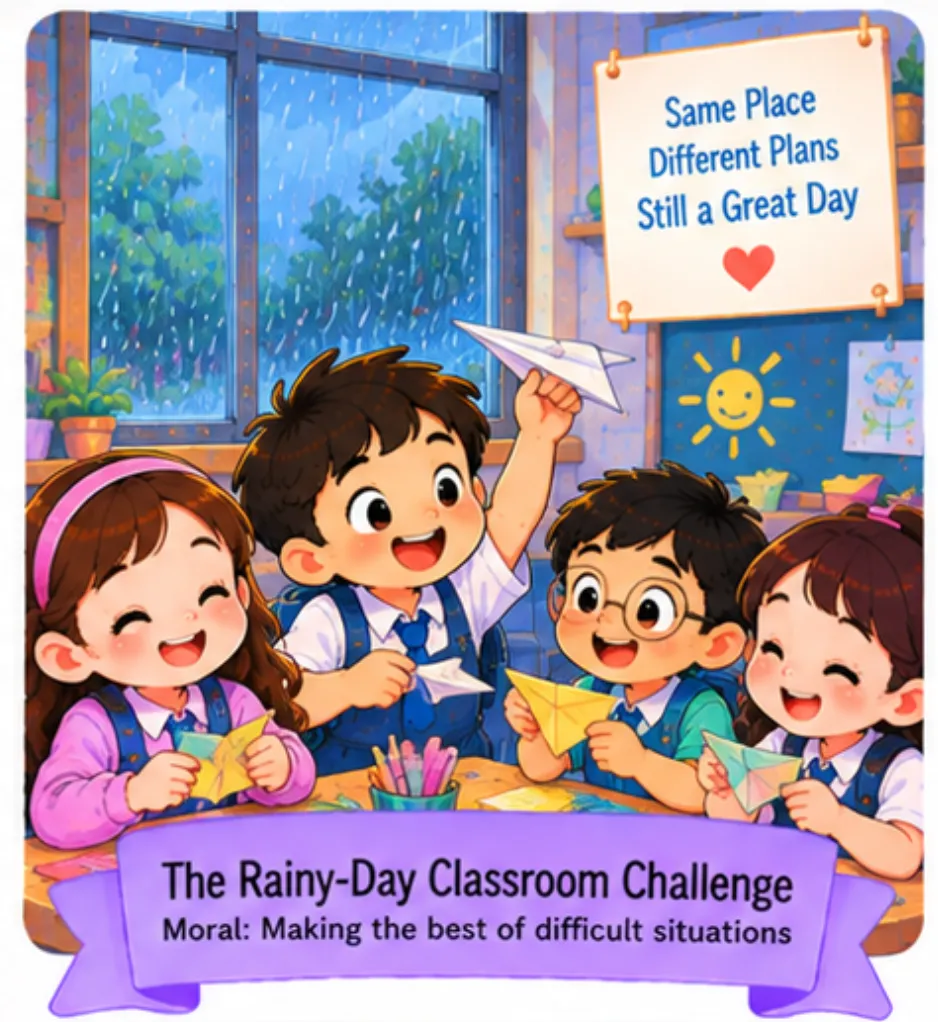
One morning, heavy rain caused the school playground to close. The students were disappointed because their sports period had been cancelled.
Their teacher decided to turn the problem into a challenge.
She divided the class into groups and asked them to create indoor games using only paper, pencils, and their imagination.
The students created puzzles, word games, and drawing challenges.
Soon, everyone was laughing and enjoying themselves.
When the rain finally stopped, the students realized that the cancelled sports period had not ruined their day after all.
They had discovered new ways to have fun and learn together.
The teacher reminded them that difficult situations can sometimes become opportunities for creativity.
Moral: Make the best of difficult situations.
22. The Student Who Stopped Making Excuses
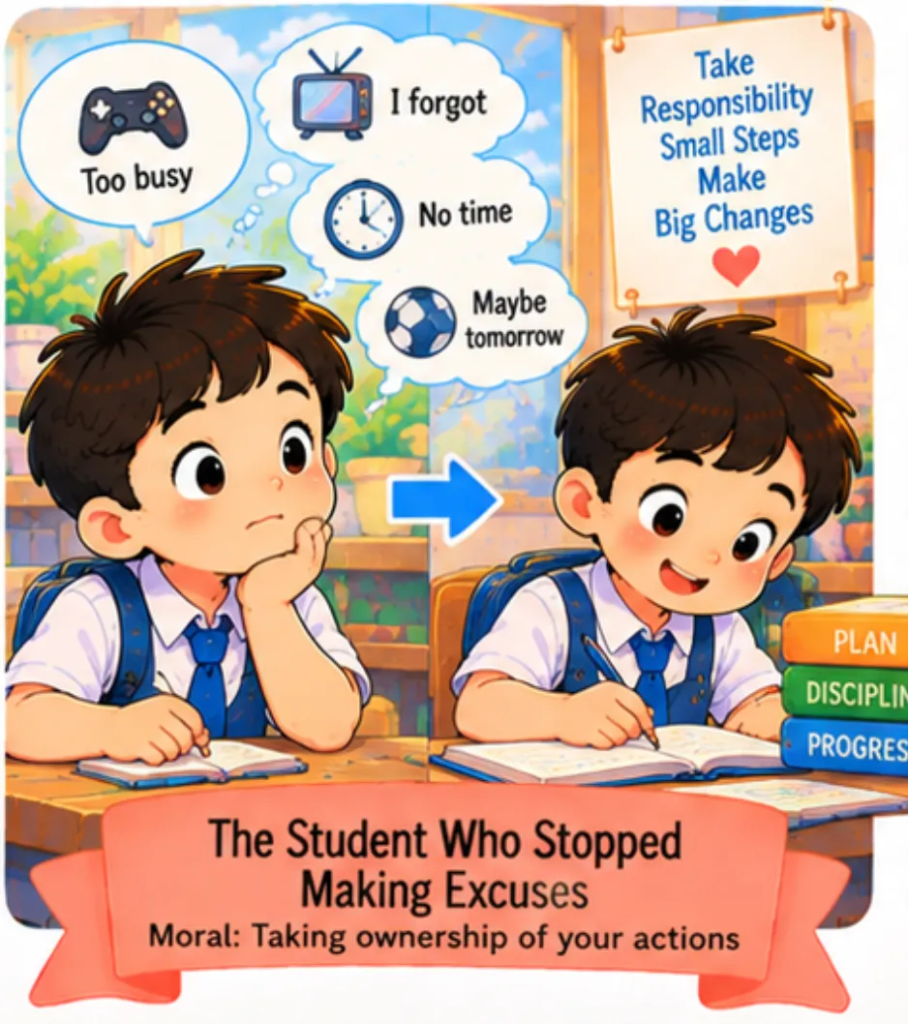
Every time Karan forgot his homework, he had a different excuse.
One day, he told his teacher that he had forgotten his notebook. The next day, he said his internet was not working. Soon, his teacher noticed the pattern.
She asked him, “What would happen if you simply accepted that you forgot?”
Karan thought about it.
The next morning, he admitted, “I did not complete my homework because I wasted my evening. I am sorry.”
Instead of making another excuse, he promised to manage his time better.
His teacher helped him create a simple study schedule.
Karan slowly became more responsible and stopped blaming other things for his mistakes.
Moral: Take ownership instead of making excuses.
23. The Old Trophy in the Cupboard
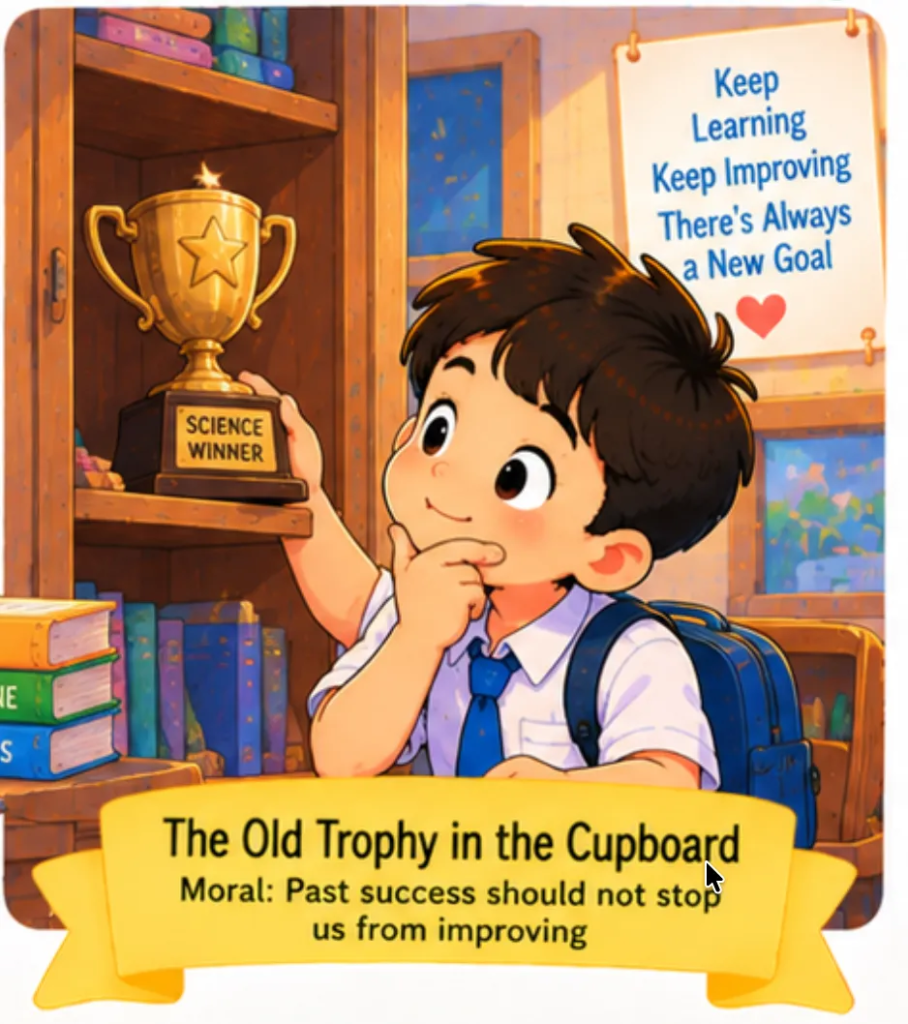
While cleaning the classroom cupboard, Neeraj found an old trophy with his name on it. He had won it two years earlier in a spelling competition.
He felt proud and showed it to his classmates.
His teacher said, “That was a wonderful achievement. What are you working toward now?”
Neeraj realized that he had spent too much time talking about his old success and had stopped trying new challenges.
He decided to enter another competition.
This time, he did not win, but he learned many new words and improved his skills.
Neeraj understood that past success should make us proud, but it should not stop us from growing.
Moral: Be proud of past success, but keep improving.
24. The New Student’s First Answer

A new student named Farah joined Class 8. She was nervous because she did not know anyone.
During her first science lesson, the teacher asked a question. Farah knew the answer but was afraid to raise her hand.
After a few seconds, she slowly raised it.
“Yes, Farah?” asked the teacher.
Farah answered correctly.
The teacher smiled and said, “Excellent answer!”
Her classmates also appreciated her.
Farah felt more confident. Later that day, she answered another question and even joined a group discussion.
She realized that confidence does not always come before trying. Sometimes, we become confident because we take the first small step.
Moral: Confidence grows when we have the courage to try.
Conclusion
Short moral stories can teach students valuable lessons that go beyond the classroom. Each story shows how simple choices can lead to positive changes in our lives. Lessons about honesty, responsibility, teamwork, patience, courage, respect, and learning from mistakes can help students become better learners and better people. The best part is that these lessons are shared through simple and interesting situations, so students can easily understand and remember them. Parents and teachers can also use these stories to start meaningful conversations with children. By reading regularly and thinking about the moral of each story, students can develop good habits and apply these lessons in their everyday lives.
FAQs About Short Moral Stories for Students
1. What are short moral stories for students?
Short moral stories are simple stories that teach students important values and life lessons, such as honesty, kindness, responsibility, patience, courage, and teamwork.
2. Why are moral stories important for students?
Moral stories help students understand good values through simple characters and situations. They can also encourage students to think about their actions and choices.
3. What values can students learn from moral stories?
Students can learn values such as honesty, respect, kindness, responsibility, patience, courage, teamwork, fairness, and self-discipline.
4. How long should a short moral story be?
A short moral story can usually be around 100 to 300 words, depending on the age and reading level of the student.
5. Are moral stories suitable for school students?
Yes. Moral stories are suitable for school students because they explain important lessons through simple and interesting situations.
6. Can moral stories help improve students’ reading skills?
Yes. Reading short stories regularly can help students improve vocabulary, reading fluency, comprehension, and their ability to understand ideas.
7. What is the main purpose of a moral story?
The main purpose of a moral story is to entertain the reader while teaching a useful lesson or value that can be applied in everyday life.
8. What are some common morals in stories for students?
Common morals include honesty is the best policy, never give up, respect others, take responsibility, help others, listen carefully, and learn from your mistakes.
9. Can teachers use moral stories in the classroom?
Yes. Teachers can use moral stories for reading activities, classroom discussions, writing exercises, vocabulary practice, and value-based learning.
10. Can parents read moral stories with their children?
Yes. Parents can read moral stories with their children and discuss what the characters did, what they could have done differently, and what lesson the story teaches.
11. What makes a good moral story for students?
A good moral story should have a clear message, simple language, relatable characters, an interesting situation, and a meaningful ending.
12. Should a moral story always have a happy ending?
No. A moral story does not always need a happy ending. However, the ending should clearly show the lesson or consequence of the characters’ actions.
13. How can students remember the moral of a story?
Students can remember the moral by identifying the main problem, understanding the characters’ choices, and thinking about how the lesson can be used in real life.
14. What topics are suitable for short moral stories for students?
Topics such as honesty, friendship, responsibility, teamwork, patience, courage, kindness, discipline, respect, confidence, and learning from mistakes are suitable for students.
15. How can students apply moral lessons in daily life?
Students can apply these lessons by being honest, helping others, completing their responsibilities, respecting people, staying patient during difficulties, and learning from their mistakes.
