Akbar and Birbal stories have been told in Indian homes for hundreds of years, and children still ask for them at bedtime. Each tale is short, a little funny, and ends with a clever answer that makes everyone smile. This page gathers eight of the best-loved ones, retold in simple English with a moral after every story.
Read one a night, read them aloud in class, or let your child pick a favourite. If you want more once you finish, we have funny Akbar Birbal stories, a collection of Akbar Birbal moral stories in English and Akbar and Birbal stories with pictures.
Who Were Akbar and Birbal?
Akbar was the Mughal emperor who ruled much of India in the 1500s. He loved art, music, debate and good ideas, and he gathered clever people around him. Birbal was one of his closest advisers. In the stories he is a quick thinker from a humble background who solves every puzzle with humour and common sense instead of force.
Historians say the stories are folk tales that grew over time, so they are best enjoyed as fun lessons rather than exact history. The friendship between the two is the heart of them, and you can read more about it in the Akbar and Birbal friendship story. If your child is just starting, this short Akbar and Birbal story in English is a gentle first read.
1. How Many Crows Are in the City?

One morning Akbar looked out of his palace window and saw crows flying everywhere. A silly thought came to him, and he turned to his courtiers and asked, “How many crows are there in our city?” Nobody dared to laugh. Everyone looked at Birbal.
Birbal did not even blink. “Your Majesty, there are twenty one thousand five hundred and twenty three crows,” he said. Akbar raised an eyebrow. “And if I count and find more?” Birbal smiled. “Then some crows must be visiting from other cities. If I find fewer, some of our crows must have gone to visit relatives elsewhere.”
The whole court burst out laughing, and Akbar had to admit that nobody could prove Birbal wrong. The silly question had been given a clever answer.
Moral: A silly question can be answered with a smart and cheerful reply. Staying calm helps you think.
2. The Line on the Board

Akbar once drew a straight line on the floor with chalk and called out to his court, “Make this line shorter, but nobody may rub out any part of it.” The courtiers scratched their heads. They could not touch the line, so how could it become shorter?
Birbal stepped forward, took the chalk, and drew a much longer line right beside it. Then he turned and said, “Your Majesty, look. Your line is now shorter, and I have not touched it.”
Akbar clapped. The line had not changed at all, yet next to the bigger one it looked small. The trick was to change the comparison rather than the thing itself.
Moral: You do not need to bring others down to look bigger. Just work to grow bigger yourself.
3. The Khichdi That Cooked Too Far Away

On a freezing winter evening Akbar was walking by a lake with his courtiers. He said, “I wonder if a man could stand in this icy water all night.” A poor man who overheard him said he could, if he were rewarded. Akbar promised him a bag of gold coins.
The man stood in the cold water until morning, shivering but determined. In the morning the emperor asked how he had managed it. “Your Majesty, I kept staring at a lamp burning on the palace wall,” said the man. Akbar frowned. “Then you took the warmth of that lamp. I cannot reward you.”
The poor man went to Birbal in tears. Birbal listened and then did something odd. The next day he did not go to court. When Akbar sent a message asking why, Birbal replied, “My khichdi is not ready yet. I will come when it is.” Hours passed, and still no Birbal.
Akbar grew curious and went to Birbal’s house himself. There he found a pot hanging high from a tree, with a tiny fire burning far beneath it. “How will the khichdi cook like this?” Akbar laughed. “It will cook just as the man took warmth from a lamp far away, Your Majesty,” said Birbal quietly.
Akbar understood at once. He sent for the poor man and gave him the gold he had promised.
Moral: Be fair and keep your promises. Stretching the rules to avoid keeping your word is never right.
4. The Cat That Would Not Drink Milk
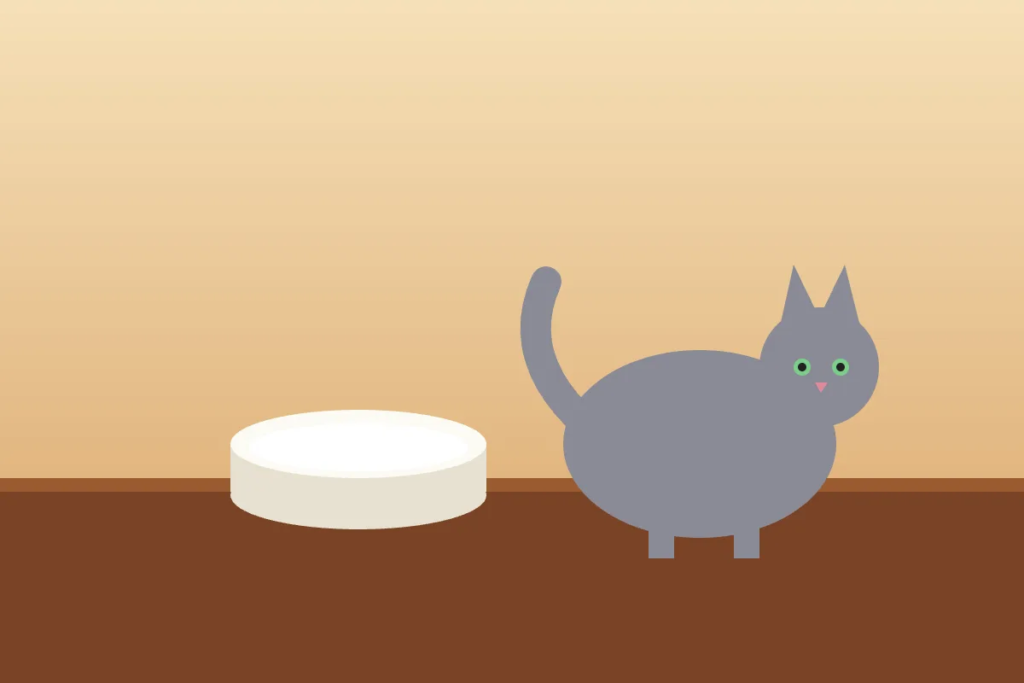
In a popular version of this tale, Akbar felt sure that a cat would always drink milk when it was put in front of her. Birbal said that was not always true. Akbar laughed and promised to test it.
Birbal took a little time, and when he came back to court he brought a thin grey cat. Akbar set a bowl of milk in front of her, and the cat backed away and would not touch it. Everyone gasped. “She must be sick,” someone said.
“She is not sick, Your Majesty,” said Birbal. “Some days ago she drank milk that was too hot and burnt her tongue. Now she is afraid of every bowl of milk, even a cool one.” Akbar looked at the frightened cat and nodded slowly. What we learn from a bad experience can stay with us for a very long time.
Moral: A bad experience can make us afraid of things that are actually safe. Be patient with anyone who is scared.
5. The Thief with Straw in His Beard
A merchant once found that his money bag had been stolen from the market. He ran to the court and asked Akbar for help. Akbar turned to Birbal, who asked the merchant a few quick questions and then ordered every suspect to be brought to the court.
The suspects came in and stood in a row, each swearing that he was innocent. Birbal looked at them calmly and said, “The thief is among you, and I can tell who he is. He has a piece of straw stuck in his beard.”
Right away one man lifted his hand and rubbed his beard. “That is the thief,” said Birbal. The man’s guilty mind had given him away, for there had been no straw at all. He confessed, and the money was returned to the merchant.
Moral: A guilty mind is never at peace. The truth has a way of showing itself.
6. The Real Flower and the Paper Flower
A scholar from a faraway land came to the court with two bouquets that looked exactly alike. One was made of real flowers and the other of cleverly made paper. “Can anyone here tell me which is real?” he challenged. The courtiers leaned in, sniffed, touched and stared, but nobody could tell.
Birbal quietly asked a servant to open the windows of the hall. Within a few minutes, a bee flew in. It buzzed around for a moment and then settled on one bouquet. “That one is real,” said Birbal. The scholar bowed. A bee is a better judge of a flower than any human eye.
Moral: Nature gives simple answers if we watch carefully. A clever solution can be a very simple one.
7. How Many Stars Are in the Sky?
One night Akbar was gazing at the sky and asked Birbal, “Can you tell me how many stars there are?” Birbal fetched a goat. “Your Majesty, there are as many stars in the sky as there are hairs on this goat,” he said. “If you do not believe me, count the hairs yourself.”
Akbar laughed out loud. Nobody could count the hairs on a goat, and nobody could count the stars either. Birbal had answered an impossible question with an impossible challenge, and both answers were equally fair.
Moral: Some questions have no exact answer. Knowing that is a kind of wisdom.
8. Where Is the Centre of the Earth?
Akbar once asked a very hard question in court: “Birbal, where is the centre of the earth?” Birbal did not hesitate. He walked outside, pushed an iron rod into the ground and said, “Your Majesty, this is the exact centre.”
“How can you be sure?” asked Akbar. “If you doubt it, please measure it yourself,” said Birbal. “If you find even a hair of difference, I will accept that I am wrong.” Nobody could dispute it, so Akbar had to accept the answer with a smile.
Moral: Confidence, calm thinking and a little humour can solve problems that look impossible.
What Children Learn from Akbar and Birbal Stories
- Thinking creatively: Birbal shows that there is more than one way to solve a problem.
- Staying calm: he never panics when a tricky question comes his way.
- Being fair: the khichdi tale reminds us that promises must be kept.
- Using humour kindly: his jokes never hurt anyone, they only make people think.
- Telling truth from lies: the thief and the flower tales teach children to observe closely.
For more stories on the same lines, see our page on the Akbar Birbal elephant story, which is another favourite with young readers.
How to Read These Stories with Your Child
- Pause before Birbal’s answer and ask, “What would you say?”
- Ask your child to retell the story in their own words the next day.
- Talk about the moral and ask when they have seen it happen in real life.
- Act out the court scenes. Children love playing Akbar and Birbal.
Are Akbar and Birbal stories true?
Akbar and Birbal were real people, but most of the stories were handed down as folk tales and grew with every telling. They are best enjoyed as fun stories with lessons.
Which Akbar Birbal story is best for young children?
The crows story and the line on the board are short, easy to follow and have a very clear ending, so they work well for ages 5 to 7.
What age group are these stories for?
They suit children from about 5 to 12. Younger children enjoy the funny endings, while older children enjoy working out the trick before Birbal reveals it.
What is the moral of the Akbar and Birbal stories?
Each story has its own lesson, but the common theme is that wisdom, humour and calm thinking can solve almost any problem.
Final Thoughts
Akbar and Birbal stories are short enough for a bedtime or a classroom break, yet they leave children with ideas to think about. Pick a favourite from the eight above, read it together, and talk about the moral. Then come back for more tales whenever your child asks for one more.
